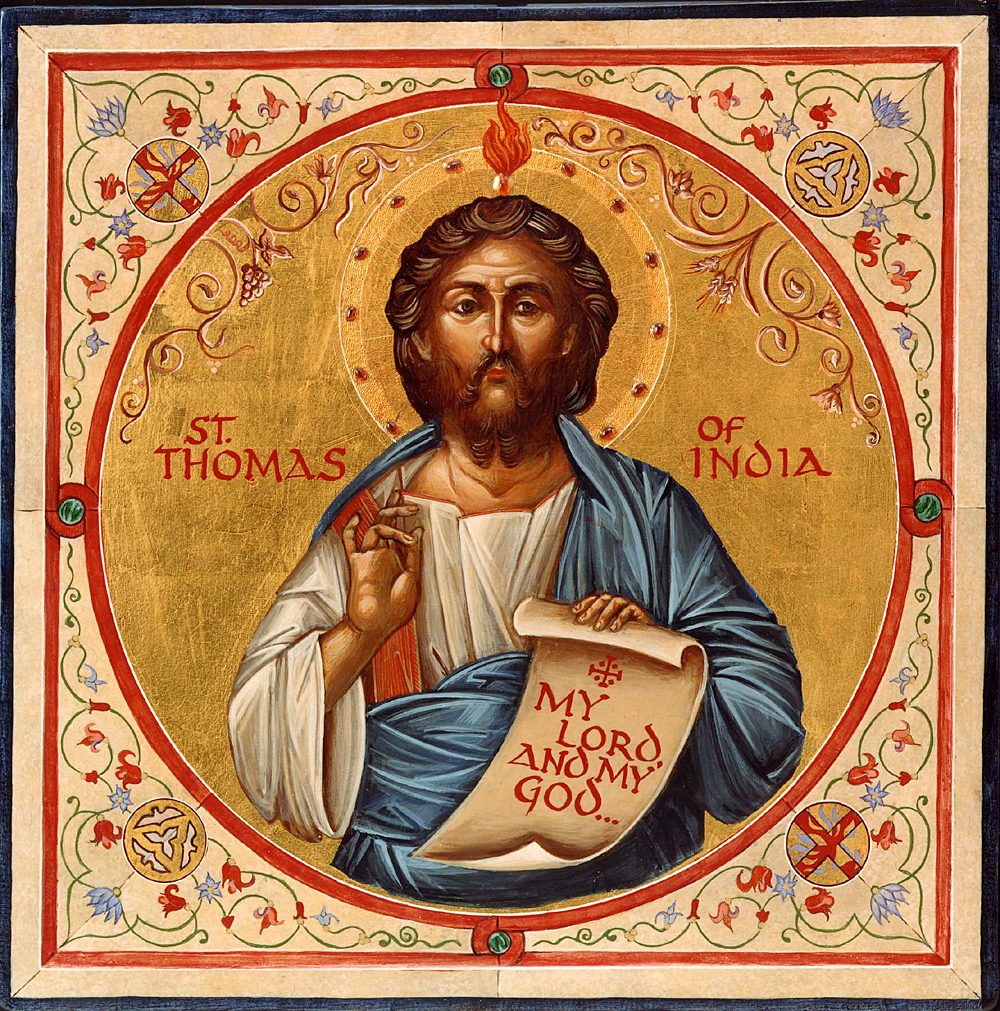
Like so many of Jesus’ disciples, Thomas was a Galilean. Though he is listed as an Apostle of Christ in all four of the Gospels Matthew 10:3, Mark 3:18, Luke 6:15, and John 21:2, the specific event when he was called to be a disciple is not mentioned in the Scriptures.
Thomas was an eyewitness to most of the events of Jesus’ ministry and he was presumably present during the times when Jesus was teaching His disciples about the practical and the heavenly things they sometimes did not really understand.
Thomas was Also Referred to as The Twin
In Aramaic, the common language of the Promised Land at the time of Christ, the name Thomas was written as Te’oma. In Aramaic te’oma also means twin. In Koine Greek, which was the other vernacular tongue of the region and the commercial language used in the Levant, the Greek word for twin was didymus. Thomas also earned the epithet Doubting Thomas, which will be explained below. He was called Judas Thomas by the Syrian church.
Just Prior to Holy Week Lazarus Got Sick & Died
Jesus’ friend Lazarus died shortly before the fate-filled events of Holy Week. Jesus told His disciples that they would go to Lazarus’ house in Bethany, where Mary and Martha lived. Bethany is located in the next valley east of Jerusalem, just past the Mount of Olives. It is less than 2 miles from Jerusalem, less than an hour’s walk from Herod the Great’s renovated Second Temple.

The disciples did not wish to go back into Judea. They warned Jesus of the intense animosity of the apostate Jewish leadership there who are “now seeking to stone you.”
Thomas Spoke Up on the Matter
Nonetheless Thomas was the disciple who spoke up and sarcastically and ironically made fun of his fellow disciples’ lack of faith in the providence of God’s protection:
Then Thomas, who is called the Twin, said to his fellow disciples, “Let us also go, that we may die with Him John 11:16 NKJV.”

During the Last Supper, Jesus Cryptically Told the Disciples That Where He Would, Go They Would Follow Him
At the Last Supper, Jesus tried to let His disciples know about his impending arrest, trial and execution, saying that where He was going they would follow. It was Thomas who questioned how they would know the way? Jesus said:
“Let not your heart be troubled; you believe in God, believe also in Me. In My Father’s house are many mansions; if it were not so, I would have told you. I go to prepare a place for you. And if I go and prepare a place for you, I will come again and receive you to Myself; that where I am, there you may be also. And where I go you know, and the way you know.”
Thomas said to Him, “Lord, we do not know where You are going, and how can we know the way?”
Jesus said to him, “I am the way, the truth, and the life. No one comes to the Father except through Me John 14:1-6 NKJV.”
The Climax of Thomas’ Participation in the Life of Christ – Holy Week
The crescendo of the Life of Christ, which Thomas witnessed, was the events in Jerusalem during Holy Week. The importance and meaning of these events are described in detail in the post describing the Son of Thunder – Apostle James the Greater. Link to James the greater.
Suffice it to say here that the Crucifixion and death of the 37 or 38 year old Jesus Christ on Friday, April 3rd, and His bodily resurrection back to life, and His rising from His grave three days later, on Sunday, April 5th, of AD 33 changed the world forever.
Note that Jesus was born in the last year of the reign of the romanized, ethnically Jewish King Herod the Great Matthew 2:1, who subsequently ordered The Murder of the Innocents in Bethlehem. Link to the Murder of the Innocents. Herod died in 4 BC. Therefore in AD 33 Jesus would have been either 37 or 38 years old.
Thomas was a Direct Eyewitness to The Passion of Christ
Thomas personally witnessed the events of Christ’s passion, both the Crucifixion and the death of Jesus and to His bodily Resurrection from death back to life. Jesus was dead and in the grave from late Good Friday afternoon until sometime early on Easter Sunday morning, when God Divinely resurrected Him from death to life. By that resurrection He was physically restored back to being a living person, walking, talking, eating and even having his fatal wounds probed by Thomas.
The risen Jesus was not the ghost or spiritual apparition that some imagine.
Thomas Doubted That the Dead Jesus Had Been Divinely Resurrected and Was Now Alive Again
On the day following that first Easter, Jesus appeared to most of the Apostles in Jerusalem, but Thomas was not with them yet. When Thomas showed up they told him about the risen Jesus visiting them. Thomas openly doubted their claims that Jesus was alive again:
So he said to them, “Unless I see in His hands the print of the nails, and put my finger into the print of the nails, and put my hand into His side, I will not believe John 20:25 NKJV.”
Eight days later the risen Jesus returned to visit the Apostles again. This time Jesus directed Thomas to probe His wounds for himself:
Then He said to Thomas, “Reach your finger here, and look at My hands; and reach your hand here, and put it into My side. Do not be unbelieving, but believing.”
And Thomas answered and said to Him, “My Lord and my God John 20:27-28 NKJV !”
Once Thomas had seen for himself, he not only quickly and explicitly acknowledged Jesus’ bodily resurrection as a living man: he also affirmed His Divinity.
Thomas Also Witnessed the Ascension of Christ

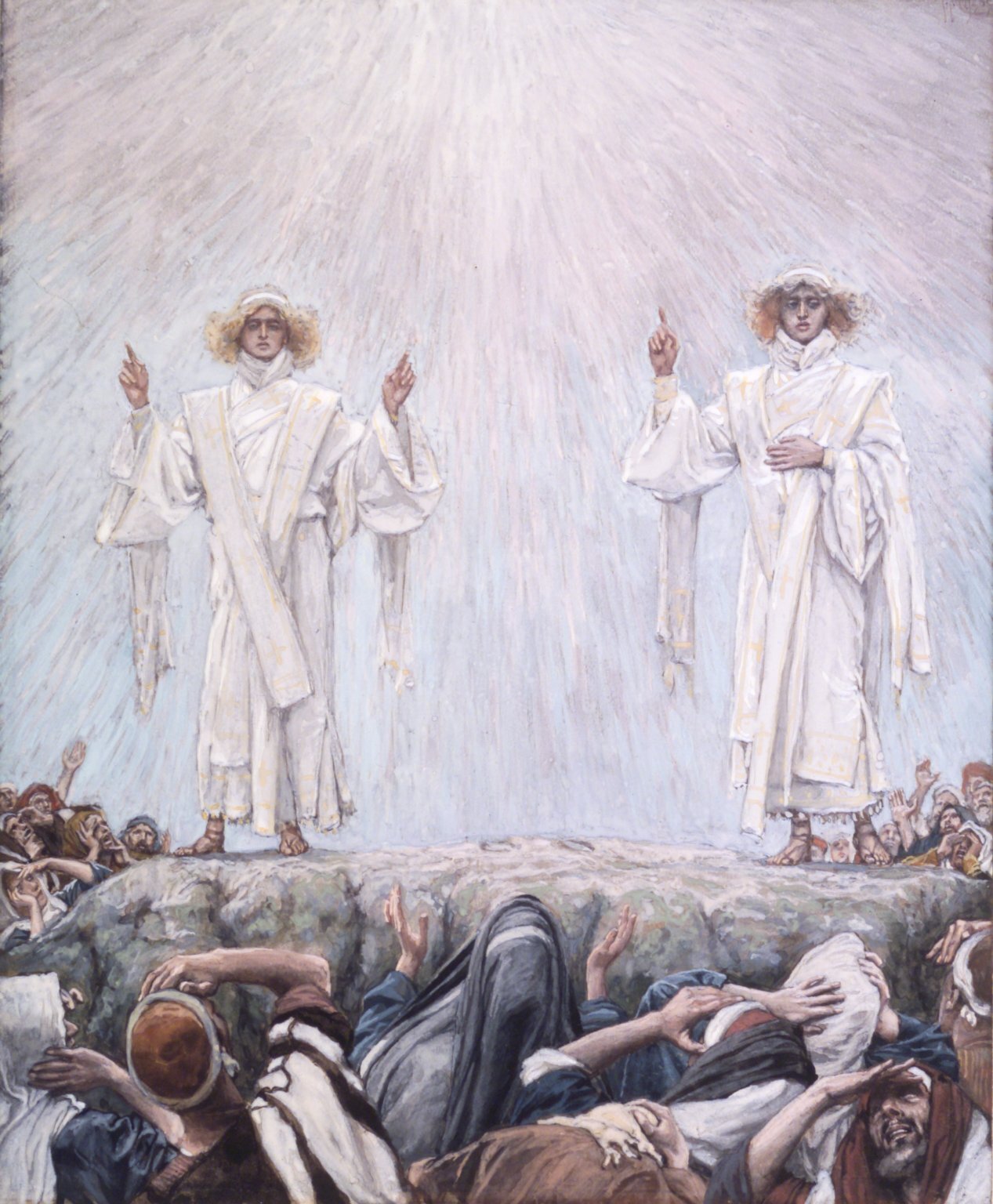
After fellowshipping with and learning from Jesus for the ensuing 40 days, Thomas then became a direct witness to the Ascension of Christ when the still living Jesus left His earthly existence and rose up to heaven where he rejoined The Father and the Holy Spirit and figuratively took His seat on God’s right-hand side.
The All Important Empowerment of Thomas and His Fellow Apostles
The Ascension of Christ occurred 10 days before the Jewish Festival of Pentecost. At that festival God’s Holy Spirit descended on Thomas and his fellow Apostles and disciples and filled them with that Spirit. They all experienced a dramatic empowerment as they were indwelt by God’s spirit and the Shekinah Glory of God’s presence changed their appearances with literal tongues of fire. They began teaching to the crowd Acts 2:1-4.
The crowd was comprised of many festival visiting foreigners. Each Apostle spoke to each member of the crowd in his native language. The Holy Spirit-powered teaching of the Apostles and Disciples in Jerusalem immediately produced thousands of converts to the belief that the incarnate Son of God, Jesus the Christ, was, in fact God’s promised Messiah, and that He had atoned for their sins, and restored them to fellowship with God. Those festival-goers began believing that He was, in fact, their Lord and their Savior Acts 2:5-47.
For a Decade the Apostles Ministered In and Around the Levant Region
The Acts of the Apostles details the initial evangelism performed by the 12 Apostles and the many disciples who, with the assistance of God’s Holy Spirit, worked in and around Jerusalem and throughout the region of the Levant (the area of Greater Palestine). They gave the accounts of what they each had witnessed. They walked throughout the region and worked to help with the rapidly growing mostly Jewish “Sect of the Nazarene,” which soon became the nascent Christian One, Holy, Apostolic and Universal Church.
The Great Dispersal of the Apostles in AD 44
In Jerusalem the sudden and dramatic increase in the persecution of the mostly Jewish, Christian church in Jerusalem stimulated the missionary journeys of those apostles who had not already begun their travels away from Jerusalem.
The Apostles Andrew and John had both left the Jerusalem cloister six years earlier in AD 38.
The local and regional focus of the Apostles radically changed in AD 44. After 11 years of evangelism, teaching and service in and around Jerusalem, the Church was well-established throughout the Levant region.
In the spring of AD 44, just prior to the Jewish Festival of the Passover, the Romanized, ethnically Jewish king, Herod Agrippa I, the grandson of Herod the Great, arrested James the Greater, and he put James through a public show trial and then had him executed by beheading Acts 12:1-2.
Herod apparently did this because he wanted to please the powerful and influential Jewish Pharisees and Sadducees who controlled the Second Temple in Jerusalem, which had been rebuilt and expanded by his grandfather.
He also arrested the Apostle Paul, and planned for his execution after the festival was completed. Paul was subsequently released from jail by an angel of God. Paul then warned the Christian leadership in Jerusalem and fled the city Acts 12:5-19.
The ever-brave and courageous, God-trusting James the Just, the half-brother of Jesus, the author of the Book of James, and of the archetypal, important, and influential Liturgy of Saint James was then confirmed and seated as the Bishop of Jerusalem.
Satan Meant It for Evil, But God Used It For Good
As is always the case, Satan meant it for evil, but God used it for good.
Satan meant the execution of Jesus to be a victory for him and his selfish human “beasts” (the nefarious government authorities Revelation 13:1-4, and “the harlot who rides on the beast” (the atheistic and/or apostate religious leaders Revelation 17) who all worked in tandem together against God.
Instead, Satan’s actions wound up serving a far more important divine purpose. The Death of Jesus Christ was a prelude to his Divine Resurrection.
Likewise the beheading of the Apostle James also served a greater purpose for God.
After the martyrdom of James and the flight of Simon-Peter from Jerusalem, many of the Apostles and disciples of Christ are believed to have begun leaving Jerusalem and the Greater Palestine region. One by one or in small groups they each embarked on whatever distant missionary journeys the Spirit of God led then to.
Many of them embarked to other places in The Roman Empire. Some of them, like Thomas, traveled well beyond that empire sojourning and spreading the Gospel far and wide.
Again, Satan may have meant Herod’s actions for evil, but God used them for the good of His kingdom.
The Tyrant King Herod also Received His Gruesome Comeuppance
By the way, shortly after, Herod had James beheaded, Herod experienced the reward for his actions. The blasphemer was eaten alive by worms and he died from that parasitic infection Acts 12:23 !!
Secular historians record the death of Herod Agrippa I as occurring in AD 44, so James’ martyrdom, and the “great apostolic exodus” must have occurred in that year as well.
Thomas’ Personal Mission Journey Initially Focused on Eastern Persia
In AD 326, the Christian bishop of Caesarea who was also a historian Eusebius of Caesarea, published his Ecclesiastical History of the Church. In that book Eusebius quotes the prolific Christian patristic author Origen of Alexandria (who lived from AD 185 to 254) as having stated that Thomas was an apostle to the Parthians (e.g., the Persians), together with his friend the Apostle Nathan Bartholomew. Link to Nathan.
Thomas is reported to have met Gondophares, a Persian sage and monarch. In AD 20 Gondophares had become the ruler of the Indo-Parthian Kingdom which encompassed much of modern-day Afghanistan, Pakistan and northwestern India. He ruled that kingdom from AD 20 to AD 46.
Thomas is reported to have converted and baptized many Parthians and he established the church in the Indo-Parthian Capital City of Taxila (in the Punjab region of modern-day Pakistan).

Persian documents are extant from the Sassanid Persian Empire which state that when they took over the Indo-Parthian territory in AD 226, there were bishops, priests and parish churches of the Christian Church of the East in the regions of Afghanistan, Baluchistan, Sindh and the Punjab regions, with laymen and clergy alike engaging in missionary activity there. Presumably this was part of Thomas’ legacy in the region.
Thomas Traveled On To The Malabar Coast in Southwestern India
After a period working at the royal court at Taxila, Thomas ordained regional leaders (bishops) for the church there. Then he left the Parthian region and sailed south along the west coast of India.

In AD 52 the Apostle Thomas is said to have sailed to the Malabar Coast (the western coast of southern India) on the ship of an Indian merchant named Abbanes to spread the Christian faith among the diasporic Jews there who had previously migrated to the coastal city of Kodungallur (in the modern-day Indian state of Kerala). Amongst other churches, Thomas is credited with founding the Church of the Syrian Malabar Christians.
Secular historians record that this region has long-standing trade relations with Syria, to whom it was selling spices including black pepper and crucible steel.
Crucible steel was an early high grade, nickel rich, 1-2% carbon alloy steel, later used in the manufacture of the legendary Damascus Steel scimitar sword blades. The well-known maritime trade route traversed from the Arabian Sea, through the Persian Gulf, and then up the fertile crescent trading routes to Damascus Syria.
According to Indian tradition and legend, Thomas reached the seaport of Muziris, in Malabar, and he is reported to have converted and baptized many people. He also established the Eight Churches (the Ezharappallikal) and evangelized in present-day Kerala and Tamil Nadu. Many of these churches were built near already existing Jewish settlements. The church located at Maliankara (Kodungallur) is thought to have been the first church he established in Kerala.
Thomas Then Traveled to Southeastern India
From the Malabar coast (Kerala) Thomas is said to have traveled to southeastern India to the modern-day state of Tamil Nadu. There Thomas converted numerous members of the court of king Misdeus (or Mizdeos). Some versions say it was the king of Mylapore. Nonetheless Thomas is said to have converted the Queen Tertia, the king’s son Juzanes, sister-in-law Princess Mygdonia, and her friend Markia to the Christian faith.
King Misdeus was infuriated by this and he led Saint Thomas outside the city and ordered four of his soldiers to take him to the nearby hill, where his four soldiers repeatedly speared Thomas and killed him. Saint Thomas is said to have been martyred on July 3rd, in AD 72.

Today Christians in the southern regions of India are known as Saint Thomas Christians or Nasranis.
Many of the details of Saint Thomas’s missionary travels through central Asia and the Indian subcontinent were recorded in the anonymous and non-canonical book The Acts of Thomas (which was written in the Syriac language around 180–230 AD).
The Doctrinal Travails of the Church of the East
The heterodox Christian Nestorius staunchly denied the finding of the Fourth Ecumenical Council (the Council of Chalcedon) of the One, Holy, Apostolic and Universal Church’s orthodox view of the hypostatic union in Christ. That counsel, held in AD 451, importantly concluded that Jesus Christ has two natures, one divine, and one human, combined and integrated in one person without confusion. Link to The Marvelous and Mysterious Dual Natures of Jesus the Christ.
Instead Nestorius taught the weird and heretical view of dyophysitism. Dyophysitism is the schizophrenic idea that there were two separate persons in the incarnate Christ, one human, one divine (two separate hypostases; i.e., two people in one person).
Sadly both the Indo-Parthian and the Southern Indian Churches which Saint Thomas founded were parts of the wider Church of the East which eventually went on to accept the Nestorian heresy.
Symbols of Thomas in Later Artworks
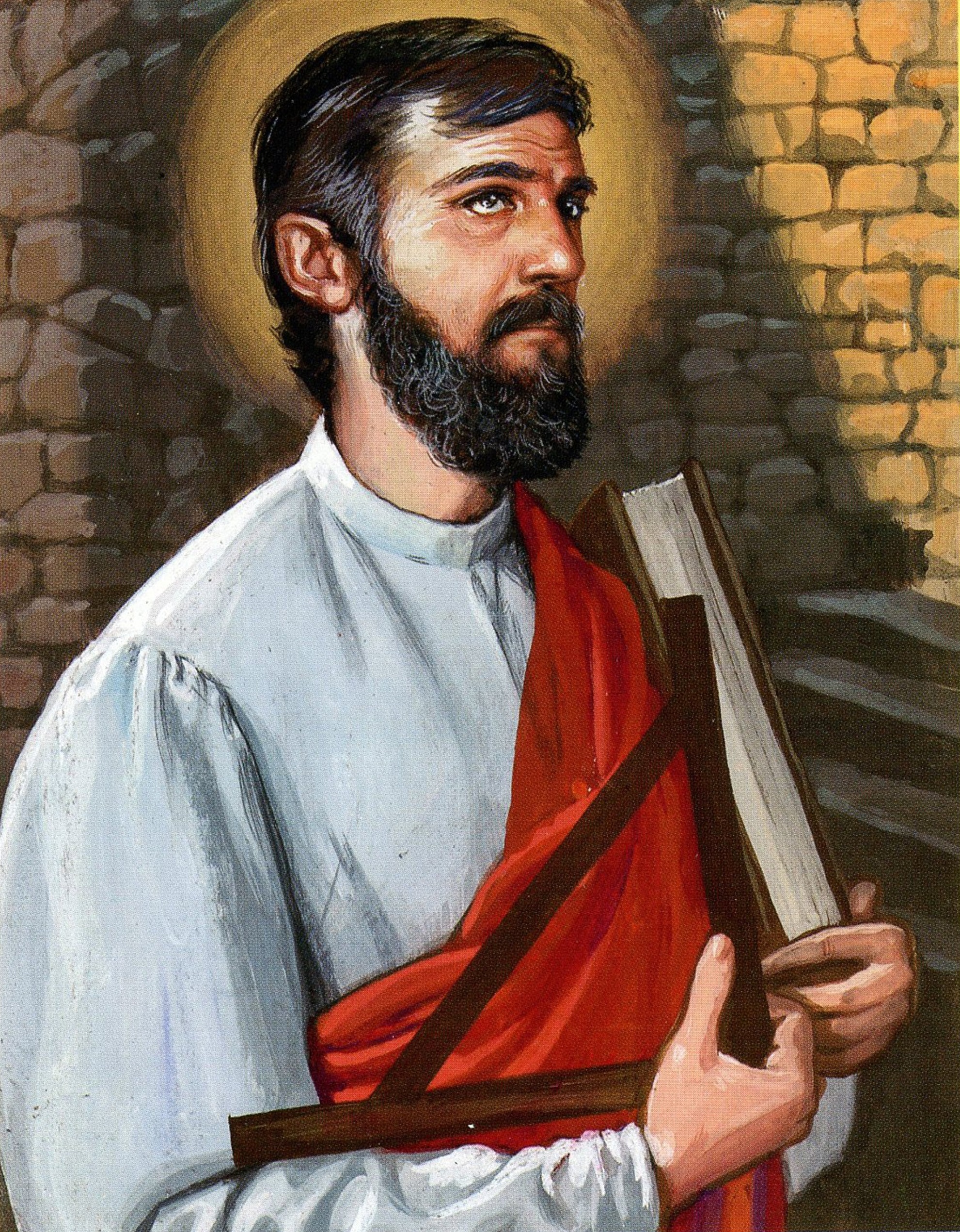
In Western artwork and paintings from the medieval era Saint Thomas can often be identified because he is depicted either holding a carpenter’s square or a spear.
Ancient legend reports that Thomas was eventually martyred by being stabbed to death with a spear. Early iconography and western paintings often depict the apostles pictured as holding the weapon they were martyred with, hence Thomas is often depicted holding a spear.
The western legend which gave rise to the carpenter’s square is more colorful and fun, though certainly not ancient. The Golden Legend is a 13th-century collection of 153 hagiographies (biographies of saints) by Jacobus de Voragine. It was widely read in Europe during the Late Middle Ages and was used as a reference by artists and scholars to identify saints in medieval era and later artworks. It was originally compiled between 1259–1266 and became one of the most printed books in Europe after the invention of the movable type printing press in the 1450s. The reason Saint Thomas is often depicted holding the carpenter’s square is a story retold in The Golden Legend.
The story goes that a king in India sent an emissary to the west to find an architect who could build him a Roman-style temple. Thomas presented himself as such an architect, so the king gave him money to build the temple with and then went off on a long journey. When he returned he saw no temple. Thomas had given the money to the poor and spent his time preaching and converting people. He explained to the king that his “temple” was in Heaven, and it would be there waiting for him. Although angered at first, the king was brought around by Thomas’ teaching. The king eventually became a Christian.
A similar, but much earlier account given in the non-canonical book of The Acts of Thomas which, again, was originally composed in Syriac, again around 180–230 AD. In that manuscript Thomas is reported to have visited the court of the Indo-Parthian king Gondophares, who put him in charge of building a royal palace. In this earlier account Thomas is known to be a carpenter. He was imprisoned for spending the king’s money on charity to the poor, rather than building the King a palace.
Because these narratives are so similar, the most likely relationship between them is that the Syrian narrative eventually made its way to Europe. Perhaps the transmission occurred sometime during The Crusades, and that became the source for the distorted tale in The Golden Legend mentioned above.

The Collect for St Thomas’ Day
Saint Thomas is remembered on his feast day. In the western church that observance occurs on either December 21st (established in the 9th century) or the newer choice of July 3rd (beginning in 1969). He is also considered to be the patron saint of India. The collect (specific prayer) for St Thomas’s Day from 1928 edition of the Anglican Book of Common Prayer is:
ALMIGHTY and everliving God, who, for the greater confirmation of the faith, didst suffer thy holy Apostle Thomas to be doubtful in thy Son’s resurrection; Grant us so perfectly, and without all doubt, to believe in thy Son Jesus Christ, that our faith in thy sight may never be reproved. Hear us, O Lord, through the same Jesus Christ, to whom, with thee and the Holy Ghost, be all honor and glory, now and for evermore. Amen.