Although Simon is listed among the Twelve Chosen, he is one of two disciples who are not featured individually in any specific narrative in the New Testament.
The name Simon is of Hebrew origin and it means one who harkens or listens.
In three of the four Gospel accounts, Simon the Zealot is listed as one of the chosen 12 disciples of Jesus Christ Matthew 10:4; Mark 3:18; Luke 6:15, and Acts 1:13.
Simon is referred to as the Kananite or Cananeus. Both words are derived from the Hebrew root word qanna (or qan’anaya) meaning zealous. This is not a reference to Simon being from Cana. It is a reference to his zeal, most likely for Israel’s independence from the Roman occupation of Judea.
Who Were The Jewish Zealots?
The romanized Jewish historian Josephus describes four prominent Jewish factions which existed in first-century Judea. They were the Pharisees, the Sadducees, the Essenes, and the Zealots. The fourth group, which Simon was affiliated with, was the Zealots—the most politically-minded of the four Jewish factions.
According to historical accounts, the Zealots were a notorious sect of Jewish patriots who sought to overthrow the Roman occupation—often through violence, terror, and political intimidation.
The Zealots were Jewish patriots who were more known for their hatred of Rome than anything else. It was this animus towards the Roman occupation of their homeland that motivated the Zealots to become violent extremists with “an insatiable passion for liberty.” (Josephus’ Antiquities 18.1.6)
However, their zeal for country and their hatred of Rome was an activity they believed served God’s purposes. In fact, they were often misguided and misdirected. The most extreme among the Zealots furthered their cause by attacking Roman soldiers, politicians, and even Jewish leaders who were friendly to Rome. On a broader scale, the Zealots also put themselves on the radar of the Roman army by burning Roman facilities throughout Judea.

In AD 6 the Zealot’s founder, Judas the Galilean (not related to Judas Iscariot), and his followers were bitterly opposed to a threatened increase of taxation associated with the Census of Quirinius, and that opposition led a revolt against the Romans. The Zealots hoped for the same results the Maccabeans had achieved against their Hellenistic occupiers in the mid-160s BC.
In response to the uprising, the regional Roman governors violently and successfully suppressed the Zealot uprising. Not surprisingly, the Romans were wary of any potential future uprisings or prospective “messiahs” coming out of Galilee from then on.
After the failure of their initial revolt, the surviving Zealots went underground, with the movement’s members resorting to more selective, covert guerilla-type attacks on individual targets. This was the group that Simon found himself a part of in his formative years.
Like many of his fellow Jews, Simon had probably grown up resenting the Roman occupation. At some point in his life, the promise of revolution and being part of overthrowing the Romans became attractive. Like many of today’s youth, Simon’s political activism and passion for “the cause,” no doubt, gave him a sense of purpose and belonging.
It is probable, therefore, that Simon initially followed Jesus for political reasons, believing the Messiah would be the revolutionary leader who would finally unite the Jewish people in open revolt against the Romans.
Jesus, however, was no such Messiah, something Simon the Zealot inevitably discovered by following Him.
The Natural Conflict Between a Zealot and a Jewish Roman Tax Collector
It is also interesting that Jesus chose a Zealot and a Jewish publican as fellow disciples. A Jew who worked collecting Roman taxes from his Jewish countryman would have been loathed and despised by a patriotic Zealot. While neither initially truly understood God’s actual plan for his Messiah, Matthew and Simon would clearly not have been likely companions.
This contrast highlights the diversity among the twelve apostles. Jesus brought together an unlikely group of individuals from very different backgrounds, including some social outsiders. He united them and taught them to walk in His footsteps and follow a common mission.
Jesus also looked to build a community out of unique and sometimes conflicting personalities. Jesus brought a tax collector and a political extremist into the same community by calling Matthew and Simon to be His disciples. For Simon, Jesus would provide true and lasting peace. For Matthew, Jesus abundantly offered grace and redemption.
The Disciples of Christ Learned As They Spent Time with Him
The New Testament does not provide specific details about Simon’s activities or contributions as an apostle. While we know almost nothing with certainty about Simon, it is safe to assume that like the others, he would have been present for nearly all of Jesus’ teachings and most of Christ’s miracles. Simon would have also benefitted from his personal relationship with Jesus, with whom he traveled, shared meals, and conversed with the Son of God daily.
Ancient But Non-Biblical Legends About Simon
Simon is mentioned in numerous early church writings which have survived. Saint Jerome and others mistranslated Simon’s title, believing that Matthew and Mark referred to him as Simon the Cananite or Simon the Cananaean. Jerome assumed he was from Cana—a town within Galilee—or possibly Canaan, an ancient region in the near east which was frequently mentioned in the Bible.
This apparently led to the Eastern Orthodox tradition that Simon was the 28 year old groom at the wedding in city of Cana, in Galilee. It was at that wedding that Christ (and his disciples attended) performed his first miracle. He turned water in six stone jars into wine. Seeing this miracle, Simon was supposed to have left his home, and his parents and followed Christ. While this narrative is, in its own way fun, it does not have a solid historical basis.
The Climax of Simon the Zealot’s Participation in the Life of Christ – The Passion of Holy Week
The crescendo of the Life of Christ, which Simon witnessed, was the events which occurred in Jerusalem during Holy Week. The important meanings of these events are described in detail in the post on the Son of Thunder – Apostle James the Greater. Link to James the greater.
Suffice it to say here that the Crucifixion and death of the 37 or 38 year old Jesus Christ on Friday, April 3rd, and His bodily Resurrection back to life three days later, on Sunday, April 5th, of AD 33 changed the world forever.
Note that Jesus was born in the last year of the reign of the Romanized, ethnically Jewish King Herod the Great, who subsequently ordered the Murder of the Innocents in Bethlehem. Link to the Murder of the Innocents. Herod died in 4 BC. In AD 33 Jesus would have been either 37 or 38 years old.

Simon was a Direct Eyewitness to The Execution of Christ and to His Resurrection
Simon was an eyewitness to the events described the Gospels. He observed Jesus’ midnight arrest, His secret trial by the Sanhedrin, His public show trial by the Roman Governor, and His immediate crucifixion and death on the cross.
Neither Simon nor any of his fellow apostles expected Jesus’ subsequent bodily resurrection from death back to life. He died on the cross and his body was placed in the grave late on the afternoon of Good Friday. His lifeless corpse remained there until sometime early on Easter Sunday morning when God Divinely resurrected Him from death to life. He was restored back to being a physical person, walking, talking, eating and even having his wounds examined by Thomas.
The risen Jesus was not the ghost or spiritual apparition that some imagine.
Simon Witnessed the Ascension of Christ
After living with Jesus for the ensuing 40 days, Simon and his fellow apostles then became eyewitnesses to the Ascension of Christ when He rose up to heaven and rejoined God and took His seat on God’s right-hand side.
Simon was Empowered by the Indwelling of God’s Holy Spirit at Pentecost
The Ascension occurred 10 days before the Jewish Festival of the Pentecost, when Simon and his fellow Apostles and the other disciples of Christ experienced the dramatic indwelling of God’s Holy Spirit. Simon was thus empowered to voice his personal observations of Jesus’ Divinely provided atonement of mankind and the restoration of God’s creation from its fallen state.
For the Next Decade the Apostles Ministered In and Around the Levant Region
The Acts of the Apostles details the initial evangelism performed by the 12 Apostles and the many disciples who, with the empowerment of God’s Holy Spirit, worked in and around Jerusalem and throughout the region of the Levant (the area of Greater Palestine). They gave accounts of what they each had personally witnessed. They walked throughout the region and worked to help with the rapidly growing mostly Jewish “Sect of the Nazarene,” which soon became the nascent Christian One, Holy, Apostolic and Universal Church.
The Martyrdom Of The Apostle James The Greater in Jerusalem
In Jerusalem a sudden and dramatic increase in the persecution of the mostly Jewish Christian church in Jerusalem stimulated the missionary journeys of those apostles who had not already begun their more distant travels away from Jerusalem. The Apostles Andrew and John had both left the Jerusalem “cloister” six years earlier in AD 38.
The local and regional focus of the Apostles radically changed in AD 44. After 11 years of evangelism, teaching and service in and around Jerusalem, the Church was well-established throughout the Levant region.
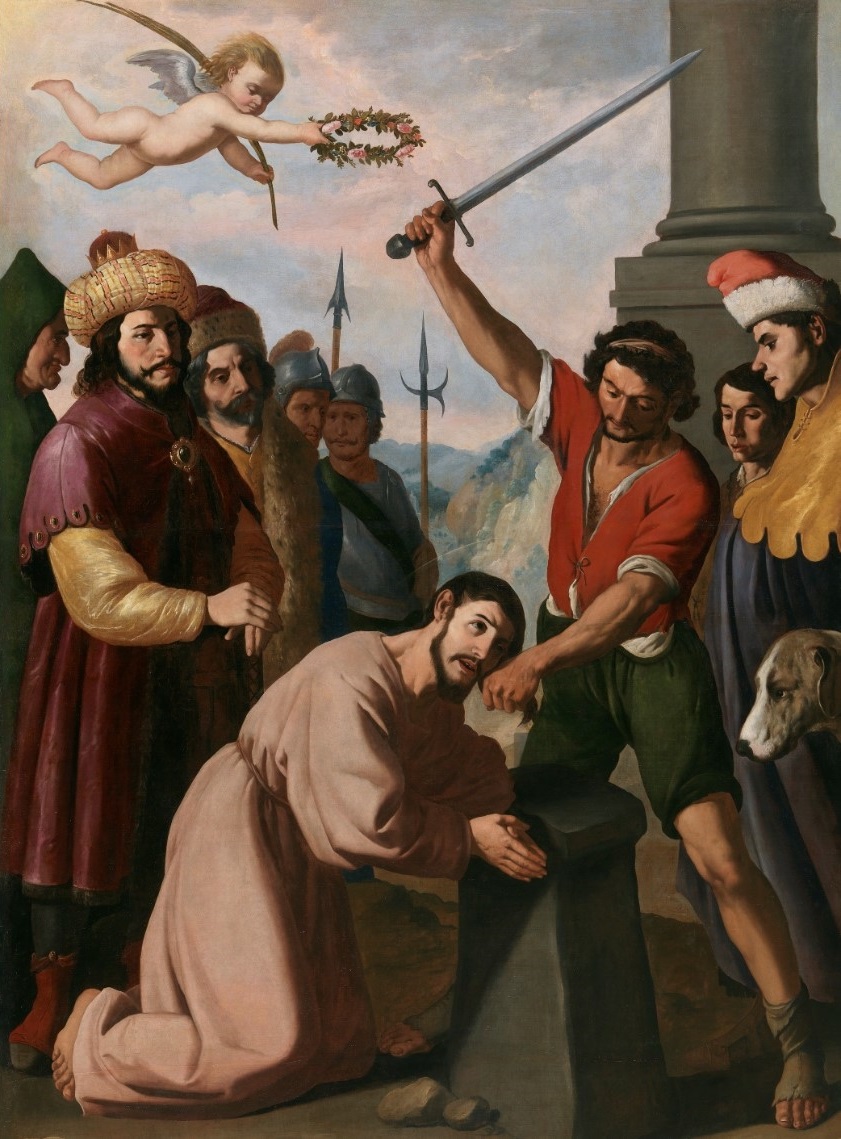
In the spring of AD 44, just prior to the Jewish Festival of the Passover, the Romanized, ethnically Jewish king, Herod Agrippa I, the grandson of Herod the Great, arrested James the Greater, and he put James through a public show trial, and then had him executed by beheading Acts 12:1-2.
The Great Apostolic Dispersal in AD 44
Herod Agrippa apparently had James killed because he wanted to please the powerful and influential Jewish Pharisees and Sadducees who controlled the council of the Sanhedrin at the Second Temple in Jerusalem. The second Temple had been extensively rebuilt and expanded by his grandfather, Herod the Great.
Herod also arrested the Apostle Paul, and planned for his execution after the festival was completed. Paul was subsequently released from jail by an angel of God. Paul then warned the Christian leadership in Jerusalem and fled the city Acts 12:5-19.
James the Just was Seated as the First Bishop of Jerusalem
The ever-brave, courageous, and God-trusting James the Just, the half-brother of Jesus, and the author of the Book of James, and of the archetypal, important and influential Liturgy of Saint James was then confirmed and seated as the first Bishop of Jerusalem.
Satan Meant It for Evil, But God Used It For Good
As is always the case, Satan meant it for evil, but God used it for good.
Satan meant the execution of Jesus to be a victory for him and his selfish human “beasts” (the nefarious government authorities Revelation 13:1-4), and “the harlot who rides on the beast” (the atheistic and/or apostate religious leaders Revelation 17) who all worked in tandem together against God.
Instead, Satan’s actions wound up serving a far more important divine purpose. The Death of Jesus Christ was a prelude to his Divine Resurrection.
Likewise the beheading of the Apostle James also served a greater purpose for God.
After the martyrdom of James and the flight of Simon-Peter from Jerusalem, many of the Apostles and disciples of Christ are believed to have begun leaving Jerusalem and the Greater Palestine region as well. One by one or in small groups they embarked on whatever distant missionary journeys the Spirit of God led them.
Many of them embarked to other places in the Roman Empire. Some of them traveled well beyond that empire, sojourning and spreading The Gospel far and wide.
Again, Satan may have meant Herod’s actions for evil, but God used them for the good of His kingdom.
The Tyrant King Herod also Received His Gruesome Comeuppance
By the way, shortly after Herod had James beheaded, Herod experienced the reward for his actions. The blasphemer was eaten alive by worms and he died from that parasitic infection Acts 12:23 !!
Secular historians record the death of Herod Agrippa I as occurring in AD 44, so James’ martyrdom, and the “great apostolic exodus” from the Levant region must have occurred in that year as well.
Simon’s Missionary Journeys
Ancient oral tradition also states that after Pentecost, and the martyrdom of James, Simon the Zealot’s apostolic journeys took him to Egypt and then to the far western coastal region of Africa called Mauritania, and possibly as far north as the British isles. After evangelizing in Africa and Briton, Simon apparently traveled and joined his friend, the Apostle Jude in Persia and together they journeyed to Armenia and to Beirut (in modern day Lebanon), and then back Armenia where Jude was martyred. Simon went on into western Persia.
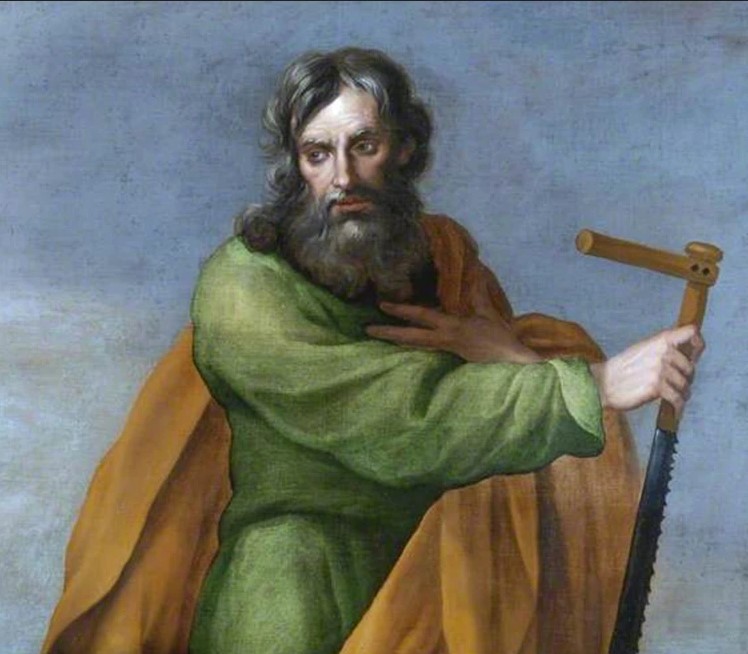
According to the ancient, but non-canonical Passion of Simon and Jude, Simon was martyred by being sawn in half with a wood saw while he was preaching in Western Persia. Other legends state that he was crucified.
Simon’s Portrayal in Artworks
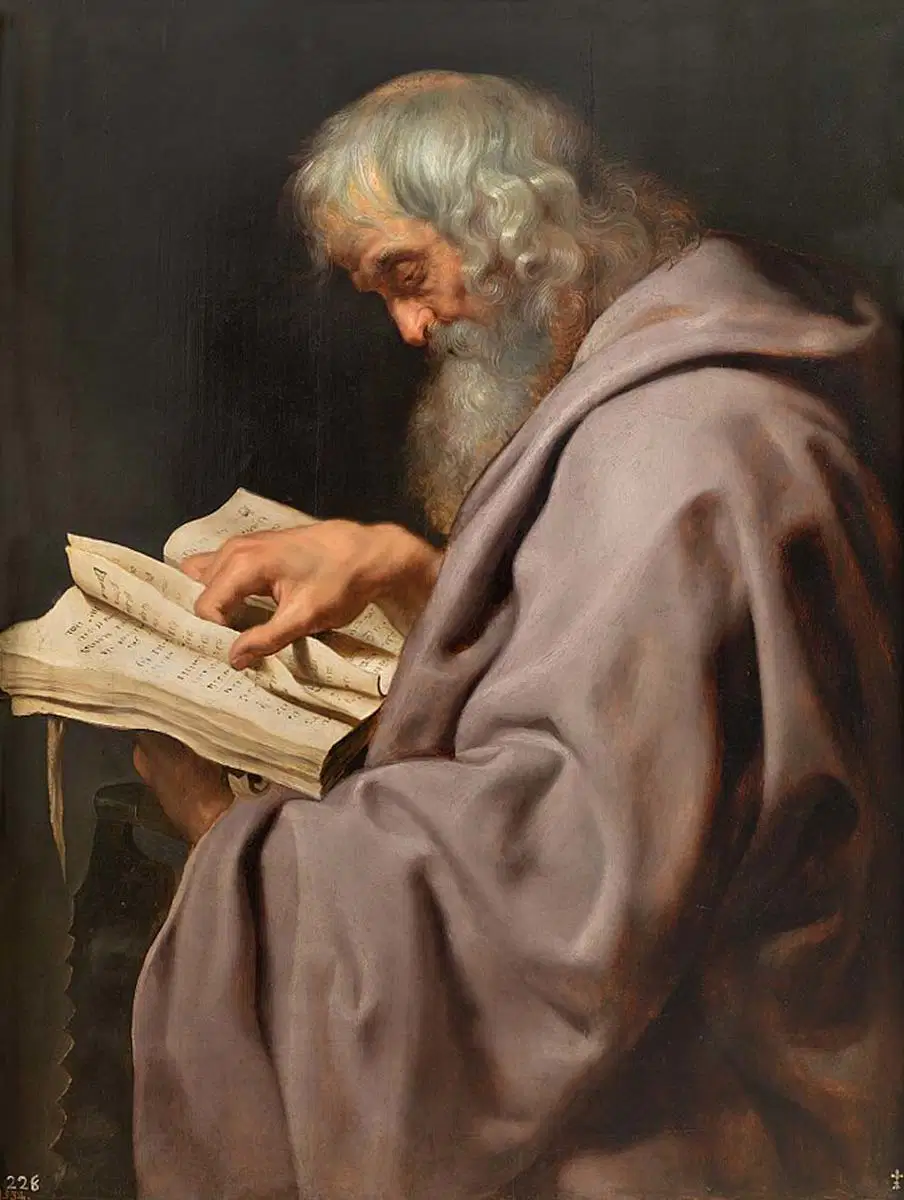
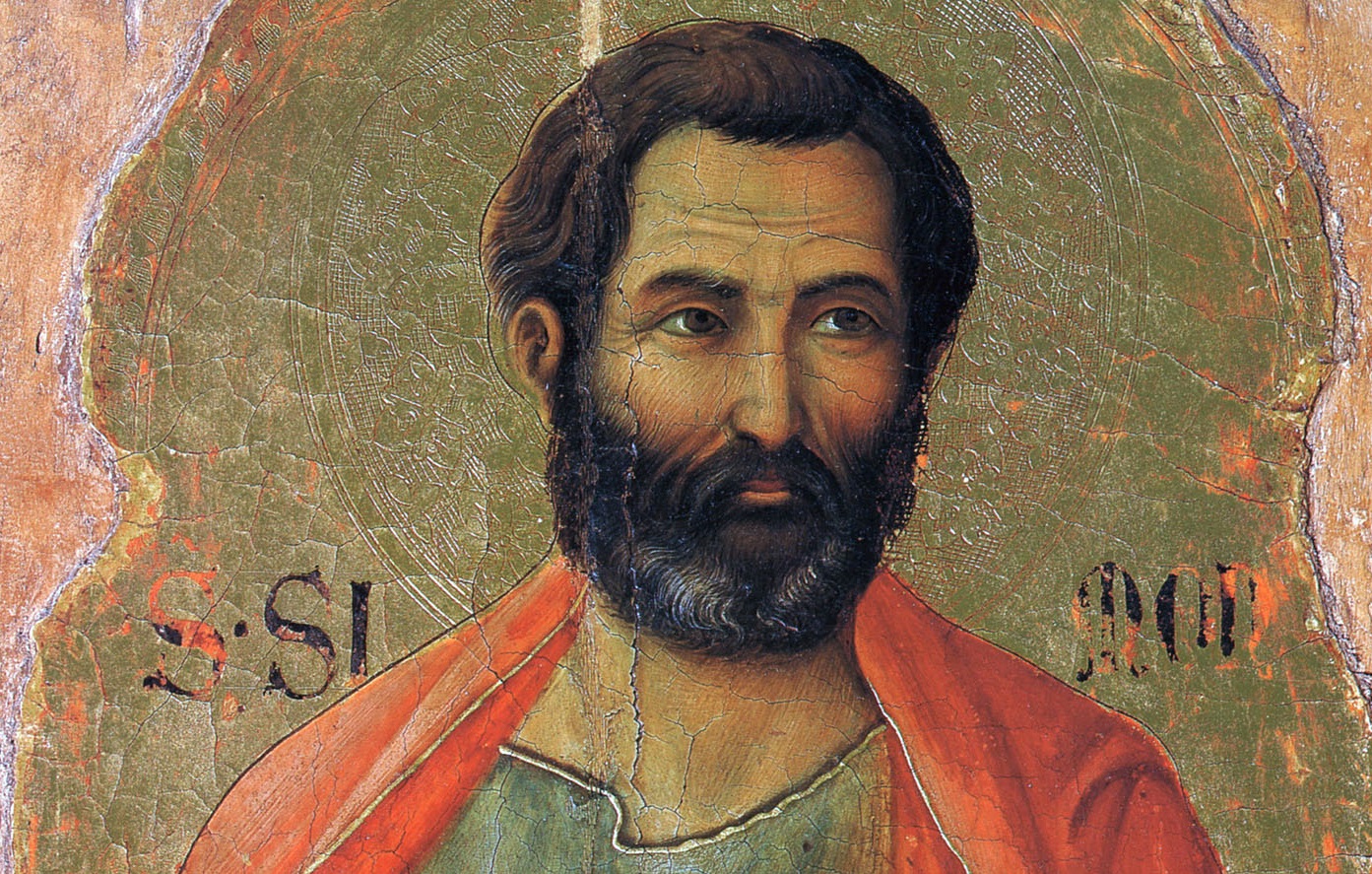
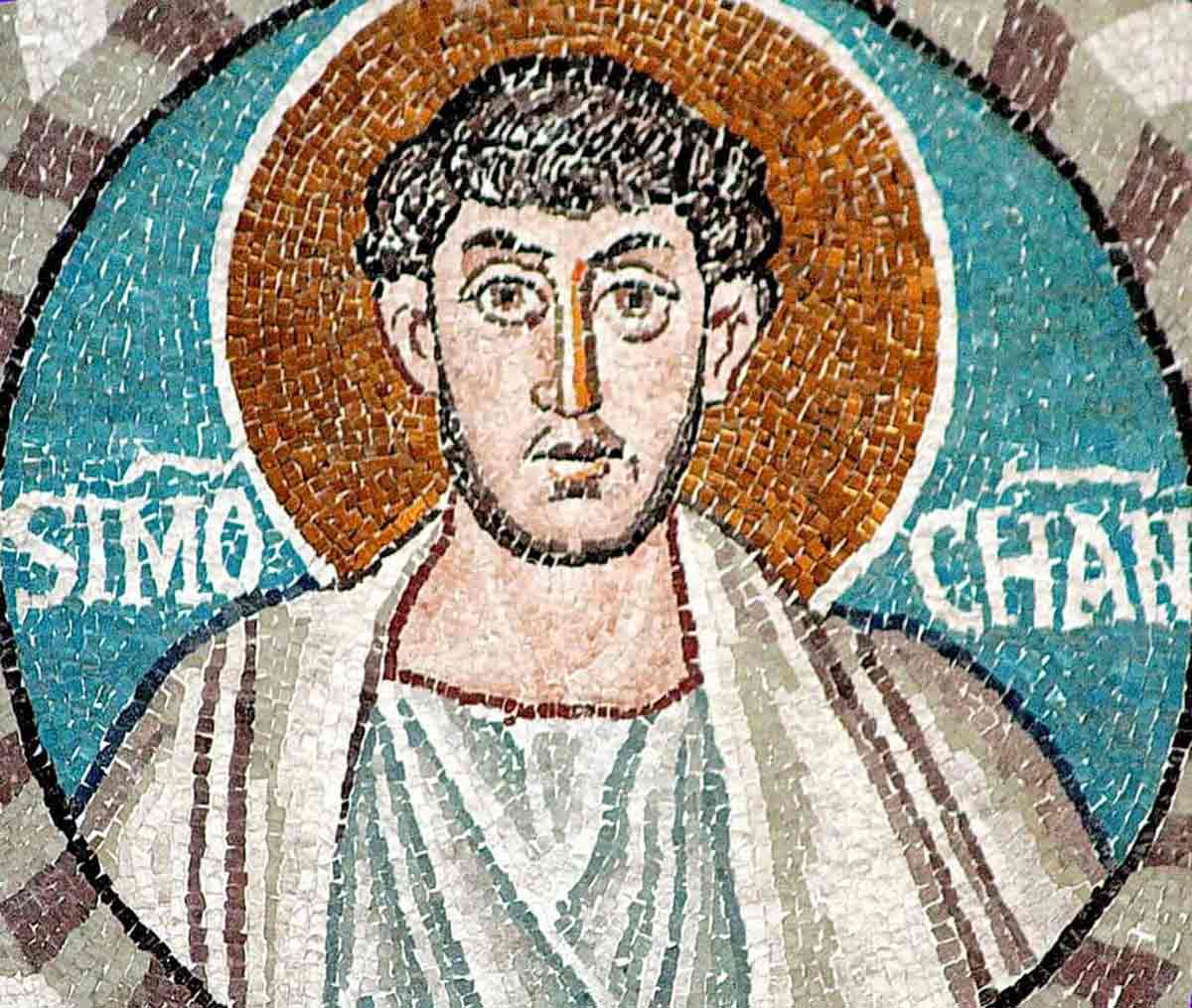
In Christian art and iconography, Simon the Zealot is often depicted with a saw, which is associated with his martyrdom. This symbol serves as a reminder of his steadfast faith and willingness to endure suffering for the sake of Christ. His portrayal alongside other apostles underscores the unity and diversity of the early Christian community, bound together by their shared mission and devotion to Jesus the Christ.
Simon’s Legacy
In the Roman Catholic Church he is venerated as the patron saint of saw workers, tanners, and woodworkers.
Conclusion
Simon the Zealot remains one of the most enigmatic and obscure of the apostles: however Simon’s story also reflects a remarkable personal transformation. The first-century Zealots pursued a political agenda driven by resentment, retribution, and violence. This worldview fueled Simon the Zealot for most of his early life. In Christ, however, he encountered something radically different. Where many people believed the Messiah would come as a conquering king or revolutionary, Jesus made it clear that He brought a mission of grace, forgiveness, and salvation. Jesus had not come to conquer the world. Rather, He had come to seek and save the lost Luke 19:10.
The Zealots sought political revolution; Jesus came to reconcile fallen mankind to God the Father.
For one thing, Jesus challenged the hearts of all would-be zealots when He said:
“You have heard that it was said, ‘You shall love your neighbor and hate your enemy.’ But I say to you, love your enemies and pray for those who persecute you Matthew 5:43-44.”
The Zealots saw the Romans as enemies. Jesus saw them as Gentile sinners needing saving.
Simon once saw Matthew as his sworn adversary. Jesus turned former enemies into new creations and spiritual brothers. And if the power of the cross can reconcile sinners to the Father, then there is no hatred, division, or conflict between men, tribes, or nations that the love and grace of Jesus Christ cannot overcome.
Furthermore, Jesus reminded His disciples that if God the Father has forgiven us of our sins, how much more should we seek to forgive those who have wronged us Matthew 6:14-15; 18:21-35?
Simon was as passionate as they come. However, passion and zeal removed from the love and truth of God’s Word only brings more confusion, division, and destruction.
Jesus, had made His mission clear:
“The thief comes only to steal and kill and destroy; I came so that they would have life, and have it abundantly John 10:10.”
Only the Prince of Peace could transform a resentful, unforgiving, hate-filled heart into something new and beautiful. What was once dead in sin was brought to life in Christ. In Christ, the transformation of Simon the Zealot would become a testimony of God’s goodness, grace, and peace.