One of the evidences that the Bible was divinely authored by God, and not by a committee of 40 to 60 (or more) cleaver people spanning over a millennium or two, is that it (The Bible) has a single primary literary theme and a single literary voice. Despite having many narratives with many, many sub-themes and plots there is an over-riding, transcendent story which binds all of the texts together and makes the book a whole.
That story starts with the divine creation of the cosmos which included the earth.
The story then jumps to the creation of the first man and the first women. We are told that God created humankind to be stewards of His creation. God and humankind lived together in a close fellowship in a luscious and fruitful earthly garden in which they regularly walked and talked together. Heaven and earth were not widely separated, they were confluent and overlapped.
We are also told that they were made in the “image of God.”
Because the description of mankind being made in the image of God at first seems vague and unclear to many of us, we tend to not pay much attention to it. The ancient patristic early church fathers wisely understood four specific ways in which people are similar to God, but few moderns read those “other” old books these days.
Yet, one of the traits we share with God turns out to be the basis for the grand thematic tension which most of the human authors writing the texts of the Bible are working explain and, we are told, God is working to resolve.
The often overlooked and occasionally even disputed characteristic of mankind that causes the problem which has to be fixed is that God made each of us as free agents. Acting as free agents, the first man and women, together, each made a bad choice. They chose to disobey their maker.
That single event starts the thematic ball rolling. Ideas have consequences, and the consequence of Adam and Eve’s bad decision is that they lost the mystical union of the close fellowship which they had with their maker. For there own good, the already Triune creator God exiled them from His luscious garden.
The rest of scripture is on one level or another the story of mankind’s need for redemption, and his/her journey and search for the restoration of that close and personal fellowship we had previously enjoyed with God.
The irony is that while mankind can choose to act badly, we can’t be good enough to obtain the redemption and restoration we seek on our own. That process required a holy redeemer who was and is one person with two natures (one human, and one divine). His sinless human nature was able to accomplish the blood sacrifice God required for our atonement and redemption. His sinless purity atoned for our criminal disobedience. He became our surrogate in God’s courtroom, if you will.
However that is not the whole story, there is more.
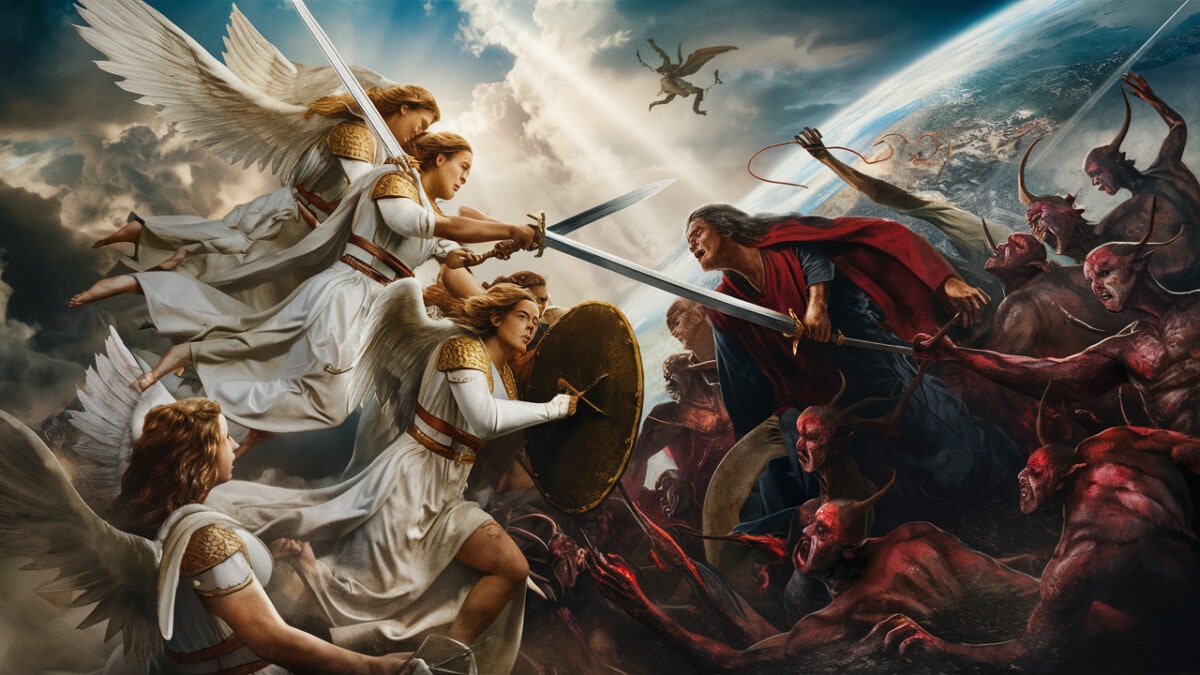
God also created his ethereal assistants (the angels). They also were given free agency. One of them, named Lucifer led a cadre of them into an unheavenly rebellion against God. This got Lucifer (who was renamed a Satan) and his minions expelled from heaven, forever.
God’s decision to create us and the angels as free agents has been both a blessing and a curse to us, and too those former angles who chose badly as well.
Of course, God did not want to be aided by puppet servants or to be worshiped by a puppet people. He desired intelligent, well-informed and enthusiastically willing creatures to worship Him and to serve Him as the steward caretakers of His creation.
By the way God was not surprised or flummoxed by His creature’s bad behaviors. He knew what the course some would chose was before he orchestrated his creation. He never change his ultimate Divine plan. He desired to give mankind both free agency and a real opportunity to know Him and live in close association and fellowship with Him. The opposite of being exiled and banished from God is mystical union with Him.
The grand tapestry of God’s interaction with mankind has spanned from the garden, through all of the periods disobedient and stiff necked Israel’s travails with Abraham, Egypt, the Desert, Cana, Solomon’s Temple in Jerusalem, the divided kingdoms, the Babylonian exile, the Second Temple, and the legalistic, merciless and disobediently apostate Sanhedrin in Jerusalem.
So, while mankind has been and is stumbling on his sojourn to regain his mystical fellowship with God, Satan and his nefarious army were and are working even more actively to undermine God’s Divine grand plan. But the Triune God is always many steps in front of Satan’s short sighted ways.
By the time of Christ, the people of Israel had subtly divided roughly into two opposing camps. The pious, obedient and observant ones, like the Essenes around the Dead Sea, and the many common working class people scattered around the countryside who were focused on obeying their creator, and the nefariously independent of God, Hellenized and Romanized cosmopolitan ones. Sadly the second group included many of the Jewish rulers like Pontius Pilot and his people, the many “beasts” described in Scripture, and the influential Jews in the Sanhedrin who controlled the Second Temple, the many “harlots” describe there.
The promised Messiah of God not only atoned for the sins of the people, but more importantly 50 days after Christ’s resurrection, God’s Holy Spirit descended on His people. God now indwells and enables those who are willing to obey him. God again inhabits his earthly creation with his stewards who are now empowered by God. They are willingly obedient to Him (most of the time) and they enjoy the mystical union with Him which they had previously lost; obedient Messianic Jews and believing Gentiles alike.
The biblical Olive Tree Metaphor depicts the obedient and observant people of God, who are referred to as Israel. The healthy productive tree is an illustration of God’s people. However this scriptural image also tells us that unhealthy non-productive branches depict the disobedience of the independently selfish Jews who comprise Adamic Israel. We are told in both Testaments that those bad branches are to be pruned out, burned up, and destroyed.
We are also told that God grafts many new healthy branches into the Tree of Israel. That is how the obedient, willing and faithful Gentiles are depicted in the metaphor. The overall healthy olive tree after the pruning and grafting procedures are completed is an image of the vibrancy of Christian faithfulness to God and of His One, Holy, Apostolic and Universal Church. The many scriptural references to Israel have no relationship to modern Zionism or the mostly secular political state which goes by then same name. The Olive Tree Metaphor tells us that is so.
The two forces of the divine and the demonic will ultimately collide in a cosmic confrontation between God and Satan and his minions trying influence mankind to act selfishly.
God, being all powerful, has no real problem vanquishing evil, so history does not climax in a gory cataclysmic physical or kinetic battle, it concludes in the beauty of the victory of God. It crescendos in the bodily restoration of those men and women who chose to obey God. These overcomers resume their duties as His Stewards in the divinely restored creation (i.e., on the physically restored planet earth) for eternity.
That single theme transcends all the books compiled into the Bible, and it is the essential core story of mankind.
The posts on the Ancient Apostles and disciples linked below are examples of specific individuals who played a particular part in the process.