Simon Was From The Seaside Fishing Village of Capernaum
Simon was born in the fishing village of Capernaum on the northwestern shore of the Sea of Galilee. His parents were an observant Jewish couple, Jonah and Joanna. Simon’s brother was the Apostle Andrew, the First Called. Link to Andrew.
The Apostle Simon-Peter (Cephas), is also know as Simon Bar-Johan, the Brother of Andrew, the Apostle, and simply Saint Peter.
Capernaum is also the village where Zebedee the fisherman and his wife Mary-Salome and their two sons lived. Zebedee’s oldest son was the Apostle James, the Greater. Link to James the Greater. James’ brother was the Apostle John, the Evangelist (the gospel writer). Link to John.
Jesus Used Capernaum As A Home Base
Though Jesus spent a lot of time walking around the Levant (Greater Palestine). When He was not roaming about the countryside, He used the village of Capernaum as a sort of home base. The village itself had a population of around 3,000 people or more. The road from Damascus towards Jerusalem passed through Capernaum. The population of the Region of Galilee is estimated to have been around 200,000 people, some of whom no doubt attended and heard Jesus’ Sermon on the Mount.
Capernaum Also Had a Roman Tax Collector
Finally, the village of Capernaum is also the town in which Matthew the Apostle and Evangelist worked as a Roman tax collector. That made him a “publican,” meaning that he was a government administrator working for the Roman overlord, the Tetrarch of Galilee, Herod Antipas. Matthew was also the apostle who wrote The Gospel According to Matthew, hence his epithet “the Evangelist.” Link to Matthew.
The Nearby Seaside Village of Bethsaida
Bethsaida is another seaside village located on the north shore of the Sea of Galilee. Bethsaida is Aramaic for house of fishing. It was about six miles east of Capernaum. It was the home town of Philip the Pragmatic Apostle, Link to Philip, and his friend the Apostle Nathanael Bartholomew, who was initially skeptical about the idea that Jesus of Nazareth could be God’s Holy Messiah. However Nathan became convinced that Jesus was the promised Messiah the minute he met Jesus in person and heard him speak. Link to Nathan.
Simon-Peter and Zebedee were Entrepreneur Fisherman
Simon and his brother Andrew were employed in Simon’s fishing business. The Bible tells us that Simon owned his own fishing boat Luke 5:1-11. Simon was partners with Zebedee, the father of James and John in that endeavor Luke 5:7-10. James and John worked in Zebedee’s fishing business, along with a crew of hired fishermen Mark 1:20. Simon and Zebedee were members of the working class in Capernaum who had managed improve their life situations with their diligent commercial endeavors. They owned their own houses, and least one boat, each (probably several) and all the associated nets, tackle and other gear they needed to catch the fish they sold.
At the time of Christ, fish caught on the Sea of Galilean was either salted or pickled for preservation and then transported and sold all over Israel. It was a thriving commercial enterprise.
Simon Peter Was Also a Married, Family Man
The Scriptures also tell us that Simon also owned a house in Capernaum. It was there that Jesus healed his mother-in-law Mark 1:29-31; Luke 4:38, 39.
Clement of Alexandria (AD 150 to 215) in his Stromata, III, said St. Peter was married, had children and his wife accompanied him on his missionary journeys. Clement also tells us that Peter witnessed his wife’s martyrdom in Rome.
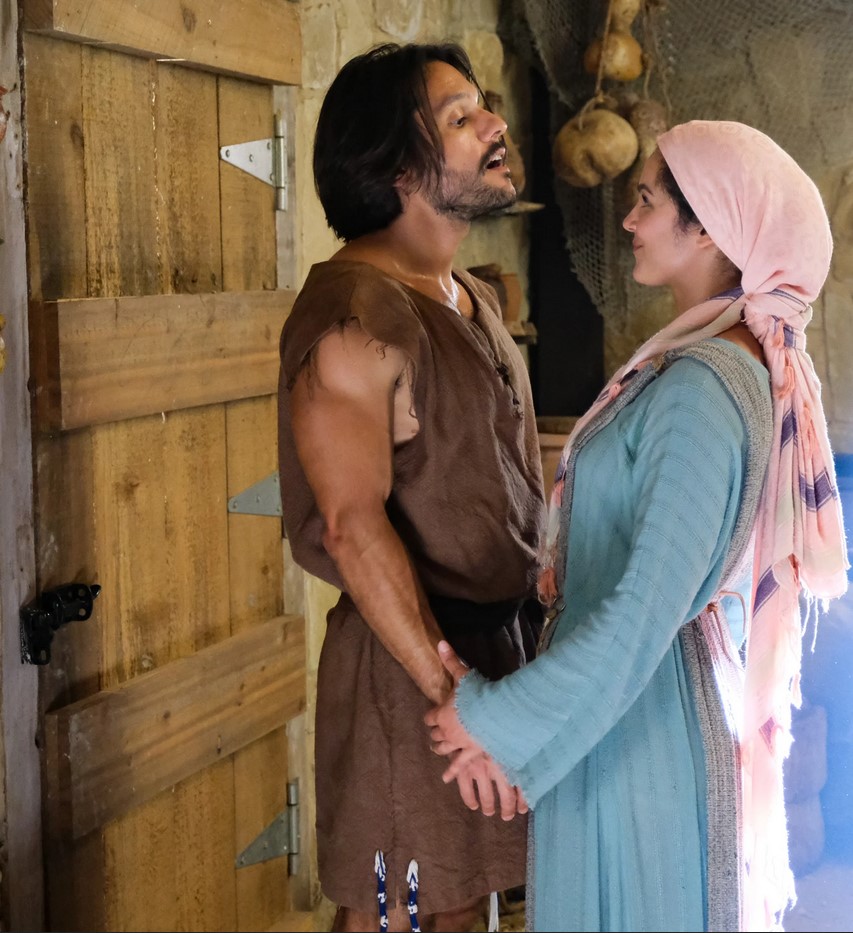
Simon Peter’s wife and family sojourning with him on his missionary journeys sounds very similar to the Virgin Mary traveling with Jesus and ministering to His practical needs while He discipled His followers, and preached to all who were interested as He was traveling around the Holy Land.
The Roman Catholic Church’s much later doctrine of mandatory clerical celibacy is clearly and glaringly out of step with the Bible’s attestation of Simon-Peter being a married man.
Contrary to Some Modern Academics Simon Was Not Just a Simple and Uneducated Backwater Fisherman
Simon would have been fluent in Aramaic, the common language of the Levant in his day. As a first century commercial fisherman he would have been fluent in Koine Greek, the common commercial language in use in Galilee. He must also have had some knowledge of Latin, the administrative language of Roman overlords who ruled and taxed the region.
Simon was also clearly familiar with the entirety of the Jewish Tanaka, the Hebrew Scriptures (i.e., the Old Testament). However at that point in time he was most likely not reading those scriptures in vowelless Ancient Hebrew. Simon almost certainly could not read the Hebrew.
The ancient Hebrew of the original scriptures was only accessible to trained Pharisees and the scholars of Sect of the Essenes, the socially withdrawn, pious and observant Jewish faction who kept the treasured documents of the ancient Holy Scriptures that much later became known as The Dead Sea Scrolls.
Simon was most likely familiar with the Jewish scriptures in the Koine Greek language translation known as the Septuagint (LXX). The Septuagint was translated from the Ancient Hebrew language by 70 Jewish Rabbinical scholars living in Alexandria, Egypt around 250 BC. That translation had been commissioned by the Greek ruler of Egypt, Ptolemy, and/or his Son Ptolemy II, for inclusion in the Great Library of Alexandria. Many copies of the Septuagint translation had been made and sold throughout the Holy Land, and intact complete ancient copies of it are extant today. The apostles all knew the Hebrew Scriptures from the Greek language Septuagint copy of them. That is why they wrote the original Gospels and their Epistles in Greek.
Simon’s deep knowledge of the content of the Tanaka, is shown by his thorough summary of it during his public sermons in Jerusalem noted in Luke’s book, The Acts of the Apostles. Simon’s knowledge of the content of the scrolls and stories of the Old Testament is also evidenced by the sophistication of his Epistles. Clearly Simon was far more knowledgeable than the average Jewish middle class people of his day.
Simon’s Brother, Andrew Was Actively Watching for God’s Promised Messiah
Like many observant Jews Andrew was watching for God’s promised Messiah to appear and he was very interested in the recent activities of an odd individual name John who was calling Israel to repentance and baptizing many of them in the nearby Jordan River to wash away their sins. John who was being called the Baptist, was calling Israel to repent of their sins and make “straight the path of the Lord” in preparation for the imminent appearance of God’s promised Messiah.
The Many Observant Jews Were Watching Expectantly for God’s Promised Messiah
At the time Jesus began his ministry, many observant Jews in Judea were alert and watching expectantly for the imminent arrival of God’s promised Messiah, who was understood to be coming to rescue God’s people, the Jews. While many such Jews were hoping that meant a political rescue from the Roman overlordship and oppression of Israel, few understood the promised Messiah as coming to atone for the disobedient apostasy of mankind towards God. The arrival of this “promised one“ was prophesied repeatedly in various books of the Hebrew Scriptures.
The faithful anticipation of this Messiah was a significant part of the glue that bound the Jewish Sect of the Essenes together. The Essenes were the pious Jewish faction who had separated from the corrupt power elites of the legalistic Pharisees and the Sadducees who controlled the 2nd temple in Jerusalem. The Essenes copied and preserved the sacred Jewish texts which were mostly written in vowelless ancient Hebrew. The Essenes kept these sacred texts sealed clay jars in caves around the Dead Sea. As mentioned above, these documents have been found and the now 2200 year old documents are now known collectively as the Dead Sea Scrolls.
Simon-Peter was Chosen by Christ
Simon was chosen by Jesus Mark 3:14 to be one of His first disciples and hence, Simon would eventually become one of His twelve chosen apostles. Simon, his brother Andrew, and the sons of Zebedee, James and John were all chosen to become “fishers of men” in the same episode, while all were fishing on the sea of Galilee Mark 1:16-20. When Simon was chosen by Jesus to be a disciple, Jesus renamed him Cephas. Cephas is Aramaic for rock; which in Latin is petra. Hence we refer to him as Simon-Peter.
Simon-Peter at Least Partially Understood that Jesus the Christ Had Both Divine & Human Natures
In Matthew 16:13-19, when Christ was in Caesarea Philippi, in upper Galilee, He asked His disciples who He, Jesus was. It was Peter who confessed Jesus as the Messiah, “You are the Christ, the Son of the living God!” and Jesus then stated that upon that rock He would build his church. In this often contentious verse Jesus is most likely saying that upon the solid truth which Peter had just uttered He would built His church; not upon the person of Peter (as the much later Roman Bible scholars often assert). Link to the Marvelous and Mysterious Dual Natures of Jesus the Christ.
Of course, the church is not just a physical building, or an organizational structure governing a group of people. It is the church universal; more importantly, it is all of the faithful believers who follow the teachings of Jesus Christ, and bow to Him as their Lord and Savior. The One, Holy, Apostolic, Universal Church.
Simon-Peter repeatedly referred to Jesus as God’s promised Messiah Mark 8:29, Luke 9:20, Matt. 16:16-17 who was repeatedly prophesied about and whose coming was promised in numerous Old Testament writings. When Simon was called by Jesus he, Simon knew that at some level Jesus was both human and divine. Simon felt unworthy to be in Jesus’ presence Luke 5:6-8.
Simon-Peter May Have Been The Leader of the 12 Disciples
Simon-Peter’s charismatic, outspoken and impetuous personality allowed him become a natural leader amongst the apostles and disciples. Many moderns state that Simon Peter was the leader of the 12 apostles, though no ancient sources plainly state that. He is clearly mentioned frequently in all four of the Gospels.
Simon Was One of Christ’s Three Person Inner Circle
Simon-Peter was one of the three disciples who were in Jesus’ so called “inner-circle.” That group included Simon-Peter, the Apostle John and John’s older brother, James the Greater.
When Jesus was preaching in Capernaum, Jairus the ruler of the synagogue in Capernaum came to Jesus and appealed to Him to heal his mortally ill daughter. Word then came to Jairus that his daughter had died. Jesus only took the three, with Him when he went to raise Jairus’ daughter from the dead.
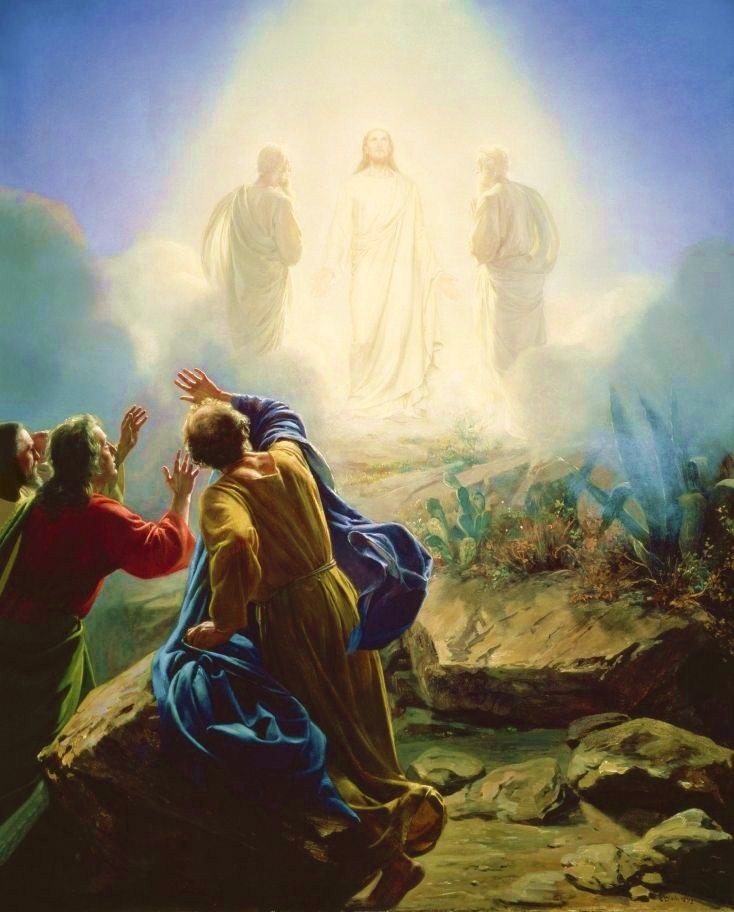
Together the three also witnessed the brilliance of Christ’s heavenly and divine Shekhinah Glory during the event known as the Transfiguration of Christ.
Simon Walked on Water
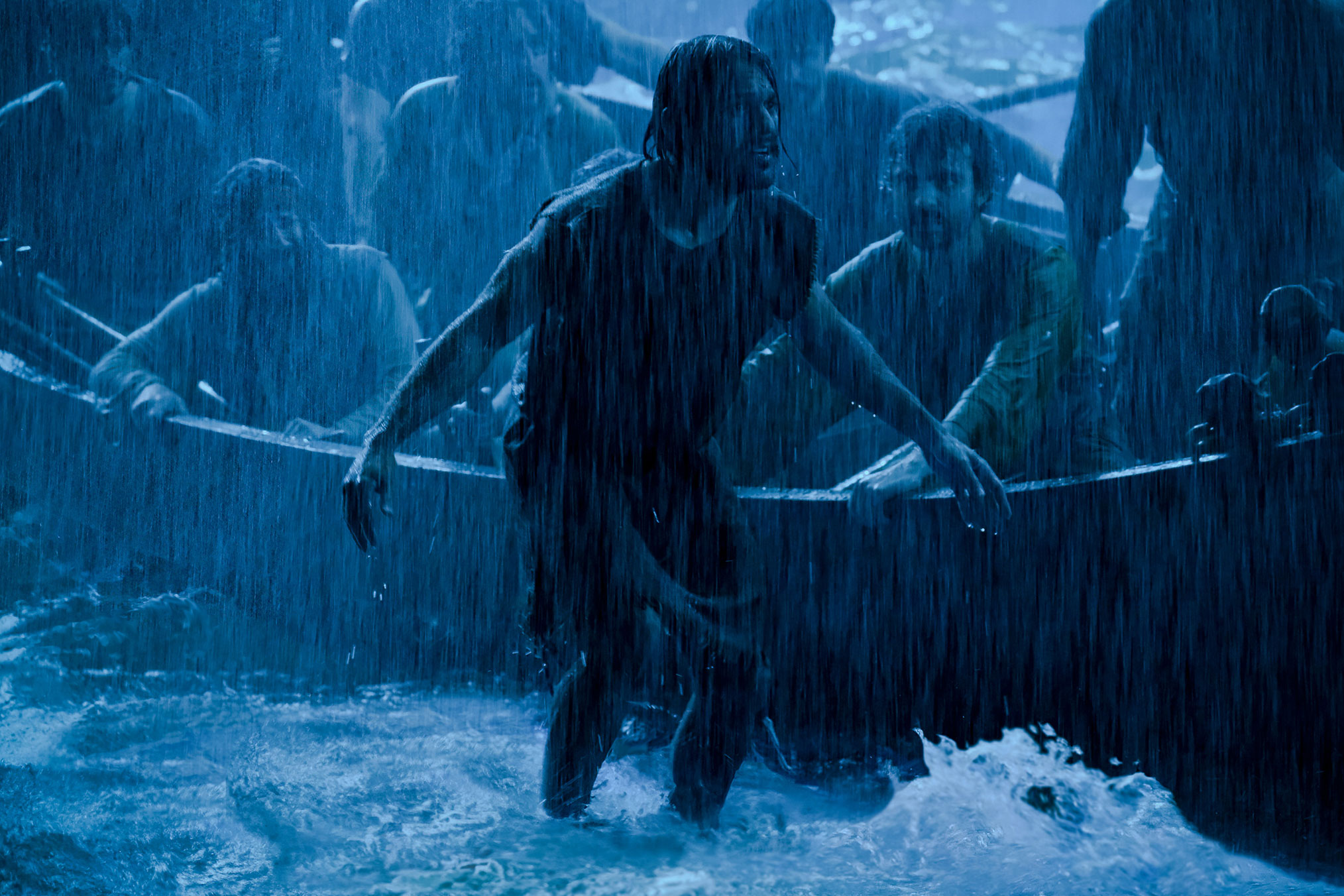
It was also Simon-Peter who impetuously jumped out of the boat during a storm on the Sea of Galilee, and walked on the water (if only briefly) with Jesus.
Christ Also Rebuked Simon-Peter Repeatedly
When Christ tried to explain that He would need to be sacrificed for the sins of the world, it was Simon-Peter who disputed Christ’s teaching. Christ told Peter:
“Get behind me, Satan! You are a hindrance to me; for you are not on the side of God, but of men.”
Peter did not yet understand God’s full plan to restore mankind to fellowship with God. Christ was forced to tell Peter that if he could not accept what Jesus must do, then Peter could not be one of Christ’s disciples!
The Disciples were Flummoxed and Dumbfounded by the Events of Holy Week
Despite His trying repeatedly to explain to His disciples what was about to happen, it seems fairly clear that none of Jesus’s disciples actually did understand what was happening when Christ was arrested in Jerusalem during that fate-filled week of Passover.
Simon was One of The Twelve with Christ on Maundy Thursday
Maundy Thursday’s name comes from the Latin root word mandatum, meaning command. This is also the root of the English word mandate. In the Christian context maundy refers to Jesus’ words during the Last Supper:
“A new commandment I give to you, that you love one another; as I have loved you John 13:34.”
This command to love one another is far more specific in the original Koine Greek than it is in English. In Greek, the specific word used for this divine type of love is agape. That word means selfless love, or altruism; that is to put the love of others above your own life. The mandate Christ gave his disciples, with Judas Iscariot still present with them, is to love one another with a selfless, even sacrificial type of love.
The Inauguration of God’s Divine Pattern of Common Union with His Chosen People
The Last Supper is the first holy communion of believers. It is what Christ ordained and commanded us to continue Matthew 26:26-29, Mark14:22-24, Luke 22:19-20,
“Do this as often as you shall drink it, in remembrance of me.”
This more-than-symbolic mandate, became the perpetual focus of the regular Christian practice of worshiping God. More than a symbol of the marvelous and mystical union between us, His people and our Triune God which occurs during Communion with Him at His holy altar.
The unity we experience through our receiving that consecrated bread and wine extends throughout the world, and includes unity with both the living saints on earth and even the saints worshiping God in heaven. That is the traditional understanding of the full extent of the mystical union of the Holy communion established on Maundy Thursday by Jesus. Christ’s imminent sacrifice restored mankind’s mystical fellowship with God. The human closeness to God, we lost in the garden, was restored by Jesus Christ’s passion for mankind and his willingness to endure the cross for us.
The regular practice of the mystery of the Holy Communion of Christians with God at His altar became the focus of all Christians worshiping God from the time of the apostles, until well after the Protestant Reformation in the 16th century. However, during the Reformation certain “innovative” new threads, within the protesting arm of the church eventually severely distorted and sadly minimized the importance of this ancient practice.
The Events in the Upper Room: The World Turned Upside Down – Divine Power Politics are a Radical Reversal of Worldly Power Politics
The common, “real world” understanding of power politics is that the most important people are the most privileged, and the common people are unimportant. Divine power politics turns that idea upside down. Christ’s example of the even more real, divine understanding of power politics is a complete reversal what His disciples thought they knew and expected.
Christ Washing His Disciples’ Feet John 13:1-17
Christ condescending to wash Simon-Peter’s feet felt so wrong as to what he understood to be “normal and acceptable” behavior on the part of His Lord that Simon abjectly refused to allow Christ to humiliate himself by washing Peter’s feet.
Christ demanded that Simon-Peter allow it.
Christ rebuked Simon-Peter that if he couldn’t adjust to Christ’s heavenly version of power politics as selfless loving service to others then Simon had no place with Christ!
Simon-Peter submitted.
This was not an odd bit of biblical theater on Christ’s part. He was absolutely serious about performing this example of selfless divine love on his apparent last night of life. The foot washing is a metaphor for everything Christ was tying to teach his disciples. Christ was unfolding it on the evening before His own ultimate example of divine agape love for the world. His loving will was to be witnessed by all on the cross, the following afternoon.
This Holy truth is all the more glaring when one realizes. It was not just being demonstrated to Christ’s chosen, pious and Holy few.
It was being demonstrated with Judas Iscariot watching and tying to understand the point of Christ’s message to His disciples as well. Furthermore, the Bible tells us Satan had already entered into Judas Luke 22:3, so Satan was also watching this heavenly example of divine love (and no doubt scoffing at it). This heavenly scene was being performed as a final example of Christ’s divine love for Judas, with the fallen angel, Satan looking on as well!
“All things, visible and invisible” are in play here.

In the Garden
Again, the disciple Simon was one of Christ’s special three. Jesus took them to pray with him in the Garden of Gethsemane, just prior to Christ’s arrest there Matthew 26:36-38. However these three lazily slept while Christ prayed that God’s will would be done.
And, of course, after his prayers, Christ was arrested by the Sanhedrin’s leaders and their private temple soldiers.
It was the impetuous Peter who drew his sword and chopped off the ear of the high priest’s servant Matthew 26:52-54; Mark 14:47; Luke 22:49-51; John 18:10, 11.
It was also Peter who panicked and thrice denied knowing Jesus that night.
Good Friday
Christ’s apostles and disciples were deeply confused and distraught by Christ’s rapid arrest, his midnight trial by the Sanhedrin’s tribunal, and His daylight show trial by Pontius Pilot which was rapidly followed by His execution on a Roman cross.

The confused apostles quickly and instinctively scattered and hid for fear that they too would be arrested. The Apostle John and the three Marys were the only ones who watched and were with Christ at the cross as He died.
The events of the trial and execution of Christ shattered the expectations of the apostles, who did not yet understand the divine power politics lesson of God’s selfless love which Christ had tried to teach them by washing their feet. That divine love gives everything of one’s self for the good of others.
Satan thought the victory was his.
Holy Saturday
More silence. More confusion. Christ had “trampled on death with death,” but the apostles and disciples didn’t yet understand it.
Easter Sunday
The three Marys went to the tomb early to prepare Christ’s dead body for His final burial. Yet the stone has been rolled away, and an angel told them that Jesus is no longer dead.
He is Risen!
Jesus appeared to Mary Magdalene at the tomb and called her name. She saw Him, alive and she responded with astonishment “Rabboni!?” meaning “Teacher John 20:12-16.”
The Marys then ran to tell the apostles.

Simon-Peter and John were already walking to the tomb when the Marys arrived to tell them the news. They took off running to see for themselves. John outran Simon and got there first. Peter caught up and was the first to go in and examine the tomb.
Christ IS risen, Christ is risen indeed!
The Apostle Paul tells us that the risen Jesus first appeared to Peter 1 Corinthians 15:5.
The divine reality of Christ’s selfless loving victory over sin and death dawned on his apostles and disciples slowly, but inexorably. They needed time to mull it over. Christ’s mother, the Virgin Mary, is clearly our best example of this type of holy contemplation.
Eventually Simon-Peter the Disciple Became the Apostle Peter
The term disciple means a follower of. The term apostle means one sent out or ambassador. The 12 apostles of Christ were actually his disciples when they sojourned with Jesus. After His execution and resurrection, the risen Jesus issued a final commandment to his disciples. The Great Commission Matt. 28:18-20:
“Go therefore and make disciples of all the nations, baptizing them in the name of the Father and of the Son and of the Holy Spirit, teaching them to observe all things that I have commanded you; and lo, I am with you always, even to the end of the age.”
This commission by Christ made his chosen disciples into His apostles.

After 40 More Days of Teaching His Apostles and Disciples, Jesus the Christ Went Home to His Father in Heaven
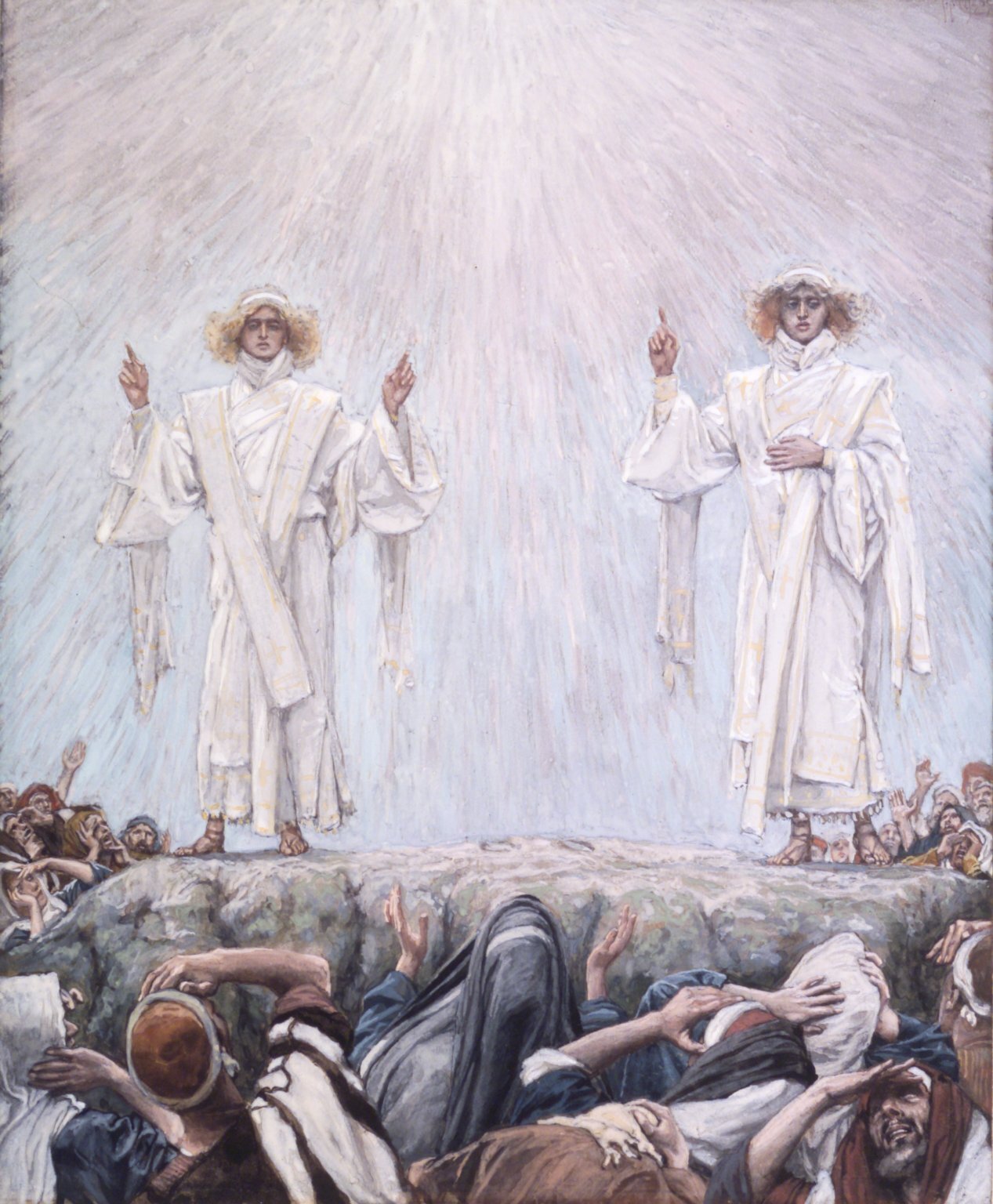
The Ascension of Jesus back to his rightful place in Heaven is the restoration of all things back to their natural order. In the first chapter of The Acts of the Apostles Luke tells us:
“Therefore, when they had come together, they asked Him, saying, “Lord, will You at this time restore the kingdom to Israel?” And He said to them, “It is not for you to know times or seasons which the Father has put in His own authority. But you shall receive power when the Holy Spirit has come upon you; and you shall be witnesses to Me in Jerusalem, and in all Judea and Samaria, and to the end of the earth.”
“Now when He had spoken these things, while they watched, He was taken up, and a cloud received Him out of their sight.”
The fullness of the divine cosmic order had been restored.
50 Days After Jesus Christ’s Resurrection, The Church was Born At Pentecost
Simon-Peter and John and the rest of the 12 apostles, and the many disciples of Christ were filled with and empowered by God’s Holy Spirit in Jerusalem at the Jewish Festival of Pentecost.
Simon-Peter immediately obeyed Christ’s command in His Great Commission by preaching to the crowds gathered there Acts chapter 2. The result of Simon’s preaching, and that of the rest of the 12 apostles on that day was that about 3,000, mostly Jewish, people accepted Jesus Christ as their lord and savior.
In the book of The Acts of the Apostles, Luke also reports that a few days later Simon healed a man who had been lame from birth. The lame man had routinely begged for alms at the Beautiful Gate of the Second Temple, and was well known to all the pious Jews who regularly attended the temple services. The local regulars had known this lame man their whole lives. That day 5,000 people accepted Jesus Christ Acts 3:11-4:4.
Luke also reports Simon being arrested (repeatedly) and brought before the Jewish Sanhedrin to answer charges of disobeying their order to not preach about Jesus Acts 4 1:-12, and again on another occasion in Acts 5:17-32.
It is worth noting that this Jewish tribunal was comprised of the same Sadducees and literalist Pharisees who had conspired together to get the Roman Governor, Pontius Pilot to order Christ to be crucified.
The First Biblical Example of the Counciliar form of Church Governance
As the Christian Church grew under the leadership of the Apostles, the practical needs of the church had to be addressed. Simon and John and the rest of the 12 met in council and ordained deacons to look after the practical needs of these new Christians.
The Sanhedrin famously arrested Archdeacon Stephen, and when his defense of himself was actually an obviously fact-filled and detailed indictment of the Sanhedrin. The thus outraged Sanhedrin then had Stephen stoned to death while the equally militant pharisee Saul of Tarus stood by, watched and held their cloaks Acts chapters 6 and 7.
Despite such vigorous opposition from the Jewish power elites, the nascent Christian church thrived in Jerusalem.
Peter’s Initial Missionary Journeys
Peter undertook missionary journeys to Lydia, Joppa, and Caesarea, and the Holy Spirit told Peter that Jesus of Nazareth was the Messiah of the Gentiles as well as of the Jews Acts 10:34 to 11:18.
The Great Apostolic Dispersal in AD 44
In Jerusalem the sudden persecution of the mostly Jewish Christian church in Jerusalem stimulated the missionary journeys of those apostles who had not already begun their travels from Jerusalem. The Apostles Andrew and John had both left the Jerusalem cloister six years earlier in AD 38.
In the spring AD 44, just prior to the Jewish Festival of Passover, King Herod Agrippa of Jerusalem had James the Brother of John (James the Greater), arrested, performed a show trial, and then executed him, apparently by a public beheading.
Herod also imprisoned Simon-Peter planning on repeating his murderous act of violence after the Jewish Passover Festival was finished.
however, Peter was release from Herod’s prison by the divine intervention of one of God’s heavenly angels Acts 12:1-11. Peter warned his fellow believers of Herod’s new-found enthusiasm for persecuting Christians, and Peter left Jerusalem Acts 12:12-19.
The ever-brave, courageous, and God-trusting James the Just, the half-brother of Jesus and the author of the Book of James, and of the archetypal, important and influential Liturgy of Saint James was then confirmed and seated as the first Bishop of Jerusalem, where he continued to serve the Jerusalem Christians for roughly two more decades.
The Nefarious King Herod Got His Divine Comeuppance
By the way, shortly thereafter Herod the blasphemer, was eaten to death by worms Acts 12:23! Secular historians record the death of Herod Agrippa I as occurring in AD 44, so James’ martyrdom and Peter’s flight must have also occurred in the spring of that year.
Satan Meant It for Evil, But God Used It For Good
As is always the case, Satan meant it for evil, but God used it for good.
Satan meant the execution of Jesus to be a victory for him and for his selfish human “beasts” (the nefarious government authorities Revelation 13:1-4), and “the harlot who rides on the beast” (the atheistic and/or apostate religious leaders Revelation 17) who all worked together against God. Instead Satan’s actions wound up serving a far more important divine purpose.
Likewise the beheading of the Apostle James also served a greater purpose for God.
After the martyrdom of James and the flight of Simon-Peter from Jerusalem, many of the Apostles and disciples of Christ are believed to have begun leaving Jerusalem as well. Many of them apparently embarked to other places in the Roman Empire and well beyond it on personal missionary journeys, spreading the Gospel far and wide. Again, Satan may have meant Herod’s actions for evil, but God used them for the good of His kingdom.
Peter Then Began His Distant Missionary Journeys
Peter was hardheaded and stiff necked and he apparently continued to think Christians need to be circumcised and to follow all the Jewish Laws of the Hebrew Scriptures in order to be obedient Christians.
Some time in the late 40s Peter traveled to the prosperous commercial city of Antioch where the followers of Christ were first called “Christians.” At Antioch Peter helped to organize the nascent Christian church.
Antioch was a seaport and it was one of the Mediterranean terminal points for the famous overland Silk Trade Route from China. It was a thriving center of trade and commerce. As a leader of that church Peter would have been a voice of support for the substantial funds which the church in Antioch raised to help the financially struggling church in Jerusalem and to finance each of the Apostle Paul‘s missionary journeys and the missionary journey of Barnabas and John-Mark to Cyprus.
Peter Sometimes Got It Wrong and Had to Be Corrected
In Acts 15:6-29 the Council of Jerusalem was called to correct Simon-Peter’s doctrinal error of wanting to Judaize gentile converts to Christianity. This council is a Biblical model of the divine conflict resolution process described in Scripture.
Convened in AD 49, the Jerusalem council was, in effect, the first ecumenical council of the Christian church (i.e. the Zeroeth Ecumenical Council). This event clearly demonstrates the biblical orthodoxy of the disseminated model of authority and control involving the Apostolic consensus which was used in the early church, and it clearly shows Simon-Peter’s participation in the process and his willingness to be corrected by the opinions of his fellow apostles.
The earliest biblical example of this conciliar model of church governance is that the 11 apostles acted together in council when they decided to fill the hole left in their number left by Judas Iscariot’s betrayal and subsequent suicide.
The next example of this counciliar form of decision making was the apostolic discussion that led to the ordination of church deacons to look after the physical needs of the Jerusalem Church, so the apostles would be free to teach the parishioners and to look after their spiritual needs Acts 6:1-7.
Peter’s Conciliarism Stands in Contrast to Rome’s Centralized Imperial Model of Church Authority
The example of the “Zeroeth Ecumenical Council” strongly conflicts with the Roman Catholic model of church authority which the Western Church erroneously borrowed from the Imperial Roman practice of a centralized model of authority. The Imperial model, which was later adopted by the Roman arm of the church eventually led to the Doctrine of Papal Infallibility which the Roman church now asserts.
After the Council of Jerusalem Peter returned to Antioch where he helped to build that church and where he served as the Bishop of Antioch for the next 7 years.
Simon-Peter Wrote Two Epistles
Simon-Peter wrote the Epistles of 1st and 2nd Peter which are found in the Bible. It is generally thought that he wrote these letters while he was in Antioch.
Some modern scholars conjecture that Simon-Peter needed the help of a scribe to write his epistles because Simon was just “an unschooled Galilean fisherman.” This modern condescension goes too far. As stated above, Simon-Peter was a commercial fisherman and entrepreneur. He would have been familiar with Koine Greek which was the language of commerce in Galilee and throughout the eastern Mediterranean world at that time. It was also the language in which he read the Jewish Scriptures of the Septuagint (LXX).
The First Epistle of Peter is addressed to believers in Pontus, Galatia, Cappadocia, Asia and Bithynia—provinces in Asia Minor between the Taurus Mountains and the Black Sea. It is likely that Peter spent some time ministering in this area, and knew the people he addresses his epistle to.
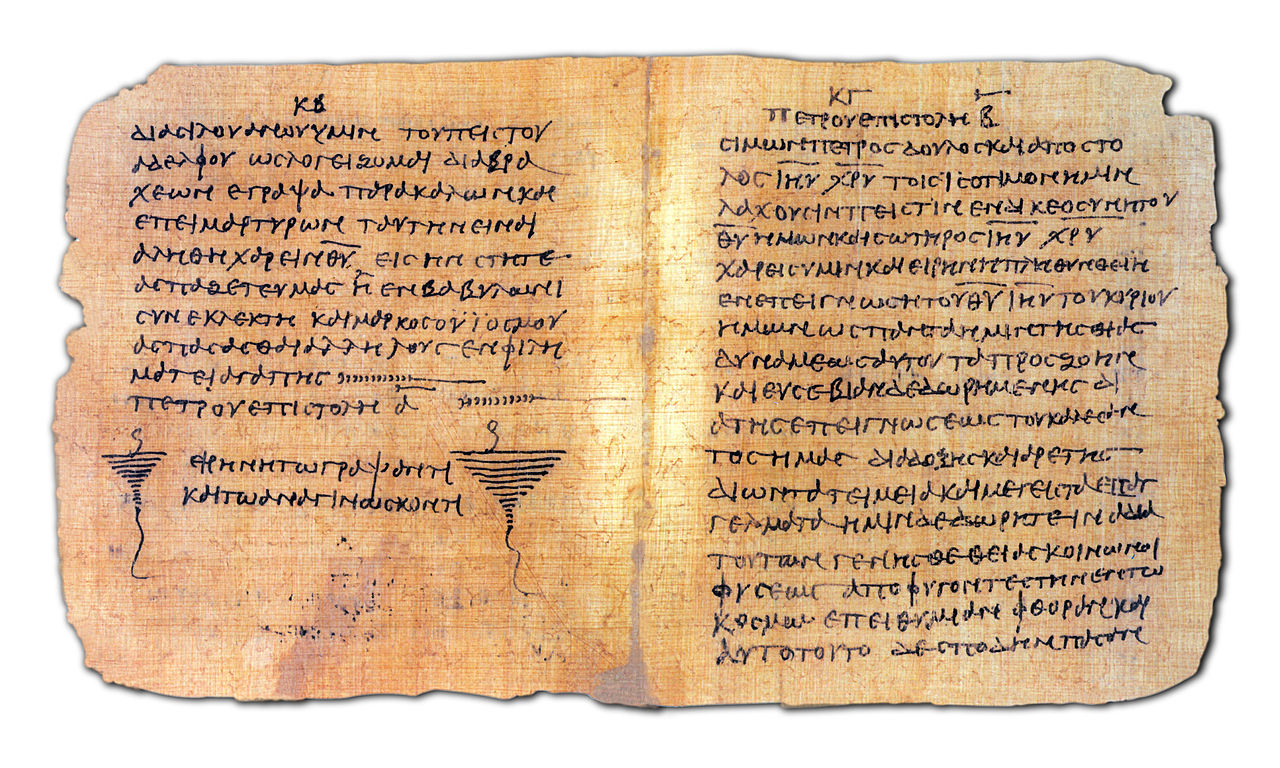
We also know that the Apostle John became the first Bishop of Ephesus and he addressed the opening of his Revelation to seven churches of Asia Minor which is the region west of where Peter had apparently traveled.
Peter & Paul were Collaborators in Missionary Work
Peter and the Apostle Paul were collaborators in missionary work. They worked together, first in Antioch, and later at the council of Jerusalem, and then finally in Rome, where they were both apparently martyred.
Simon-Peter is Credited with Founding 3 Petrine Sees
Sometime around AD 57 Peter journeyed from Antioch to Rome where he worked establishing the Church in Rome, and where he may have acted as the first Bishop of Rome. The three “Petrine sees” (bishoprics established by Peter) are Antioch, Alexandria (to whom Peter sent Mark the Evangelist) and Rome.
Simon-Peter is Believed to Have Been Martyred in Rome.
We are told by Clement, the 3rd Bishop of Rome from around AD 88 to AD 97, that Saint Peter was martyred (along with Saint Paul) in the first official Roman government persecution of Christians under the Emperor Nero. Nero’s persecutions occurred sometime between AD 64 and AD 68. According to Origen of Alexandria, (who was born around AD 185, and who died around AD 253), Saint Peter requested that he be hung upside-down on his cross because he wasn’t worthy enough to died like Christ. Later illustrations and icons of Saint Peter often show him hanging inverted on an upside-down Roman cross.
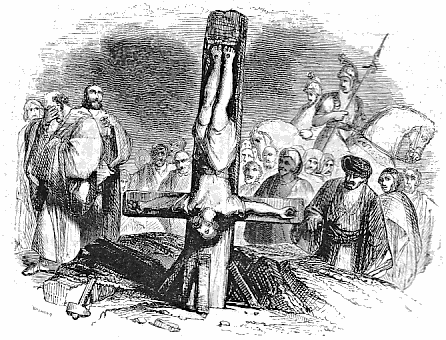
The ancient Christian churches all venerate Simon-Peter as a major saint and associated him with founding the churches of Antioch, Alexandria, and later the church in Rome.
The Collect for St Peter’s Day
Saint Peter is remembered on his feast day. In the western church that observance occurs on June 29th. The collect (specific prayer) for St Peter’s Day from 1928 edition of the Anglican Book of Common Prayer is:
O ALMIGHTY God, who by thy Son Jesus Christ didst give to thy Apostle Saint Peter many excellent gifts, and commandedst him earnestly to feed thy flock; Make, we beseech thee, all Bishops and Pastors diligently to preach thy holy Word, and the people obediently to follow the same, that they may receive the crown of everlasting glory; through the same thy Son Jesus Christ our Lord. Amen.
Conclusions
A study of the life and character of Simon-Peter reveals many noble traits. His enthusiasm and boldness are worthy of emulation. He was extremely devoted and committed to Christ.
However, he also illustrates the danger of misdirected and superficial enthusiasm. Some of the sharpest rebukes in the NT were directed at him. His positive traits are inspiring and challenging to us all; his negative traits are cautionary tales for us.
Enthusiasm and devotion must be tempered by a balanced and informed perspective. Peter could be overconfident in his enthusiasm, at times bordering on arrogance (as in Peter’s initial refusal to allow Jesus to wash his feet in the Upper Room); nonetheless he stands as a stellar example of bold allegiance to God and of glowing achievements in the proclamation of the Gospel.