America’s Democratic Republican Form of Government
At the close of the Constitutional Convention in 1789 Benjamin Franklin was asked by Elizabeth Powell, what kind of a government the Founding Fathers had devised. He famously answered to her:
“A Republic, if you can keep it.”
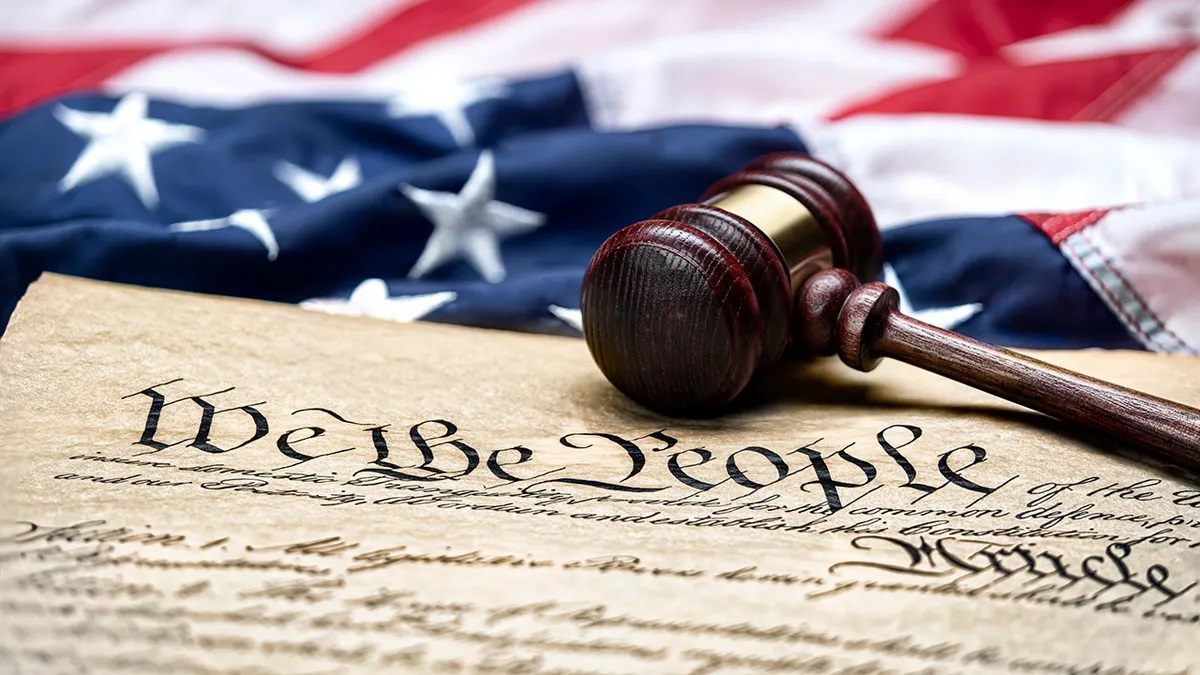
The US Constitution and its associated Bill of Rights established the representative form of our Republic. Since that era the representative republican form of American government has often been described as “democratic.” In two different senses it both is and it isn’t a democracy. Literally, of course, republics are technically not true democracies.
The Classical Athenian Form of Democracy
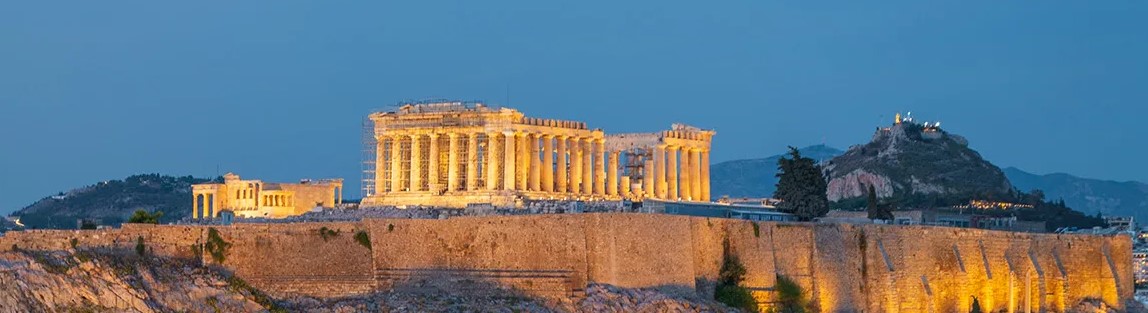
In the ancient democracy of the Greek polis of Athens, during the classical era, all of the citizens voted on every issue of importance to them. That was the original concept of democracy.
However, even in that archetypical democratic society there was a limited franchise. Only the male citizens who had been born in Athens and owned real property in the polis had a vote in Athenian elections. Athenian women, children, slaves and the “strangers among them” did not. It is generally estimated that less than 10% of the male inhabitants of Athens had the right to vote in Athenian elections. The Athenians did not trust their democracy to the tyranny of the majority.
Colonial American Democracy
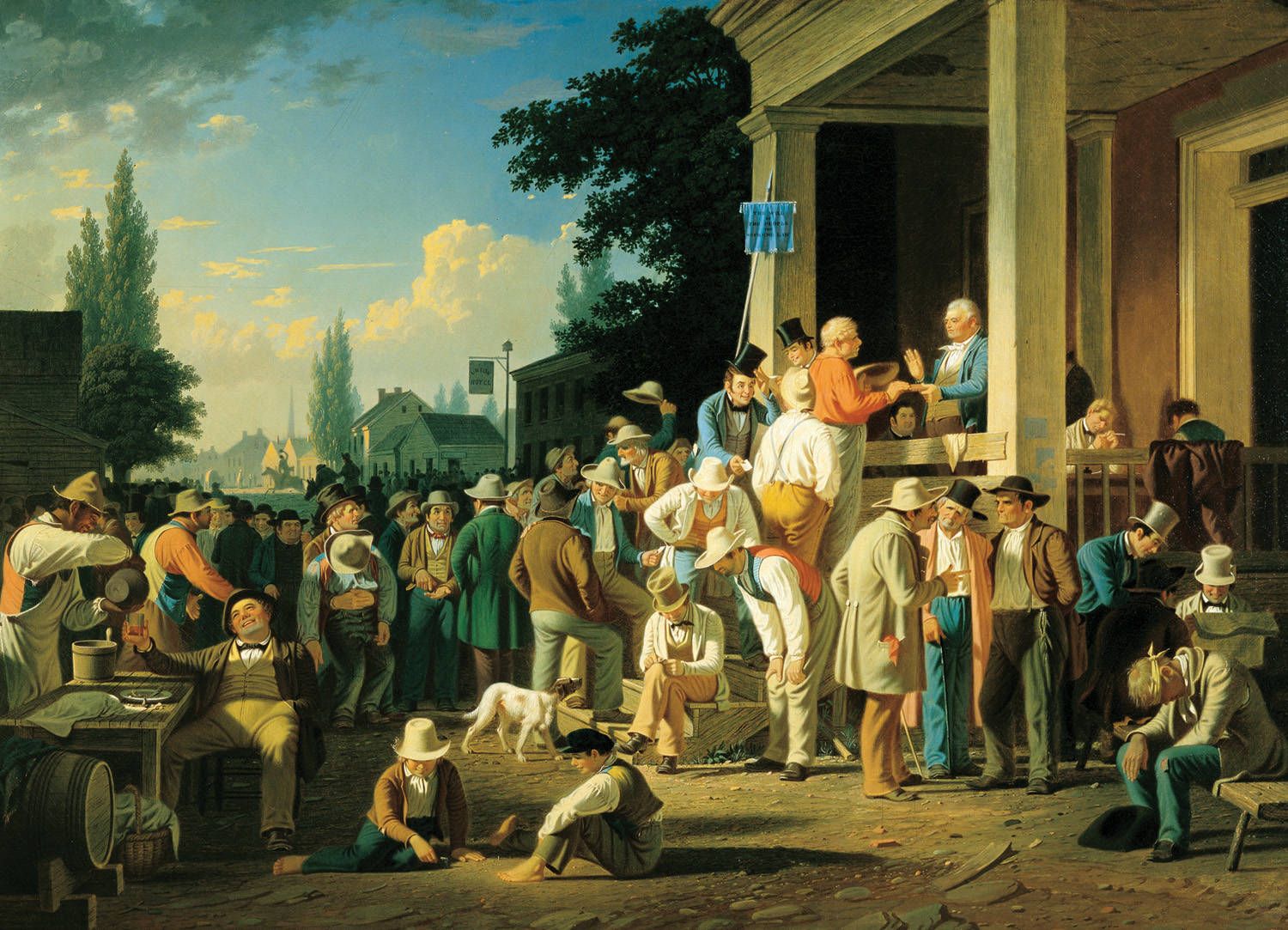
Like the Athenians, the citizens of the colonies in America only extended the franchise of the right to vote to the land-owning male citizens of each colony. The idea behind that limited system was that voting on the governance of their colony was to important a matter to be left to just anyone. Only those who had a material stake in the outcomes of the issues being voted upon in a colony could be trusted to vote as wise, responsible, intelligent, decision-makers. The precaution of having this limited franchise clearly illustrates that in their colonial democracy the colonists also wisely feared the tyranny of the majority.
What Would a Modern Material Stakeholder Democracy Look Like?
The modern version of the cautious attitude about democracy described above would be to only allow the franchise to those citizens who are in net positive tax flow to the government, and hence are material supporters of the government. Again only those citizens who have a material stake in the outcomes of the national issues being decided at the polls would be allowed to vote. Such a program, while politically impossible to institute, would nonetheless restore a material stakeholder form of democracy to America.
Jeffersonian “Everyman Democracy”
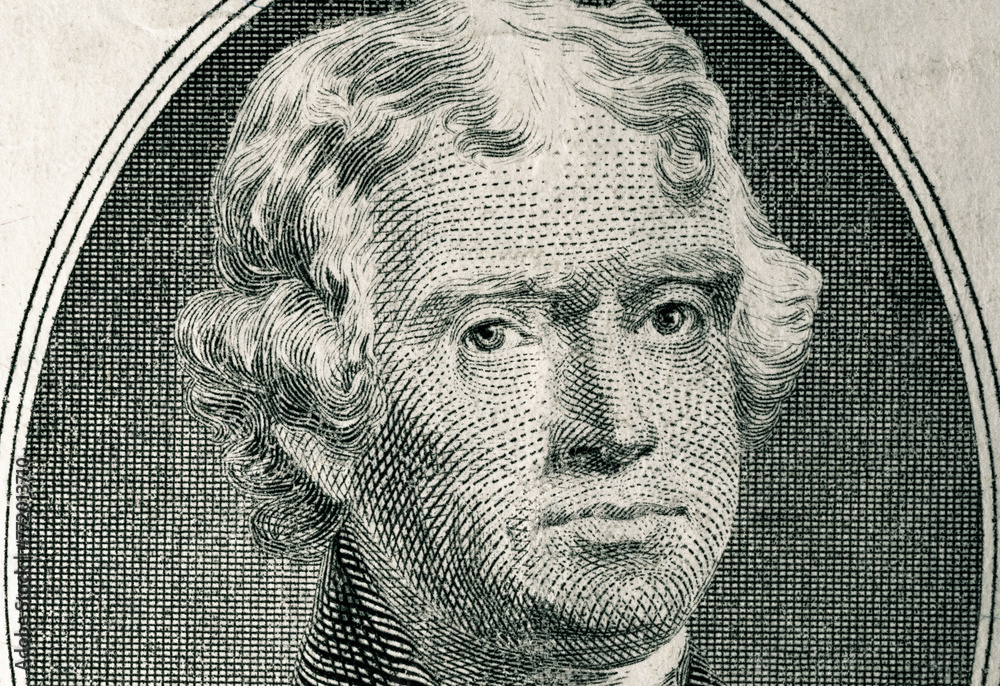
The early American system of material stakeholder democracy was abolished in America largely by the efforts of one man, Thomas Jefferson. After he finished his second term as President in 1809, he began a personal campaign in favor of what he called “everyman democracy.” He went from state to state encouraging the members of each state legislature to repeal their material stakeholder voting rights laws, and over the ensuing decade that system was gradually abolished, and Jefferson’s new and expanded everyman franchise was eventually nationalized. Of course the Jeffersonian everyman democracy still excluded women, children and slaves.
American Democracy Described Simply
American democracy is classically remembered simply by what Abraham Lincoln famously described at the close of his Gettysburg Address:
“Government of the people, by the people and for the people.”
Lincoln’s concept of democracy was the view of a blatant Populist, which was a vastly different view from that which the later Progressives like Woodrow Wilson would hold.

Wilsonian “Democracy” was None of Those Things
As an avid Progressive, Woodrow Wilson nominally advocated “direct democracy.” He supported the passage of the Seventeen Amendment to the Constitution which abolished the practice of Senators being chosen by state legislatures and substituted the direct election of Senators by a direct election of the people of each state. Later in his second term as President, Wilson began to speak of “American democracy,” however he actually meant nothing of the kind.
Wilson duplicitously used the term democracy frequently. However he actually used democracy as a socially acceptable veneer for his actual concept of good government in American. The Progressive Wilsonian concept was ardently aristocratic. Wilson’s true belief was in that America should be ruled by of an elite oligarchy of highly educated and “disinterested” professional bureaucrats. Wilson believed he was the providentially determined natural ruler of the unwashed masses of the ordinary people. Wilson actually shared the Roman Imperial view of the masses which they referred to as the mob or the rabble.
During the speeches of his political election campaigns Wilson would speak glowingly of democracy, but he never meant what the people who heard him use that term thought he meant.
Wilson did care what the movers and shakers of American society wanted. He needed the support of the moneyed interests on the Wall Streets of America, and he needed the support of the powerful journalists and publishers of his day because that was how people got elected in 1912 (as it still is today).
Wilson Saw Himself as a Messianic Progressive Reformer
Wilson was a progressive intellectual elitist to his core. What is more remarkable he was a life-long Calvinistic Presbyterian, who actually believed that he was God’s chosen man to lead America into a better, more just, tomorrow. From early in his adult life, he held this messianic self-view and it permeated to the core of his soul. Wilson’s sense of his divinely given, personal superiority was without limits. As an example, consider the following quotation.
William Frank McCombs, was the chairman of the Democratic National Committee and the man who was largely responsible for Wilson’s victory in his first presidential campaign in 1912. After the successful election, Mr. McCombs had tried for several days to get an audience with the President elect, and he expected to hear of Wilson appreciation of him. When he finally got to speak with him, Wilson told Mr. McCombs:
“Whether you did little or much, remember that God ordained that I should be the next President of the United States. Neither you nor any mortal or mortals could have prevented that!“
Source: William Frank McCombs, Making Woodrow Wilson President, (Fairview Publishing Company, 1921), pages 207–208.
Speaking generally, people who believe they have been “chosen” by God for a particular role in life and act accordingly are often more than a little odd. If you actually believe your mission is driven by divine providence, then the voices of ordinary people are a petty matter to you.
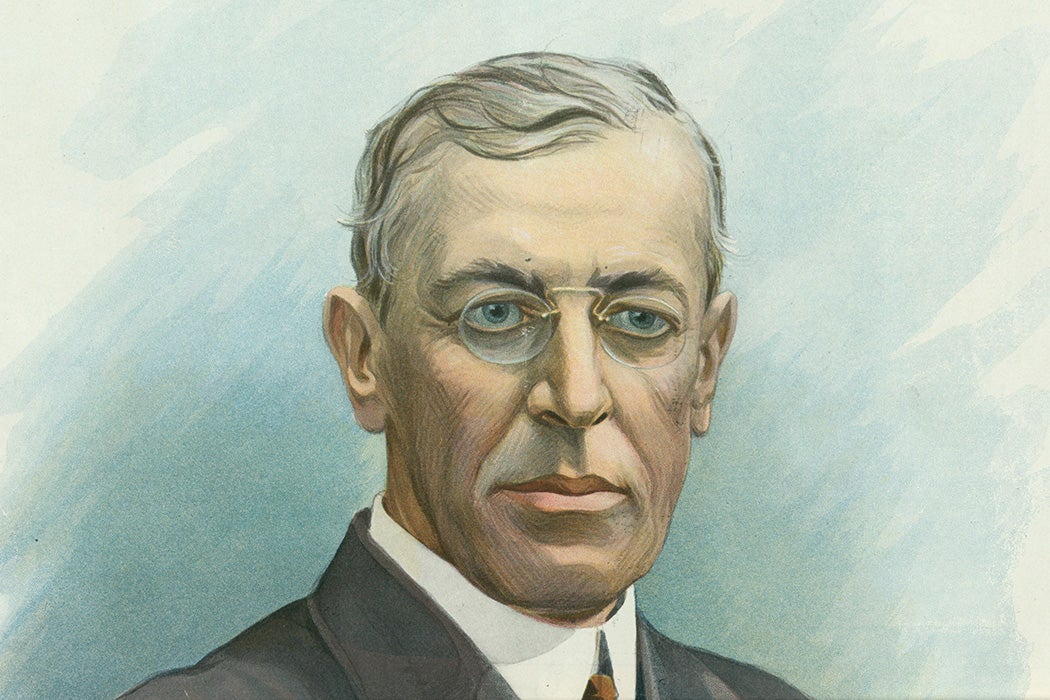
Wilson’s Intentional Distortion of the Meaning of Democracy
In the book Woodrow wrote and got published in 1885, while he was still a Graduate student at Johns Hopkins University, Congressional Government, the young Woodrow described the voice of members of Congress as being the literal “voice of the people.” Not the figurative embodiment. The actual voice.
“An effective representative body, gifted with the power to rule, ought, it would seem, not only to speak the will of the nation, which Congress does, but also to leader lead it to its conclusions, to utter the voice of its opinions, and to serve as its eyes in superintending all matters of government, . . .”
In 1885 the United States was comprised of 38 states. It had a population of approximately 50,000,000 people. There were 325 members in House of Representatives.
In Wilson’s conceptual opinion, he had converted those 50 million voices, all of whom had their diverse and arcane points of view, into being the same thing as 325 powerful elite politicians whose personal interests were obviously far removed from those of ordinary people of America. Nonetheless, that was Wilson’s stated early concept of “democracy.”
In 1908, when Wilson was the President of Princeton University, he published another book, his Constitutional Government. That book is both a summary of his views on the American System of Government and an explanation of who he was as a political candidate. He wrote the book to influence the important movers and shakers who would matter to his election campaign to become the Governor of the state of New Jersey: the stepping stone office he sought on his way to becoming the President of the United States. He knew that the ordinary voting people of America were unlikely to read it.
By this stage of his life, his now academically more mature concept of American democracy had morphed into another even more distorted version. In his Constitutional Democracy, Wilson states that the President of the United States is the essence and the actual embodiment of American democracy. Wilson did not mean this figuratively.
In 1908, America was a nation of 89 million people, and 46 states yet in Wilson’s mind those people only had a single voice! Wilson’s deludedly mature yet still messianic concept of democracy was soon to simply be his own voice. Wilson was profoundly narcissistic but he was not stupid.
He stated that it was the president’s job to understand the interests of the ordinary people,
“better than they understood their interests themselves.”
Then the president needed to synthesize those interests of the people into the “democratic” policies they needed. That president was then tasked with selling what were actually his personal policies to those ordinary people in a way they could understand them, and would therefore support them. Nobody could describe that arrogant Wilsonian concept of democracy as anything but a national form of autocracy.
Wilson Was NOT Forthright About His Distorted Concept of Democracy
When Wilson spoke, he used the word “democracy” without any qualifiers. His listeners heard and understood him to mean the same general definition of democracy they used.
What Wilson actually meant when he said “democracy” was his own personal Symbolic Equivalent of Democracy, that is to say his academically Progressive concept of the rule of the elitist governors of the people, such as himself, which Wilson initially described as “real democracy.”
He repeatedly stated his distorted concept of democracy in his published books, but he duplicitously knew those books weren’t read by the ordinary people he gave speeches to. So, in his political campaign speeches, he only used the word “democracy.” That sounded much more patriotic, progressive and populist.
Wilson’s Role in the First World War Changed American Diplomacy Forever
Wilson is the undisputed Godfather of the Idealistic American version of the international foreign policy paradigm. That is, that American is obliged to impose the American form of Wilsonian Democracy everywhere on the globe.
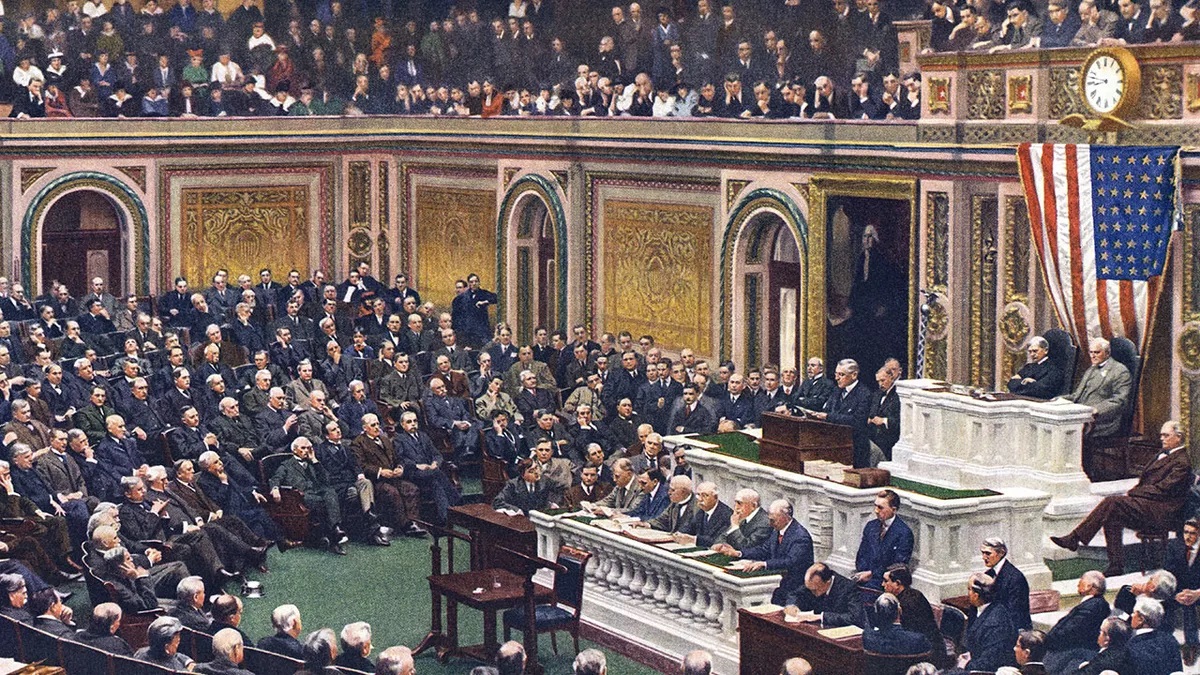
Wilson Said America Needed to Make the World Safe For Democracy
The idealistic academic foreign policy wonks, have invariably produced the American Secretaries of State for over a century. They have, ever since, each in their own way, asserted Wilsonian Democracy claims as the only nationally patriotic goal of American Foreign Policy. It is a very condescending point of view. Foreign diplomats have derided it from Versailles to Moscow, to Beijing.
These American Secretaries of State and foreign policy academics have mostly ignored the alternative concept of the balance of power and its corollary of critical national interest aspects of international relations which other, more forthright, countries and diplomats routinely use to decide their foreign policy issues.
For example, once you got past the fallacy of Weapons of Mass Destruction in Iraq, the national goal of spreading Wilsonian Democracy was George W. Bush’s fallback goal used to explain his unwise, regionally and globally disruptive invasion.
Conclusions
Words have meanings. In George Orwell’s 1949 dystopian novel Nineteen Eighty-Four, he referred to the intentional distortion of words to achieve political ends as Newspeak. In many ways Woodrow Wilson was the Progressive Movement’s archetypical Progressive. Wilson certainly thought of himself in that messianic sense. The proto-Newspeak of his distorted use of the term democracy is a classic example of it.
The great irony of it all is that the distorted way Wilson used the term democracy became the universal norm for the otherwise very intelligent academic foreign policy wonks in American Universities, and it remains so to this day.