

Understanding the Mind of the Author
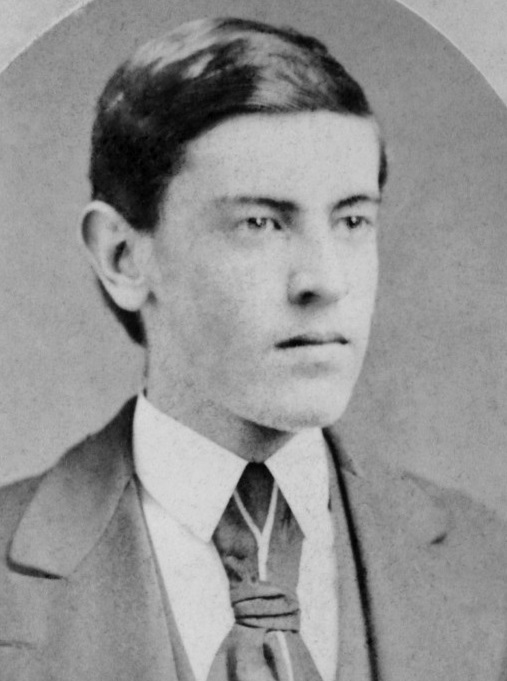
In the beginning, he was known as Tommy. He was born in Staunton, Virginia, the third child of a strongly Calvinistic Presbyterian minister.
When he was too young to remember it, the family moved to Augusta, Georgia. His Father, Joseph was the Senior Pastor of the prominent First Presbyterian Church of Augusta. The parish provided Tommy’s family with several black servants as part of their support for their rector. There is no evidence that the Wilson family ever owned any slaves of their own.
Tommy was 5 years old when the American Civil War broke out, and he was 9 when the Treaty of Surrender was signed at Appomattox Station. His father strongly identified with the South and was a staunch supporter of the Confederacy throughout the war.
Five years after the war, when Tommy was 14, he decided he preferred to be called by his middle name, Woodrow. That was also the year his family moved to Columbia, South Carolina where his father became a theology professor at the Columbia Theological Seminary.
When he was 17, Woodrow became a communicant member of the Calvinistic Columbia First Presbyterian Church, and he remained, at least nominally, a member of that church, for the rest of his life.
Throughout his life Woodrow had the deep impression that God had chosen Him and had ordained him as a divine messiah who would fix what Woodrow and his Progressive colleagues thought was wrong with American. He also maintained an abiding sense that God had divinely ordained the agenda of the Progressive Socialist’s, Social Gospel to cause millenarian changes to happen which would improve the nation, and later on, the world.
Note: The Social Gospel of Richard Ely, and other such Progressive Socialists bares scant resemblance to the core messianic message of Jesus Christ and the Holy Scriptures.
Many quotations from Woodrow Wilson himself validate the audacious-sounding and almost unbelievable fact that Woodrow personally believed he was being led by God on a divine mission of national reform and improvement throughout his entire life, however that is somewhat off the point here, so I just move on, for now. Those quotations will be presented soon on this site in another post.
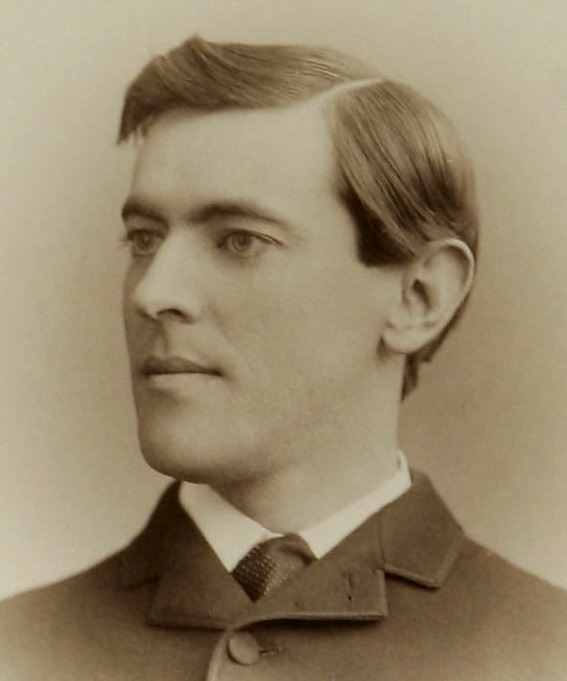
The rumors that young Woodrow sympathized with or actually joined the Ku Klux Klan have never been substantiated. They are in all likelihood unfounded.
Despite his active and supportive role in the racial segregation of all of the employees of the US Government within a month of his inauguration as President, in 1913, and despite his premiering the feature length and ardently racist silent film Birth of a Nation at the White House that same month. Though he was unquestionably raised as a southerner and had adopted ardently racist southern ideas on racial issues, he actually considered himself to be more of an American Nationalist than a Southerner.
In 1873 Woodrow left home to study at Davidson College in Davidson, North Carolina. However, during his first year he transferred to the College of New Jersey, later known as Princeton University, where he studied political philosophy and history. Woodrow’s busy social schedule in college allowed him to crowd his four years of college studies into just six short years. He graduated and was awarded his Bachelor’s degree in 1879.
For post-graduate studies he initially attended the University of Virginia Law School, which he left (reportedly due to poor health?). He dropped out and went home to live with his parents who were by then living in Wilmington, North Carolina. He briefly opened a law practice there however he soon found the practice of law didn’t suit his personality well, at all.
Eventually Woodrow was Drawn to Studying the Prussian Historical School Philosophy of Hegel and Progressive Socialism at Johns Hopkins University
After four year of living at home Woodrow chose to continue his formal post-graduate education. In 1883, he enrolled in a very magnetically Progressive and socialist school, the newly formed Johns Hopkins University in Baltimore, Maryland.
Johns Hopkins was founded as the first American university to feature the Prussian, Hegelian and Bismarckian concepts, of The German Historical School Philosophy which focused heavily the professional administration of government. That Prussian system of government was deeply admired by the European educated, Progressive socialist professors at Johns Hopkins. Those views were typified by the core ideal of the wise rule of nations by an educated elite oligarchy of disinterested professional bureaucrats and administrators.
At its core these ideas were in strident conflict with those of the Founding Fathers who authored the Declaration of Independence and the U. S. Constitution, and they were ardently opposed to government by the consent of the ordinary people who were to be governed; that is to say the German School was openly derisive of democratic government.
Professor Richard Theodor Ely, was just back from his indoctrination in the German Historical School Philosophy being taught at the University of Heidelberg where he studied at the Historical School of Economics, under Karl Knies. Ely’s progressive Episcopal background also made him an aggressive advocate for his very socialist ideals which he had incorporated into his concept of a distorted Christian works program he referred to as the Social Gospel. Ely’s Social Gospel quickly and perfectly dovetailed with Woodrow’s messianic self image as a man fated by God, Himself to be a national reformer.
While studying at Johns Hopkins University Woodrow became familiar with the writings of another major influence on his life and his thinking about government. That person was the banker, author and publisher of the very influential British magazine, The Economist, Walter Bagehot. Mr. Bagehot was a leader advocate of the English Historical School Philosophy. He wrote two books which had a significant influence on Woodrow’s thinking.
The first was Bagehot’s Physics and Politics, (1872) in which he discusses his Progressivist views of the scientific principles of progress in a society. Bagehot saw progress through the lens of the historical determinism of human progress. He integrated aspects of social disciplines, such as anthropology, and the true sciences including Darwin’s evolutionary theory. Bagehot’s version of Social Darwinism traced the development of political society from an assumed ‘pre-political’ tribal age through to the development of more advanced political systems of the modern nation-states. Woodrow would later echo many of Bagehot’s ideas in detail.
Bagehot’s second book which was equally influential on Woodrow’s thinking about government was his 1867 work The English Constitution in which Bagehot described the historical determinism which produced the English parliamentary system of his day. Bagehot saw the fact that England did not actually have a written constitution as an advantage to England. The lack of an actual written constitution allowed the English system of parliamentary government to evolve and advance with the changes it needed to respond to in the modern industrial era it had entered.
Woodrow frequently quotes Bagehot as his authority on the English system in the book we will soon be reviewing here.
Still a young utopian idealist Woodrow utterly drank every drop of the Progressive Socialist the Kool Aid. At Johns Hopkins, Woodrow had found the final nuts and bolts of his true personal belief system. The numerous problems of an increasingly unjust industrialized world could be addressed with the changes proposed by the well meaning and idealistic thinking of these Progressive Socialists, and Woodrow studied their canon and soon became a card carrying member of their fraternity.
The bureaucratic professionalism of the German Historical School’s Hegelian Philosophy could be used to address the rampant corruption embedded in the American governmental system associated with the process of American industrialization. Even better, the principle of governmental coercion in the collection of taxes could provide the money needed for Woodrow’s and his fellow Progressive socialist’s agenda of redistributive justice. To use a modern expression, Woodrow was “all in.” He saw the details of his Wilsonian system of Progressive Socialism emerging before his eyes, and he liked what he saw.
Woodrow’s Personal Dilemma was that He was Averse to Having to Do Any Real Work
Woodrow had been raised with a silver spoon in his mouth, and hence he decided in favor of the safe and comfortable occupation of becoming a collage professor. In 1883 he wrote:
“a professorship was the only feasible place for me, the only place that would afford leisure for reading and for original work, the only strictly literary berth with an income attached.”
Woodrow Never Actual Wrote or Defended a Doctoral Thesis at Johns Hopkins
At Johns Hopkins University, Woodrow completed his doctoral classes. However he never wrote, submitted or defended a doctoral thesis. As a result the administration at Johns Hopkins declined to grant Woodrow a PhD.
Woodrow then submitted his already published book, Congressional Government: a Study in American Politics, (the subject of this book review) to the faculty, and he asked for their forbearance, requesting that they accept his book in lieu of a thesis. After a delay of over a year, the Johns Hopkins administration ultimately relinquished its academic standards, and granted Woodrow Wilson’s request for a variance, and awarded him a PhD, in 1886.
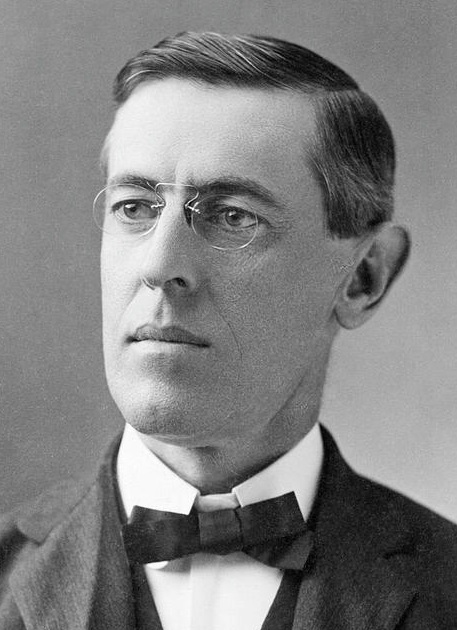
That long introduction is my way of pointing out that Woodrow Wilson was a complicated person. Both his Southern heritage and his Calvinistic Presbyterian Millenarianism are only two facets of the many faceted person Woodrow Wilson actually was.
On To the Book Review
Contrary to the foregoing statements, this article is a book review, not a biography.
The book I am reviewing here is Woodrow Wilson’s Congressional Government. It was first published in 1885, when Wilson was 29 years old. Long before he began working as a college professor, or subsequently became the President of Princeton University in 1902, or the Governor of New Jersey (1911), or the 28th President of the United States, which happened in 1913.
On the down side the book is long, detailed and tedious. On the up side the detail is generally relevant and hence not only tolerable, but actually quite interesting in many places.
More importantly, the book reveals much about what young Mr. Wilson’s thought was right or wrong with the US Constitution and with Wilson’s impression of the then current US system of constitutional government as it existed in1885. The Constitution itself had, of course, been agreed upon, written down, and confirmed by all of the original thirteen states almost a hundred years earlier.
Congressional Government’s Main Literary Themes
Wilson enumerates three abiding themes in this book.
Wilson Posited that Congress Should Rightly Rule America
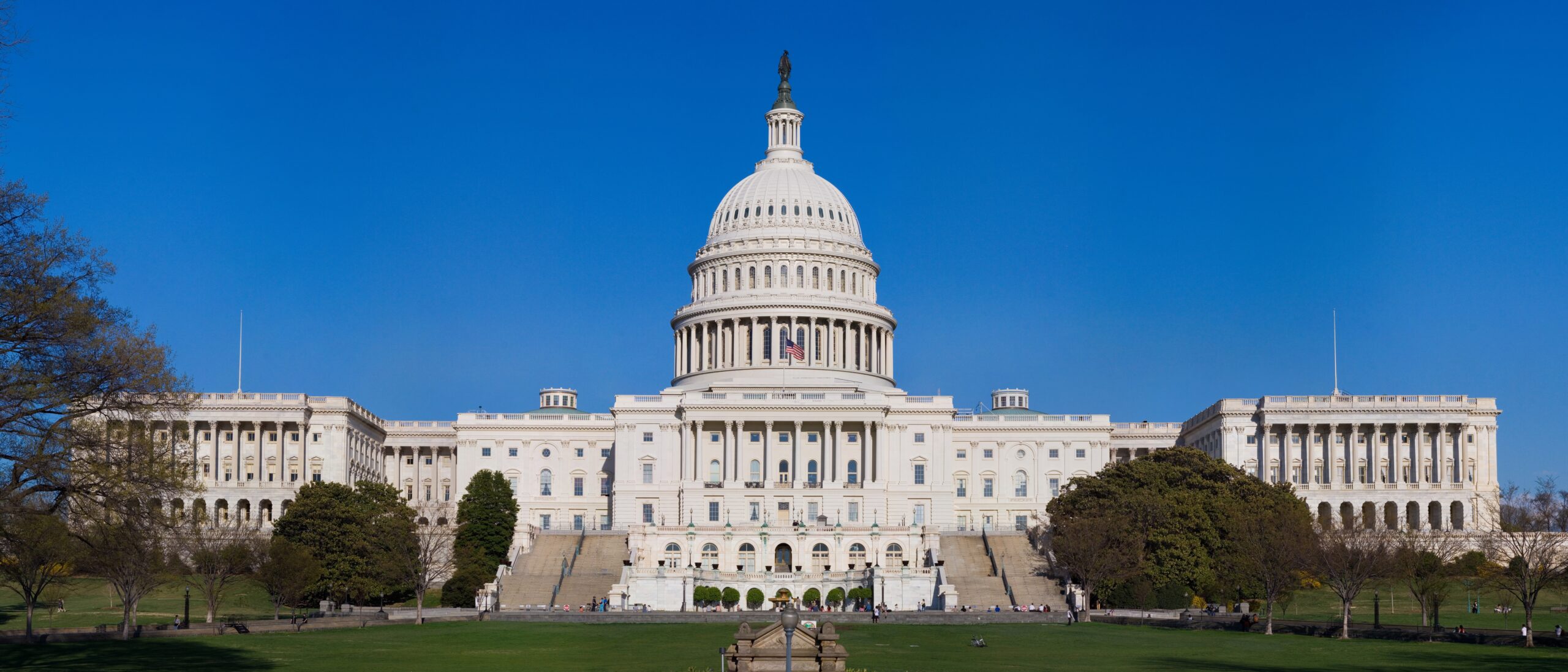
The primary theme in this book is that Wilson believed that the US Congress of 1885 was the by far the most powerful branch of the government in America. This theme of Wilson’s is in part a reflection of his deep admiration of the British Parliamentary system as it was described by Walter Bagehot. He believed Congress was the ruling power of American government, and by all rights should be so.
“Congressional government is committee government, . . . administration by executive agents who are the accredited leaders and accountable servants of a legislature which is virtually supreme in all things.” – Woodrow Wilson in the Preface to his Congressional Government.
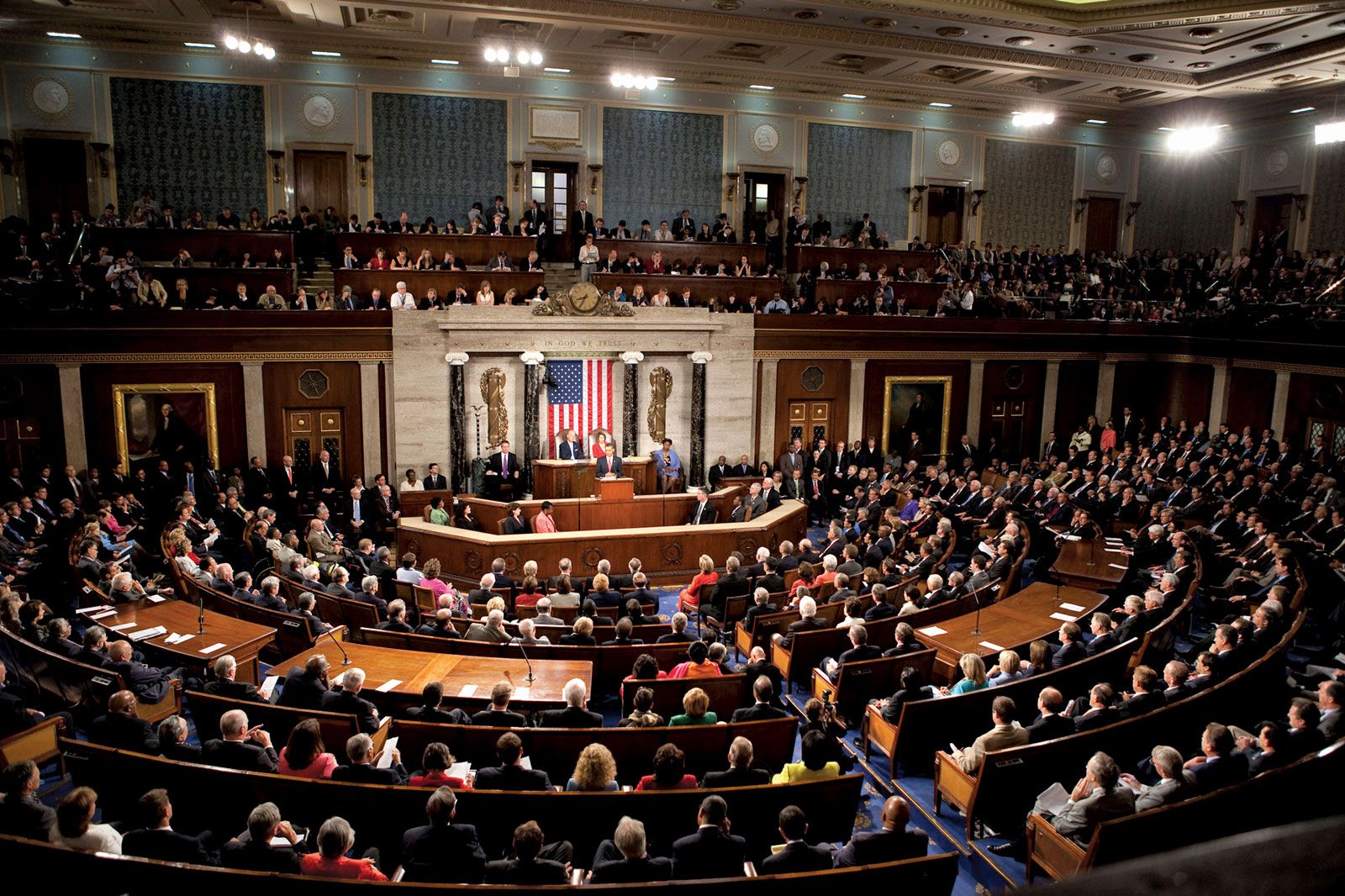
However Wilson also recognized that Congress was, in his view, badly hamstrung by the limits placed on it by the Founding Fathers, and what he understood to be a sadly out of date and no longer valid or useful Constitution for the newly industrializing nation.
Wilson Asserted The Representative Body of Congress as the Voice of Democracy in America
The second theme which Wilson repeatedly presents is that as an elected representative body, Congress was actually American democracy itself. Wilson particularly states that this is true of the directly elected House of Representatives. Of course a body of elected rulers could not possibly be the same as the vast numbers of the people they are ruling over.
Wilson’s description that the House of Representatives as the essence of American democracy, is, in fact, an excellent example of the routine distortions which he used to gaslight his readers. Wilson had adopted Hegel’s assertion that The State was the earthly manifestation of God’s perfect divine rule of mankind. Hegel actually said little about democracy, however he disdained the concept.
Wilson merged Hegel’s mystical and metaphysical identity of The State with Bagehot’s assertion that the British Parliament was English democracy in action to derive Wilson’s concept that an elected governmental body (the House of Representatives) was the same as the voice of the ordinary people in America.
In 1885 the United States was comprised of 38 states. It had a population of approximately 50,000,000 people. There were 325 members in House of Representatives.
In Wilson’s conceptual opinion, Wilson had converted 50 million voices, all of whom had their diverse and arcane points of view, into an equivalence point of 325 powerful elite politicians whose personal interests were obviously far removed from those of ordinary people. Nonetheless, that was Wilson’s early concept of “democracy.”
Wilson’s ardently Progressive point of view actually ignores and abjures the Founding Father’s and Abraham Lincoln’s sense of:
“government of the people, by the people and for the people.”
Wilson clearly asserts that Americans should be ruled by the isolated elite oligarchy comprised of the Congressional representatives, and oddly, that such rule IS democracy. This is the thin rhetorical veneer of Wilson’s concept of democracy which Wilson repeatedly places over his clearly elitist system of national rule by his proposed system of Congressional Governance.
Furthermore, Wilson clearly asserts that rather than Congress listening to voice of the ordinary people in America, that the people of America should be listening to the voice of Congress and they should obey that voice. Wilson describes this system as his version of American democracy; it is Wilson’s Progressively distorted concept of democratic government.
Wilson’s Admiration for Bagehot’s View of British Parliament Permeates this Book
The third and final theme which permeates Wilson’s tome is his deep admiration of the British Parliamentary system of government, which he believed had by 1885 been brought to governmental perfection, and was therefore a vastly superior system of government to that practiced in America. Wilson’s understanding of the British Parliamentary System is apparently solely based on Walter Bagehot’s book, The English Constitution: Parliament and the British Monarchy, first published in 1867. Mr. Bagehot was the respected editor of weekly magazine The Economist. In his Congressional Government Wilson quotes Bagehot extensively. Wilson plainly states his personal conclusion that the elitist and oligarchic British Parliamentary System of imperial government is the most wise and modern model of government in the world.

Wilson repeatedly asserts that the American Congress should have ultimate authority over all three of the Constitutionally separated branches of American government, the way the British Parliament did. That is to say that he pined for Congress to control the legislative, administrative and judicial powers of the American government.
His view stated in Congressional Government is one in which all power and control in America would be concentrated in the person of a single Prime Minister who would have ultimate and absolute sovereignty to rule the land.
Wilson’s Prime Minister would be appointed by this Parliamentary Congress, and that Parliament would be the minister’s only constituency. He would not answer to, or even necessarily be interested in the will of the governed, the ordinary people of the nation.
Wilson’s Congressional Government system would, in fact, be comprised of a ruling faction which would be both isolated from the interests of ordinary people and immune from the consent of the governed. It would be (and has, in fact, become) an aloof oligarchy of a privileged ruler class, pretending to act as the voice of the people. Of course that is also what has become of Parliamentary Government today in the steadily collapsing nation of Britain.
Other Comments, Echoes and Allusions in Wilson’s Congressional Government
Besides Wilson’s major themes he points out numerous other things about congressional action that seem, at least at first glance, to be quite odd.
Congressional Business is Always Behind Closed Doors – Congress Is NEVER “On The Record”
The first important point which Wilson makes early on is that Congress lives by its committee decisions. Congress’ actions and inactions are all decided upon behind closed doors. Of course this means that there is never any accountability for the individual politicians involved in those decisions. No transcripts or records of the committee meetings are ever made.
This facet of the American Congress is in stark contrast to the British Parliament where publicly debating national policy is heart and soul of the institution.
Congressional ultra-secrecy is an odd reality, for representatives who are supposed to be acting as agents of the people. It no doubt started early on, when Congress occasionally discussed politically delicate matters and needed to be discrete about such discussions. One assumes this quickly morphed into all committee discussions happening in what became routinely secret, behind closed door sessions.
No doubt the representatives and senators quickly learned that not being accountable for their opinions and actions was better for their personal political lives and careers. The Congress’ closed door policy continues to be their unbroken routine practice to this day.
Congressional Hearings are Not Like Congressional Committee Meetings
One should note that Congressional hearings (Congressional investigations) may be open door or closed door events, but they are not same as the committee meetings where Congress actually conducts congressional business.
Of course open door hearings are generally media theater. This is exemplified by the recent media dramas surrounding the Fauci investigation. The involved Congressmen can always rely on the news media to accommodate and amplify the theatrics of the Congressional events of a hearing. Another, now fading, example was the drama of the Reagan era Iran-Contra/Ollie North hearings.
This Book is Deeply Interwoven With an Early Version of Wilson’s Not Too Subtle Progressive Activism
A second point which needs to be understood about this book is that Wilson intends for it to describe his activist Progressive agenda. That is Congressional Government describes what he and his Progressive activist associates want Congress to become. He is not subtle about his goal:
“The point which it is interesting to note is that we of the present generation are in the first season of free, outspoken, unrestrained constitutional criticism. We are the first Americans to hear our own countrymen ask whether the Constitution is still adapted to serve the purposes for which it was intended; the first to entertain any serious doubts about the superiority of our own institutions as compared with the systems of Europe; the first to think of remodeling the administrative machinery of the federal government, and of forcing new forms of responsibility upon Congress.” – Page 5 in Woodrow Wilson’s Congressional Government (1885)
Wilson Ignored or was Sadly Blind to the Wisdom of The Founders
A third point of significance is the observation that Wilson pretty much completely missed the reason for and the positive value of the core principles of the writers of the US Constitution. Wilson ignores the issues of the Constitutional separation of powers & the checks and balances against any government leader assuming sovereign power over the government, except to express his disdain for it.

These provisions in the Constitution address the reality that even apparently noble leaders of society are fallible, flawed people. Such people can easily learn to love the power they possess and to fall victim to the reality of Lord Acton’s famous and often quoted warning:
“Power corrupts, and absolute power corrupts absolutely.”
The framers understood this eternal truth about human nature perfectly. The army of Progressives, which Wilson marched in, blatantly ignored Acton’s warning, much to their peril, and to the peril of the governed. The unelected, “independent” and supposedly disinterested, apolitical Congressional regulatory agencies they thought so highly of and used so extensively to produce and expand the administrative state of government, have been impervious to external oversight and hence have been magnets for government corruption and fraud.
Conclusion:
This book should be read more as a cautionary tale than as the manual for improving and perfecting American government, which is what Wilson intended it to be.
However Wilson’s advocacy of changing American government into an analog of the British Parliamentary system eventual waned to some degree.
The early Progressive President, Teddy Roosevelt who was President prior to Wilson made broad usage of the distinction between the plenary powers of the President and the Constitutionally enumerated powers. The word plenary is derived from the Latin root word plenus which means full. Teddy asserted that presidential powers not specifically forbidden by the constitution were open to the President’s desecration.
An earlier instance of a President using such plenary power is when Thomas Jefferson used that logic to agree to buy the territory of The Louisiana Purchase from Napoleon, in 1803, at a moment when Congress was not in session.
With Roosevelt’s numerous recent examples fresh in his mind, Woodrow Wilson soon decided that the Presidency could be the most powerful branch of Government. If Congress couldn’t be made into the Parliamentary body Wilson initially desired, then Wilson could use the plenary powers of office of the President to accomplish his radically Progressive agenda instead.
The great irony is that the impatience of Wilson and his radical Progressive reformer colleagues caused them to use “any means necessary” rather than operating within the safety of the existing American Constitutional system.
By encouraging Congress to establish unconstitutional comprehensive regulatory bureaucracies, they repeatedly both violated the law, and ignored the will of the ordinary people of America. The rhetorical veneer of declaring their actions to be “real democracy” did not, in any way, make their actions democratic.
American democracy has been severely injured by the “Progressive” ideas and practices which Wilson strongly and effectively advocated in this book.
In Congressional Government Wilson knavishly and foolishly advocates for the exact folly the Founding Fathers loathed and feared: A dangerous concentration of political power in the hands of one person, or a limited group of people.
Sadly, Wilson’s enthusiastic progressivism utterly failed to account for or to understand the very thing that the historically practical and seasoned British Lord Acton understood as the paramount truth of human nature.
The ultimate irony is that the Progressives ultimately achieved their unconstitutionally structured ideal of a massively expanded national regulatory bureaucracy.
The vast administrative state Wilson sought, has in fact, sadly, become the modern reality of America.