John Mark was not one of the twelve Apostles chosen by God’s Holy Messiah, Jesus Christ. Mark was one of the virtual army of “others” known as his disciples Luke 10:1, hence Mark was most likely a direct eyewitness to at least some of the events of the life of Christ.
The Ancient Term Evangelist Literally Means Gospel Writer
The Early Church applied the epithet evangelist to describe the four writers of the Gospels (Matthew, Mark, Luke and John). Two of the evangelists, Mark and Luke, were not chosen Apostles of Jesus. Later, during the Reformation, the term evangelist was used to describe the early supporters of Martin Luther, before they were called Lutherans. Of course In modern times it denotes the same concept as an apostle, that is, a messenger or ambassador of Christ.
Mark is repeatedly mentioned in the New Testament Acts 10:12, and much more is known about him from the richness of the ancient and undisputed oral traditions and the many writings of the early church fathers which fill in more details about him. John was his given name (his first name) and his surname (his family’s last name) was Mark.
John Mark was Born in the Commercially Thriving Coastal City of Cyrene
Mark was born to prosperous Jewish parents who were living in the thriving North African coastal trading city Cyrene (on the northeastern coast of modern day Lybia). Mark’s father was apparently named Aristopolus (according to records from the early church) and his mother was called Mary. The Mark family were from the priestly tribe of Levi (as Mark’s cousin Barnabas was Acts 4:36).
The languages commonly spoken in Cyrene at the time of Christ included Coptic (Egyptian), Koine Greek, and Latin. Mark and his parents would also have been fluent in Aramaic, the common language spoken in Jerusalem and the Levant region.
Cyrene was founded by Greek coastal traders sailing from the Southern Aegean Island of Thera in 631 BC.
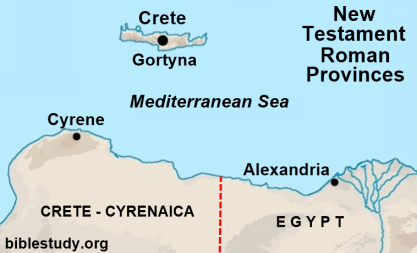
The Territory of Cyrenaica Was Incorporated into the Ptolemaic Empire
After the death of Alexander the Great his military generals (the Diadochi) began to fight each other for control over the various territories Alexander had conquered. Ptolemy chose Egypt, and he established his capital in port city and commercial center of Alexandria, located adjacent to the Nile Delta region. Ptolemy desired to make Alexandria into a center of learning and culture, modeled on Athens.
The Ptolemies Established the Library of Alexandria and Commissioned the Septuagint
Ptolemy the Great established the Great Library of Alexandria and he sought to fill it with copies of all the great texts of wisdom, learning and philosophy. The library was soon surrounded by many Greek philosophical schools, which made that district into a university of sorts. Ptolemy also had the famous Lighthouse of Alexandria build to guide merchant ships safely into his harbor.
There was also a large Jewish district in the city that is estimated to have had a population of one or two hundred thousand diasporic Jews in it. Ptolemy employed 70 of the rabbinical scholars from that community to translate the Jewish scriptures from ancient vowelless Hebrew into Koine Greek. That translation of the Jewish Tanakh (Old Testament) text became known as the Septuagint (abbreviated as LXX), and it was thereafter copied and widely distributed throughout the ancient world. It became the source text for Jewish Scriptures quoted by Jesus and known to the Apostles, most of whom could not read or write ancient Hebrew. The Septuagint survives to this day.
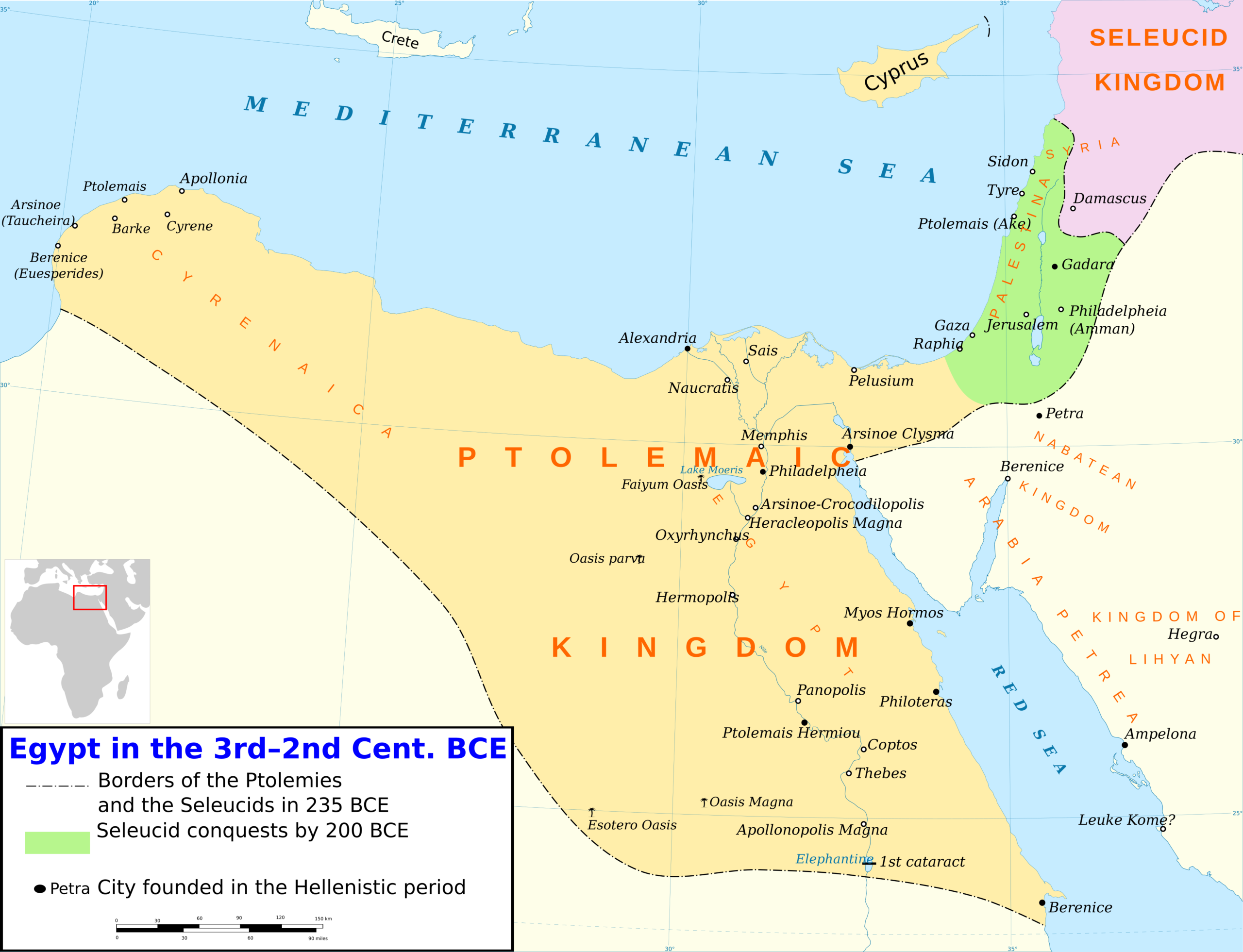
Ptolemy also famously moved a large group of diasporic Jews from Egypt to Cyrene to increase the population in that region during the 4th century BC.
In 96 BC Cyrene was conquered by Rome and it became part of the Roman Empire.
John Mark was Well-Educated
John Mark is thought to have been educated in both the classical Greek tradition of the Paedeia (the trivium and the quadrivium). He was also taught in the Rabbinical understanding of the ancient Jewish Scriptures. Mark’s more complete educational background would later become the basis for modern claims that his close association with the Apostles Peter and Paul was because he acted as a scribe for them. More on that below.
Sometime in the Early First Century the Mark Family Moved to Jerusalem
Sometime during Mark’s upbringing his parents migrated from Cyrene to Jerusalem. Ancient oral tradition asserts that this occurred because the region around Cyrene was being subjected to repeated attacks by tribes of Berber bandits who were not being controlled by their Roman Overlords.
According to several ancient sources from the church in Alexandria, the Mark family home in Jerusalem was apparently located on or near Zion Hill in Jerusalem.
The Mark Family Home in Jerusalem May Have Been “The Upper Room”
The Mark family apparently extended hospitality to Jesus and his followers when they came into Jerusalem, as Lazarus’s family did in Bethany, the small village just east of the city of Jerusalem. Again, according to several ancient sources from the church in Alexandria the Mark family home had a large upper room, and the biblical Upper Room was actually in the Mark Family home.
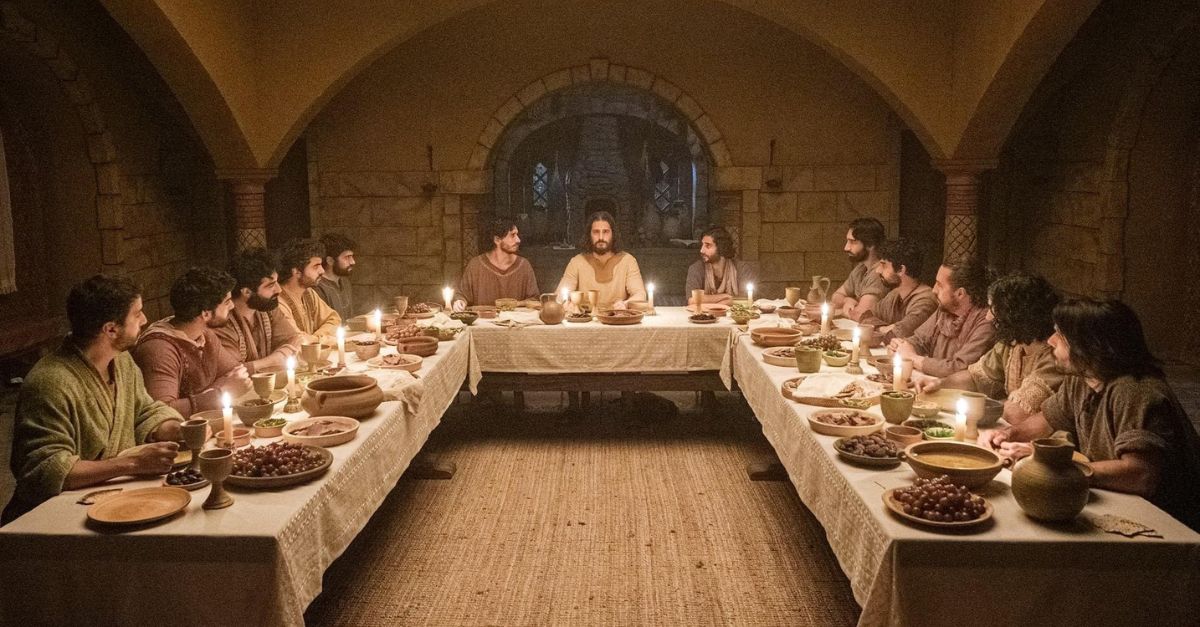
If so their upper room was most likely the location where Jesus demonstrated the principle of divine leadership: That is His leading by acts of service towards those being led. In other words, He led by His acts of selfless agape love to his disciples exemplified by His washing their feet. Then, still in the Upper Room they shared The Last Supper together. It follows then that the Mark family’s upper room, is where the disciples and Apostles fled for shelter and refuge after Jesus was arrested by the Sanhedrin.
That arrest, show trial, and execution is most likely to have occurred in AD 33.
After God resurrected the dead Jesus and He emerged from the tomb, the risen Christ showed himself to the Apostles and disciples who were still hiding in that same room. If all of that is correct then it is likely also that it was also Mary Mark’s upper room where God’s Holy Spirit entered into the disciples and Apostles on the morning of Pentecost.
Finally, it clearly was Mary Mark’s house that Paul fled to after the angel of the Lord released Peter from Herod Agrippa’s prison in AD 44, shortly after Herod had his men behead James the Greater, making James the first Apostle to be martyred Acts 12:5-19.
John Mark May Have Sojourned With Jesus During His Travels
It is reasonably likely, but by no means certain, that the Mark family was already living in Jerusalem well before Jesus began his ministry in AD 29 or 30, and that, as stated above, the Mark family home was the place of hospitality visited by Jesus and his disciples every time they stayed in Jerusalem.
If that is correct then it is also reasonable that John Mark may have traveled with Jesus and the Apostles as they sojourned throughout the Holy Land. Mark is just as likely to have been a traveling disciple, and therefore a direct eyewitness to the events he describes in his Gospel account. Just because there is no direct statement about the sources Mark used to write his Gospel account of Christ does not invalidate the possibility that he was an eyewitness to what he tells us in The Bible.

Mark was the Cousin of Barnabas
Most biblical scholars think John Mark was the cousin of Barnabas the Levite Acts 4:36, Paul’s fellow missionary Colossians 4:10. Mark is also thought to have been a close relative of Simon Peter who refers to him familiarly as “Mark my son 1 Peter 5:13 NKJV.”
John Mark Traveled with Peter on His Missionary Journeys
Ancient oral tradition states that Mark traveled with Simon Peter when he fled from Jerusalem after God’s angel released him from Agrippa’s prison in AD 44, and that Mark acted as Peter’s interpreter and scribe.
Many scholars assert that Mark learned the things he wrote of in his Gospel as a result of this later phase of his relationship with Peter.
Peter’s Missionary Journeys with John Mark
From Jerusalem Peter and Mark went to Antioch, where the believers in the Jewish Sect of the Nazarene were first called Christians Acts 11:26. They continued to travel north and evangelized the local Jews and the Gentile “God-fearers” (Gentile converts) of the diasporic Jewish synagogues of the region, passing through many regions of Anatolia (modern-day Turkey) visiting the churches in Pontus, Galatia, Cappadocia, Asia minor, and Bithynia 1 Peter 1:1.
From AD 44 through AD 46, they traveled through Anatolia and they continued on to Greece and then Dalmatia (the Greek eastern shore of the Adriatic sea) as far as the Roman port city of Aquileia, on the northern end of the Adriatic sea (east of modern-day Venice and just west of modern-day Trieste).

John Mark Wrote The Gospel According to Mark
According to the 4th century Christian historian Eusebius of Caesarea, John Mark wrote The Gospel According to Mark while he was in the Adriatic port city of Aquileia, initially with Peter in AD 46. In all fairness I must note that some modern biblical scholars (many of whom are either apostate former Christians or actual non-believers) the Gospel of Mark was written around AD 70, but that is not based on impeccable facts. It mostly the conjecture of modern biblical scholars.
Also according the Eusebius Peter left Aquileia and traveled on to Rome.
According to Hippolytus of Rome (AD 170-235), Mark remained in Aquileia, and founded the See of Aquileia (and became the first bishop of Aquileia). All of that would have happened prior to Mark’s subsequent mission to Alexandria, Egypt.

Mark’s Gospel is often considered to be the earliest of the so called synoptic gospels (the other two synoptic gospels are The Gospel According to Matthew and The Gospel According to Luke). Other bible scholars consider Matthew to have written his Gospel account earlier than Mark.
In his Gospel account Mark describes the acts and teachings Jesus clearly. Like all the Gospel writers, the intended audience of his book was first the disbelieving and apostate Jews and secondarily the non-Jews who might be interested in the life of Christ. These open-minded Gentiles were described by Luke in The Book of Acts as the “God-fearers” who were in the synagogues described in Luke’s accounts of Paul’s missionary journeys.
Even in its original form God’s covenant with Abraham was not just with his descendants, Israel. God promised His covenant would ultimately to bless “all the nations of the earth,” Genesis 22:18 which includes the Gentiles who accept and obey the one, true God. Jesus fulfilled the fullness this broader scope of the God’s promise to Abraham. The Christians like Mark and the rest of the Apostles and disciples, into whom God’s Holy Spirit had come, made it happen. The kingdom of God is for everyone who accepts Christ. Mark’s writing uses simple, straightforward language that is easy for us Gentiles to understand.
John Mark Also Traveled Briefly With The Apostle Paul
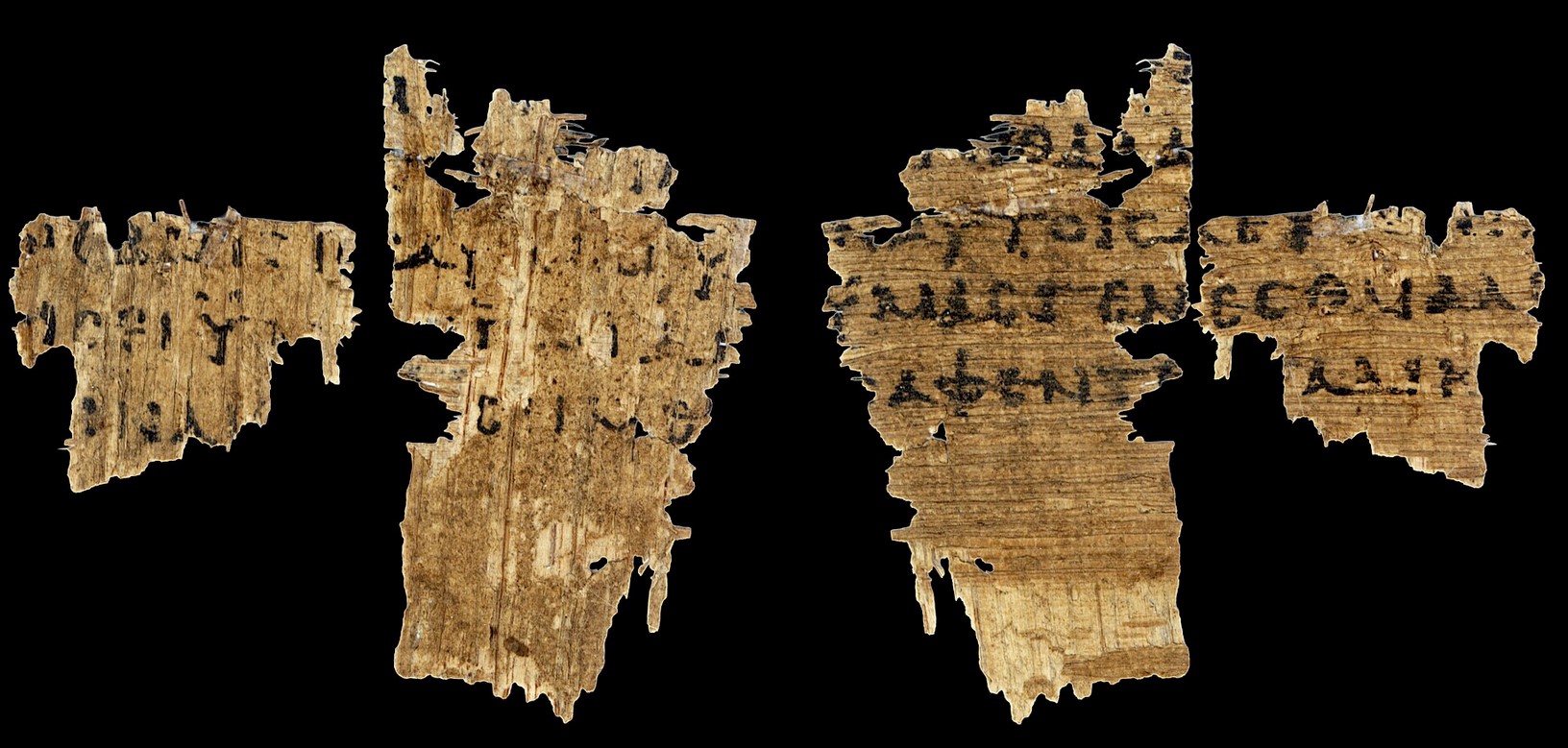
The book of The Acts of The Apostles tells us that John Mark traveled with Paul and Barnabas Acts 12:25 “as their assistant” (Paul’s scribe ?) Acts 13:5 on Paul’s First Missionary Journey sometime between AD 46 and 48 Acts 13. John Mark then left Paul and Barnabas while they were in Pamphylia and he returned to Jerusalem Acts 13:13.
As for the modern claim that Mark acted as Paul’s scribe, the relationship of John Mark being Paul’s assistant was at best a short-lived. It also seems unlikely because Paul’s epistles use very complex and sophisticated Greek phrases, and they echo many passages from the Jewish Scriptures of the Septuagint and the ancient Hebrew texts. If John Mark acted as a scribe to Paul, then the exact text of Paul’s dictation to Mark must have been very specific.
Be all that as it may, John Mark’s early departure from the missionary journey apparently did not sit well with Paul.
After the meeting of the Jerusalem Council, which occurred sometime around AD 48 or 50, Paul and Barnabas were planning to leave on another missionary journey and Barnabas wanted John Mark to come with them Acts 15:37. Paul insisted that John Mark should not join them because he had left them in the middle of their first missionary journey.
Paul describes an additional issue he had with Barnabas in the second chapter of his Letter to the Galatians, so Mark’s previous early departure was not Paul’s only issue with Barnabas. Be all of that as it may, Barnabas and John wound up sailing to Cyprus Acts 15:39, while Paul and Silas traveled north by land through Syria and Cilicia on his second missionary journey Acts 15:40.
The tension between Paul and John Mark did not last too long. In Paul’s Second Epistle to Timothy, Paul asks Timothy to bring John Mark to him “for he is useful to me for ministry 2 Timothy 4:11 NKJV.”
John Mark’s Important and Often Overlooked Missionary Journey to Alexandria
John Mark was a Cyrenian who was fluent not only in Greek, Latin, Aramaic (and he was likely literate in ancient Hebrew), however, because he was also a native Coptic speaker, he was the natural disciple to evangelize the busy metropolis of Alexandria, Egypt, so with Simon Peter’s blessing and encouragement Mark sailed to Alexandria from Cyprus when He and Barnabas had finished there.
John Mark’s mission to Alexandria is well documented by the Early Christian historian Eusebius, and by many ancient records of the Church in Alexandria which flourished there.
The ancient and often told account of Mark’s arrival in pagan polytheistic cosmopolis of Alexandria is worth repeating.
As Mark walked into Alexandria, the strap of his sandal tore. He brought it to a local cobbler, Anianus, to get repaired. While the man was working the shoe, Anianus accidentally pierced his hand with an awl and then he shouted , “Eis Theos!” which is basically, “God is One!”
Mark saw it as a spiritual opening. He healed Anianus’ hand miraculously, and then he started speaking to him about the Christian faith. Anianus accepted the message, invited Mark into his house, and became among the earliest converts. Later, as Mark was getting ready for travel, he ordained Anianus as the first Bishop of Alexandria.
Mark established the Church in Alexandria and he eventually seated Anianus as the first Bishop of Alexandria.
The Archbishop of Alexandria held an influential leadership position. The Bishop of Alexandria was routinely referred to as the Patriarch of Alexandria, also described as the Pope of Alexandria. In Latin the term pope literally means papa. The terms patriarch and pope, were interchangeable with the term archbishop in the first 6-8 centuries of Christianity. The Church in Alexandria, became one of the five most important, authoritative and influential churches of the undivided first millennium of Christianity (along with the churches in Jerusalem, Antioch, Constantinople, and Rome).

Working in Alexandria, John Mark also established a catechetical school to teach the Gentile converts and the diasporic Jews the details of the Christian faith. This school soon became far more than basic training for recent converts. The soon important and influential Catechetical School of Alexandria was located in or adjacent to the Great Library of Alexandria (as mentioned above the Library was establish by Ptolemy the Great around 300 BC).
The Catechetical School was also adjacent to the Musaeum Complex of Alexandria. Note that the Greek term musaeum meant any place that was dedicated to the Muses (the Hellenistic inspirational goddesses of literature, science, and the arts). The classical Greek museum was generally a place related to the study of music or poetry or of the philosophical sciences (i.e., a university).
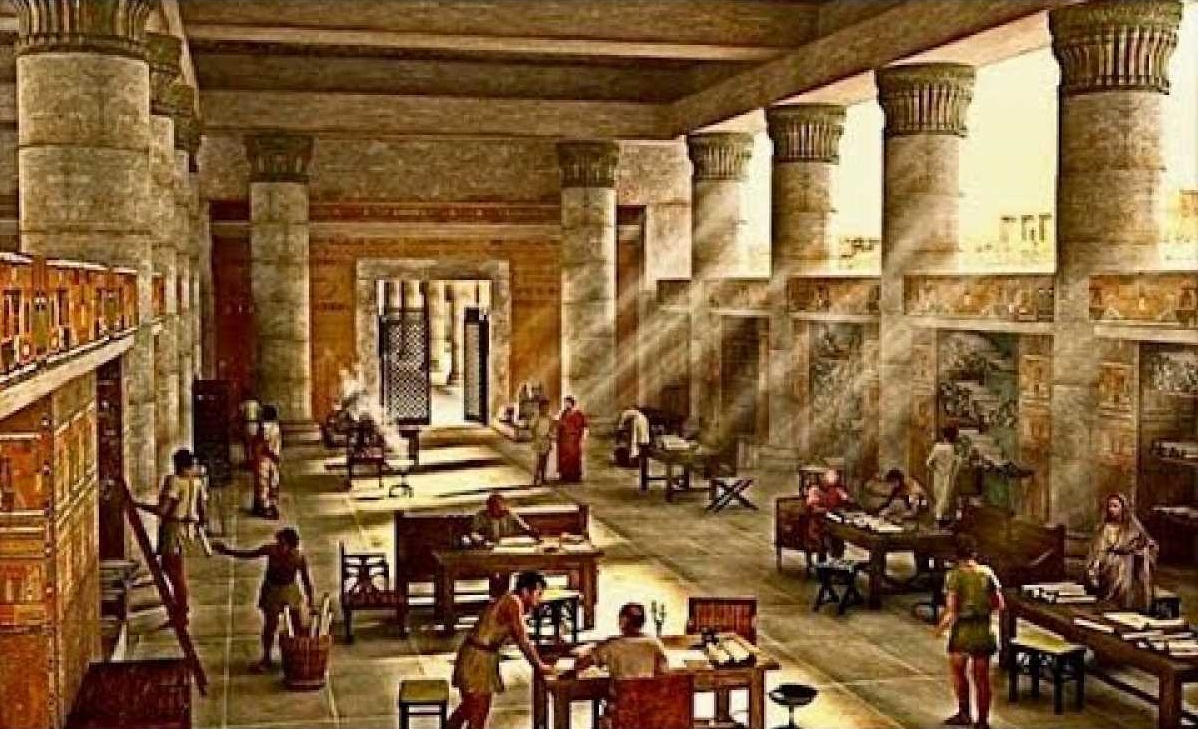
By the time Mark established the Catechetical School in Alexandria, Alexandria was the second largest city in the Roman Empire, and its largest port facility. The Museum of Alexandria was the greatest educational facility in the Roman Empire. It was the de facto University of Alexandria. Arguably, Alexandria had surpassed Athens as a center of Greco-Roman learning.
The Museum of Alexandria housed numerous philosophical schools, including the Hellenistic Platonic, Aristotelian, Epicurean, Stoic, Cynical, Neo-Platonic and Pythagorean schools. In addition to the Hellenistic schools, the diasporic Jewish Rabbinical school was also adjacent to the Great Library.
As mentioned above, the rabbinical school was the source of the 70 Jewish scholars who had translated the ancient Hebrew Scriptures into the Koine Greek language of the Septuagint (the Greek language Old Testament ) around 250 BC. When New Testament authors quoted the ancient Jewish scriptures the translation they were quoting was usually the Septuagint.
While Mark was establishing the Alexandrian church and the Catechetical School, the Hellenized Jewish philosopher Philo of Alexandria was an influential figure in the Jewish district of Alexandria.
The academically sophisticated environment in Alexandria included numerous philosophical disputations which were routinely held in public and drew the attention of many interested onlookers.
This highly scholastic environment forced John Mark (and the subsequent Christian scholars of the Catechetical School) to become competent and sophisticated apologists for the Gospel of Christ. Mark and his followers ably rose to the occasions, both initially and over the ensuing centuries.
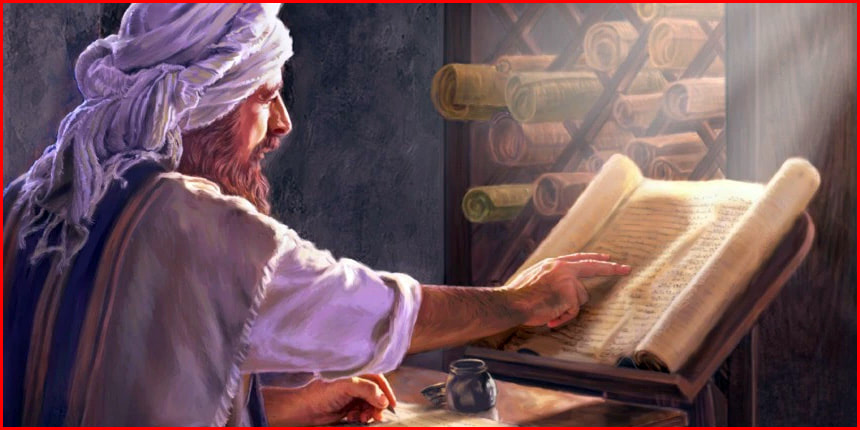
The early historical record of Mark’s Catechetical School is thin, at best, however the school soon included an important scriptorium. A scriptorium is a “document copy center,” manned by literate student/scholar scribes who manually copy documents as part of their practice as scriveners. The Alexandrian scriptorium was soon producing many copies of important Christian Scriptures. These copies were the widely disseminated early text documents of the Gospels and Epistles which would eventually be complied to form the New Testament of the Bible. No other highly productive scriptorium is known to have existed elsewhere in the early centuries of Christianity.
Legacy of the Catechetical School of Alexandria
Over the next 3-4 centuries The Catechetical School grew (in fits and stops) until it became the foundational source of The Orthodox Theology of the Christian Religion (arguably in association with the intermittently existent Catechetical School of Antioch). The Christian scholars of the Catechetical School of Alexandria were the decisive Christian leaders and influencers who advocated for the orthodox views which became the official findings of each of the first four Ecumenical Councils of the Christian Church as the church disputed and rejected the pernicious and diabolical heresies of the first few centuries of Christianity.
The famous and influential headmasters and students of the school include:
Athenagoras (AD 176), Pantaenus (AD 180), Clement of Alexandria (AD 187), his pupil Origen of Alexandria (AD 203), his pupil, Dionysius the Great, of Alexandria (AD 248), and then Peter of Alexandria (AD 300), and Alexander of Alexandria (AD 313), Athanasius of Alexandria, “the Black Dwarf” (AD 328), Didymus the Blind (AD 341), and Cyril of Alexandria (AD 412).
These great Christian thinkers and scholars wrote and left important manuscripts many of which have survived to this day. While these books are not in the Christian canon of scripture, they are still fascinating and instructive for Christian who are interested in the early days of the church to read. For anyone who is newly considering exploring this are I strongly recommend starting with Athanasius’ On the Incarnation of Christ.
John Mark also may have put the finishing touches on his Gospel while he was the bishop of Alexandria.
Mark Passed from Faith to Knowledge Around AD 68
According to Eusebius, Mark was succeeded by Annianus as the second Bishop of Alexandria in AD 62.
According to the records of the church in Alexandria, on April 26, in AD 68, during the Easter celebration an angry pagan mob of the followers of the Egyptian god Serapion-Abbis, in Alexandria, seized Mark. They deeply resented Mark’s the success and impact of missionary activity. They tied him with a rope which was attached to a horse, and they dragged him through the streets of the Bokalia district of Alexandria until he died and his body was torn to pieces. This form of execution was public, and it produced a slow and prolonged death.
The same source states that this mob then tried to burn his body, but a sudden storm quenched the flames. His remains were gathered and interned at a rocky place near the sea, and then later they were transferred to a sanctuary in the Alexandrian church. While this information is not in Scripture, it is widely accepted as probable truth by most biblical scholars.

John Mark’s Portrayal in Later Icons and Artwork
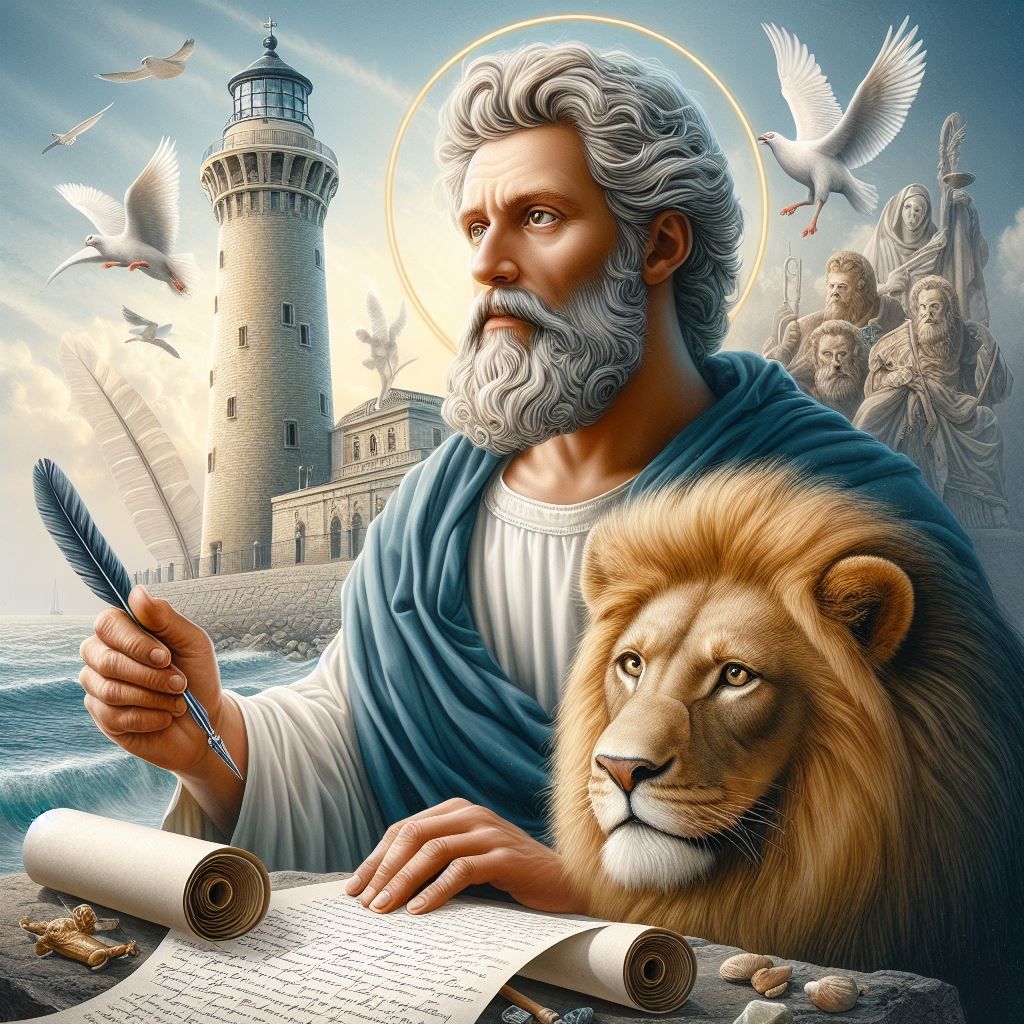
Early Christian illustrations of the four evangelists depict them as “the four living creatures” who support the throne of God in Heaven Ezekiel 1:2-10 and Revelations 4:7-9.
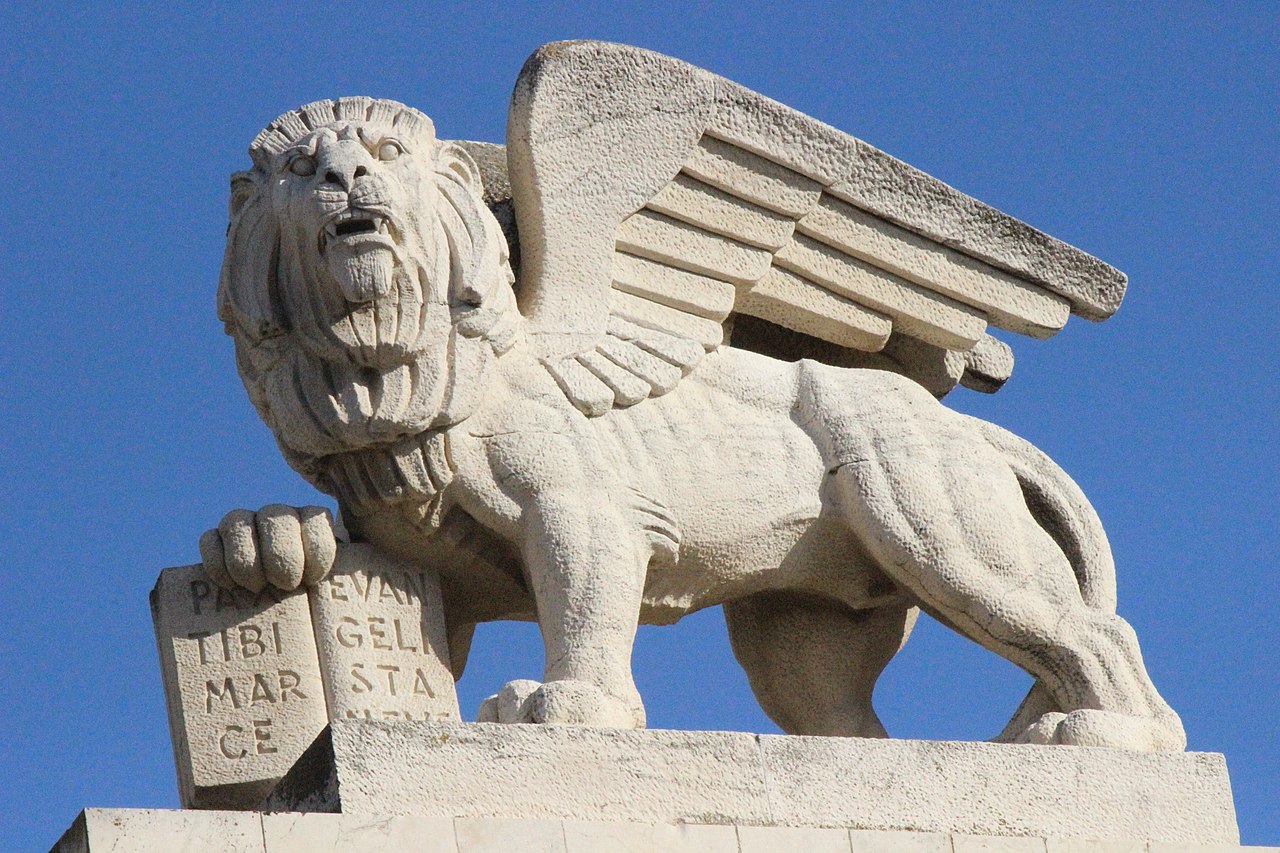
Saint Mark is symbolized him as a winged lion, (with Matthew, who is shown as a winged man or angel, Luke who is shown as a winged ox or bull, and John who is shown as an eagle).

John Mark’s Legacy
Early in the history of Venice, Saint Mark was adopted as the Venetian patron saint from Aquileia. In AD 829, Venetian merchants sailed to Alexandria where they were encourage to steel the relics of Mark the Evangelist from Alexandria (to protect the relics from the Muslim rulers of Alexandria), and they transported then back to Venice.

The Venetians built the Basilica of Saint Mark located adjacent to (and connected with) the palace of the Doge of Venice on the Piazza San Marco (Saint Mark’s Square) to house Saint Mark’s relics. The initial basilica was completed by 832 and the first St Mark’s Campanile (bell tower) was built during that same century.
Mark is also the patron saint of the Egyptian church.

The Collect for St Mark’s Day – April 25th
Saint Mark is routinely remembered on April 25th, his feast day. The collect (specific prayer) for St Mark’s Day from 1928 edition of the Anglican Book of Common Prayer is:
O ALMIGHTY God, who hast instructed thy holy Church with the heavenly doctrine of thy Evangelist Saint Mark; Give us grace that, being not like children carried away with every blast of vain doctrine, we may be established in the truth of thy holy Gospel; through Jesus Christ our Lord. Amen.
Conclusion:
John Mark’s life is a shining example of how a regular person, with the common flaws and imperfections we all have, can still serve God. Mark was faithful to God and he did many simple and practical things which don’t seem like much at the time, yet through the divine providence which surrounds all our lives his actions turn out to be more important in the long run than they might have initially seemed to be.
Was Mark’s decision to leave Paul and Barnabas in the middle of their missionary journey a mistake on his part? Scripture does not say. It certainly became and bone of contention between Paul and Barnabas. However even our mistakes and stumbles can work for good. Satan may mean our mistakes for evil, but God often uses them for good.
Like most of the Apostles and all of the disciples of Christ, John Mark was an excellent example not of perfection, but rather of real world Christianity. Ideas do have consequences, and the results of Mark’s life were clearly much greater than a secular evaluation of the individual events would have predicted. Twenty centuries later Mark’s obedience and faithfulness to God still shines light into a troubled world.