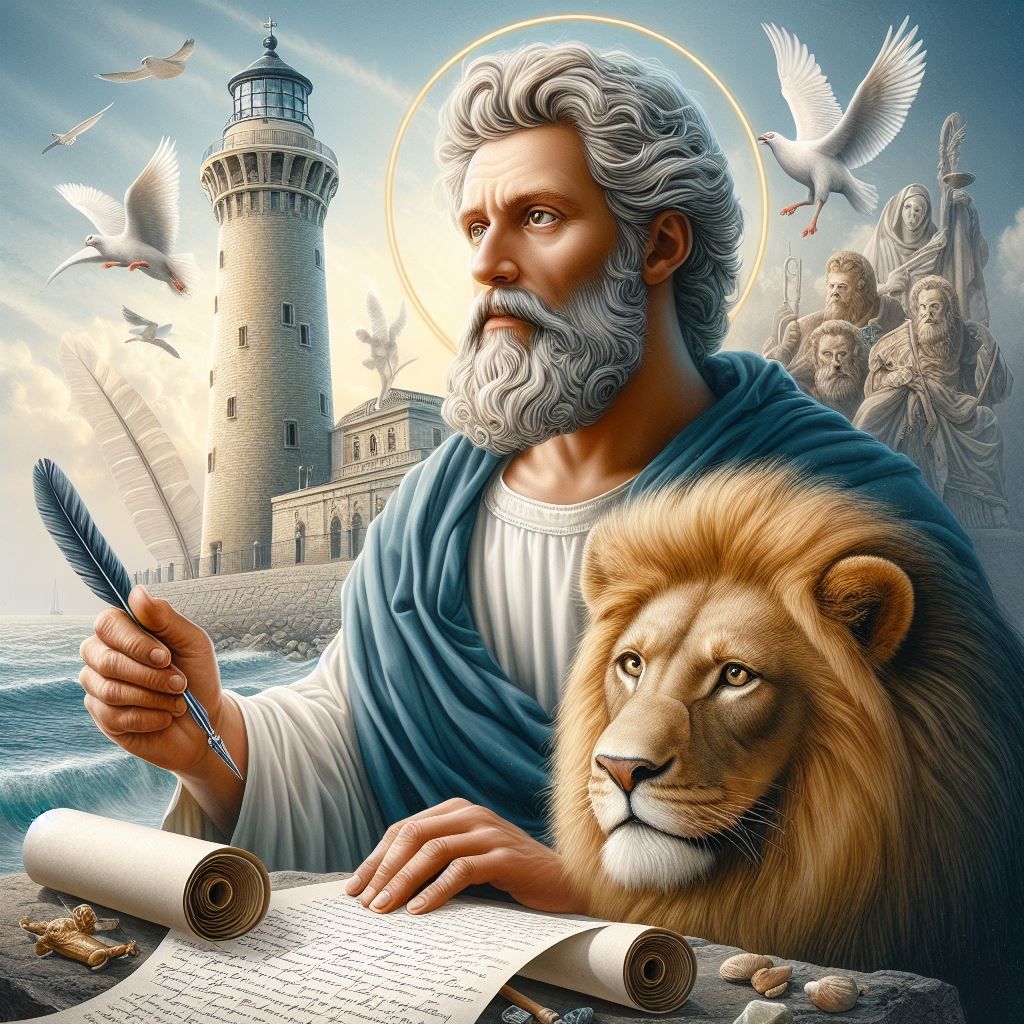
Luke was NOT one of the twelve apostles chosen by Christ; nor was he one of the 70 “disciples of Christ.”
The Epithet Evangelist Meant a Gospel Writer
Luke the Evangelist was one of the four authors of the Gospels which chronicle and explain the life of Jesus Christ. Though he never names himself as such he is unanimously understood to have been the author of both The Gospel According to Luke (written around AD 60 to 63) and the very important continuation to that Gospel, The Acts of the Apostles (also written while he was in Rome with Paul, sometime around AD 60 to 64). These two books were originally a single literary work, referred to as Luke-Acts. Luke’s authorship of these two works means that Luke contributed over a quarter of the text of the New Testament. More than any other author. More even than all of Saint Paul’s Epistles combined.
Luke’s Home Town was Antioch
Luke was born and raised in Antioch, a prosperous and bustling city located on the Orontes River, about 15 miles inland from the coast of the Mediterranean Sea in modern-day Syria. The river between the city of Antioch and the Mediterranean made the city significantly safer and more defensible than other actual seaports were. Antioch was renowned for its vibrant intellectual and cultural life.
Some 600 years before the time of Christ, the Persian Royal Road System had linked the Silk Route from ancient China to the city of Antioch (and several other Mediterranean seaports). That made the city a busy commercial seaport where exotic goods from China were transshipped into sailing boats and then sent on to other, more distant trading ports around the Mediterranean for ultimate sale in those locations.
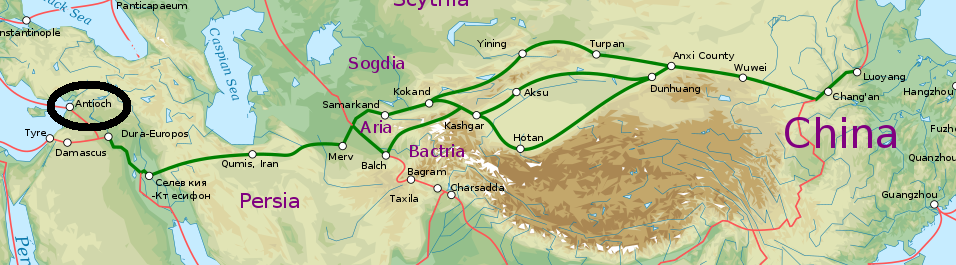
Luke was either a Hellenized Jew or, more likely, he was a Gentile Colossians 4:11. Either way he was a native of Antioch. He was well-educated in the classical Greek Paedia. That renowned Greek educational system included the seven cardinal subjects of Greek learning. The trivium, the first three subjects which mostly had to do with words (gymnastics, grammar and rhetoric) and the subsequent four subjects which most had to do with numbers, the quadrivium (music, mathematics, geography and natural history). The quality of Luke’s education is evidenced by his precise and meticulous style of writing.
The Scriptures also tell us Luke was a physician Colossians 4:14. As a Gentile physician he would have been trained in the principles of the Hippocratic School of Greek medicine.

Some scholars believe Luke’s medical background influenced his attention to detail, especially when describing the healing miracles of Jesus in his Gospel. He is often depicted as a physician not only for the body but also for the soul, as his writings offer spiritual healing through the life and teachings of Christ.
The often misquoted and ironic phrase “Physician, heal yourself Luke 4:23 NKJV !” is a statement that comes from Luke’s writing. In the parable of the Good Samaritan, Luke mentions the Samaritan tending the mugged Jewish traveler’s wounds.
The Three Highly Educated Writers of Scripture
Luke, Mark & Paul were the highly educated, “enlightened” and cosmopolitan men who were instrumental in propagating the nascent Christian faith and in documenting the life and the works Jesus the Christ and His apostles and disciples Link to Mark the Evangelist. It is remarkable that these three: two diasporic Jews and a Gentile, were NOT from Jerusalem or the Levant region (modern-day greater Palestine).
Mark was born and raised in the large commercially active and busy seaport of Cyrene (located on the coast of modern-day Libya) and Paul was from another the busy commercial seaport, the trading city of Tarsus in Cilicia (in southern Anatolia, in modern day Turkey). Tarsus was another prosperous seaport which was a terminus of the ancient Silk Route. The three of them were fairly unique among the other apostles and early disciples. The apostles who were chosen by Jesus were intelligent men who were and they were rich in common sense and practical knowledge, but they were not formally educated men.
When Does Luke Begin to Witness the Messianic Events for Himself?
No one knows for sure but somehow Luke heard that the promised Messiah of God, who had been prophesied about in numerous ancient Jewish Scriptures, had actually appeared and had begun teaching in the Levant. He was Jesus of Nazareth, from Galilee. The region of Galilee was about a week’s walk north of Jerusalem.
If that is so then when Luke heard the Messiah had arrived, he would have traveled the 300 miles from Antioch to Palestine to see for himself. Luke may have arrived in Jerusalem around the time of the Festival of the Passover, in AD 33, when Jesus Christ was arrested, abused and then executed on a Roman Cross.
This crucified Messiah would not exactly have been what a Gentile convert to Judaism was expecting to find. Luke, who might not have been deeply steeped in the ancient Jewish Scriptures, would hardly have been expecting a crucified Messiah/king as God’s promised redeemer of Israel. Luke must have wondered if he had wasted his time, by coming to Jerusalem.
The Emmaus Enigma – God Sees Men’s Hearts
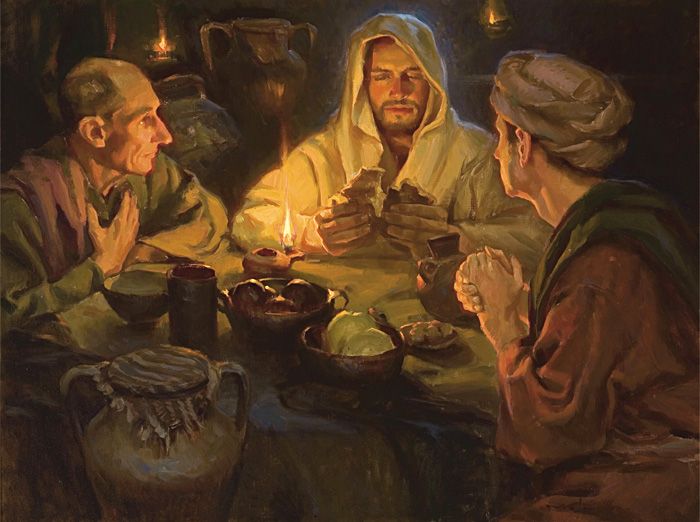
Luke is the only Gospel writer who tells us of the two despondent disciples walking away from Jerusalem on the Road to Emmaus, Cleophas and an unnamed friend. As they were proceeding along that road they were joined by the previously dead, and yet now risen from His grave, Christ. For a long time they did not recognize Him.
Many Biblical scholars think Cleopas’ unnamed associate may have actually been Luke, who was too modest to name himself in his own account of the episode. Be that as it may, they walked along together.
Jesus spent the remaining hours of their seven mile long sojourn to the village discussing what the crucifixion of Christ meant to the faithful. The Lord Jesus Christ recited and explained the numerous Jewish Scriptures (or Old Testament) which told of the need for, and prophesied the promise of, the coming Messiah in detail. No doubt the crescendo of that teaching would have been the Risen Lord explaining to them why it was better for him to have died on the cross.
That by so doing He had atoned for the sins of the world. He must have explained how the expected revolutionary leader fighting against Roman Rule in Judea was a misunderstanding of the ancient prophesies about Him. By His selfless death he had not only atoned for mankind’s sins, He had also restored God’s creation from its corruption. He had trampled on death, with death!
When they reached the village and started to break bread together, Cleophas and Luke suddenly recognized who their well informed teacher actually was Luke 24:13-35.
The dinner together in Emmaus was also an early re-enactment of the Holy Communion which Christ had ordained three days earlier in the upper room. That pre-Passover supper had also been the model of the first communion.
Be all that as it may, Luke soon affirmed the validity that Jesus was, in fact, God’s promised Messiah, and he accepted Christ’s preaching of salvation for “the Jews, first and then also for the Gentiles” without reservations.
Luke Was Likely an Eyewitness to Many of the Events He Described in Acts
After his personal experience with Jesus on the Road to Emmaus, Luke was likely amongst the rest of the disciples and the Apostles of Christ in Jerusalem.
He likely witnessed the Ascension of Christ, 40 days after His Resurrection, and most likely, Luke was among the Apostles in the Mark family’s upper room in Jerusalem when God’s Holy Spirit fell upon them during the festival of Pentecost.
Luke recounts in detail Peter’s evangelism and repeated arrests by the Sanhedrin in Jerusalem. Luke, no doubt, both observed the birth of the Early Church which was initially the Jewish sect of the Nazarene, but was later described as the Christian church Acts 11:26 Link to Simon-Peter. He describes that birth in the sequel to his Gospel According to Luke now known as The acts of the Apostles.
Luke Surely Took Notes About Jesus and About the Events He Observed Himself
Luke is not thought to have written his Gospel or its sequel until several decades later when he was with Paul in Rome around AD 60. However, as a man of letters, the thorough and meticulous Luke was most likely compiling many notes and maybe even composing rough drafts of his future writings throughout the time he witnessing the birth of the Early Church and the time he spent traveling with Paul.
Luke is Mentioned in the Scriptures Four Times
Luke is specifically named in Paul’s epistles three times—all by Paul while in he is in prison Colossians 4:14; Second Timothy 4:11; Philemon verse 24.
The fourth reference to Luke is in the sections of Luke’s Acts where he transitions to a first person point of view, referred to as the “WE” Sections. Luke writes those passages from his personal point of view. See more on those passages below.
Luke’s Time Working as a Missionary Assistant to the Apostle Paul
In his Letter to the Colossians, the Apostle Paul writes of Luke’s constancy as an assistant and as a companion: “Luke, the beloved physician, . . . greets you Colossians 4:14 NKJV.”
Luke describes Paul’s amazing personal experience with the risen Lord Jesus Christ on the Road to Damascus, around AD 37. Luke didn’t join Paul for more than a decade after that event.
Shortly after Paul’s Damascus Road experience he departed Southward and sojourned to Mount Sinai (literally “Horeb the mountain of God”) “like Elijah had” nearly a millennium earlier 1 Kings 19:1-18. Paul’s time “in Arabia” was more than a scriptural echo of Elijah’s experience Galatians 1:17. Paul spent the next 3 or more years at Mount Sinai. Paul was, no doubt, fellowshipping with God and being taught by The Almighty Himself. Elijah had heard the “still, quite voice” of God Romans 11:2-5.
After Paul completed his “divine post-graduate education,” he returned to his home town of Tarsus for some period of time (perhaps from AD 40 until around AD 45).
Paul then moved to Antioch, in Syria, Luke’s home town, where Paul reconnected with his friend Barnabas. Together they carried famine relief to Jerusalem (AD 45 or 46). Paul’s first missionary journey with Barnabas and Mark occurred sometime between AD 46 and AD 48. The Jerusalem Council happened in AD 49 or possibly AD 50. Paul’s second missionary journey began in AD 50 or 51.
Luke documents most of these events, but Luke does not seem to have joined Paul until Paul was in Troas (the city which Homer described as Troy in The Iliad and The Odyssey). From Troas, Paul and Luke were about to enter Greece. At that point Luke’s grammar in his Acts of the Apostles transitions from the third person to his first person point of view; the “we” passages begin.
Luke Even Traveled with Paul on His Journey to Rome, After He Was Arrested in Jerusalem
Ten years later, Paul wrote to Timothy from Rome while he was a prisoner there. Paul’s other coworkers were elsewhere, and Paul states that only Luke remained to assist him: “Only Luke is with me 2 Timothy 4:10-11 NKJV.” Note that Paul’s Second Epistle to Timothy was written by Paul near the time of Paul’s martyrdom in Rome (around AD 66 or 67).
Luke had most likely finished his Book of Acts by then as he does not mention either Peter or Paul’s executions in Acts. The unanimous and ancient Christian oral tradition states that the first-ranked apostles Peter and Paul finished their earthly lives with their martyrdoms in Rome.
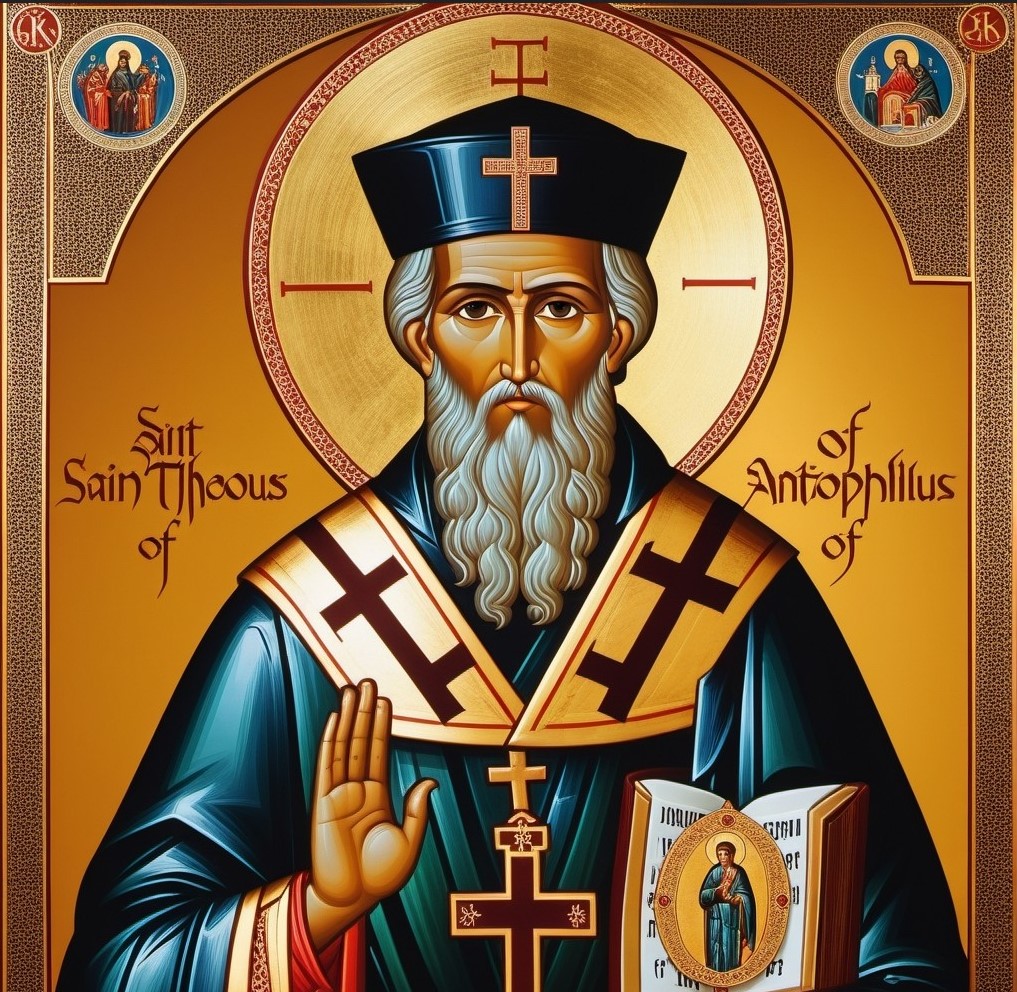
Luke Dedicated Both of His Books to the Mysterious Theophilus
Both the Gospel of Luke and Acts are dedicated to the same person, Theophilus Luke 1:3 and Acts 1:1.
Theophilus is a Greek name which means friend of God. His exact identity is uncertain. It might be a pseudonym for a real person. His description as most excellent suggest he may have been a respected Roman official, possibly from Luke’s home town of Antioch, who had been taught (catechized) as someone who was converting to Christianity and learning of the life of Christ. He may also have been a wealthy patron of Luke’s. Luke’s statement “in order that you may have certainty concerning the doctrines in which you have been instructed Luke 1:4 .” strongly suggest that Theophilus was a catechumen preparing for Christian baptism.
It has also been suggested that Luke was writing to a Christian audience and that a name with this meaning is a coded metaphor for all of Luke’s Christian readers. Appropriately, the books would then be understood to be addressed to any friend of God who wanted more detailed and accurate information concerning the origin and meaning of his or her faith.
Many Orthodox churchmen credit Theophilus as having been the first Bishop of Antioch.
Luke Likely Compiled His Notes and Wrote His Gospel and Its Sequel While He was in Rome with Paul
Luke is believed to have written his Gospel and its continuation, Acts, between AD 60 and 64 while he was with Paul in Rome. Though Luke does not name himself as the author of either of his books, he is unanimously believed to have been the author of both. His writings reveal a man who understood both the frailty of the human body and the boundless mercy of God.
Many of his unique contributions were accounts obtained from talking to the Apostles and disciples who were themselves eyewitnesses of the events Luke describes Luke 1:2. He was a sort of historical forensic detective, sleuthing out the details of the life of Christ and the subsequent origin of the church. He states that he carefully investigated everything from “those who from the beginning were eyewitnesses and ministers of the word delivered them to us Luke 1:1–4 NKJV.” Once he reached Jerusalem he became an eyewitness to the events he subsequently writes of.
Luke Records Numerous Important Events
It is only Luke who records certain parts of the Christmas story, such as the Annunciation to Mary, the birth of John the Baptist, the visit of the shepherds, and the story of Jesus’ childhood. These suggest that he had spoken to people in Jesus’s own family, and to Mary herself. it was Luke who included Holy Simeon’s prophecy when the baby Jesus was presented at the Temple in Jerusalem which asserts that Jesus “will be a light to the Gentiles.”
Luke also includes some of Jesus’ most famous parables not found elsewhere, such as the Good Samaritan Luke 10:25–37, the Prodigal Son Luke 15:11–32, the Lost Coin Luke 15:8–10, and the Rich Man and Lazarus Luke 16:19–31, suggesting that he collected those accounts from eyewitnesses.
Luke alone records three of the sayings of Christ on the Cross: “Father, forgive them Luke 23:34,” “Thou shalt be with me in Paradise Luke 23:43,” and “Father, into thy hands I commend my spirit Luke 23:46.” These suggest that he heard of those sayings from someone who was there; perhaps John, or Mary. Luke is also the only writer to include the story of the two disciples on the road to Emmaus mentioned above Luke 24:13–35.
Luke’s Gospel is One of Mercy and Inclusion
Luke’s Gospel is often called the Gospel of Mercy and the Gospel of Compassion. More than any other Evangelist, Luke includes and lifts up those on the margins; the poor, the sick, the sinner, and the forgotten. He gives us beloved parables that reveal God’s tender heart:
the Parable of the Good Samaritan, who shows what it means to love without borders;
the Prodigal Son, who teaches us the joy of forgiveness;
and the Lost Sheep, whose return brings celebration in Heaven;
and the Rich Man and Lazarus.
These stories emphasize God’s mercy and the importance of love, compassion, and repentance.
Luke’s Gospel Presents a Balanced View of the Importance of Women
Luke also shines a special light on Mary, offering the most detailed account of the Annunciation, the Visitation, and of the proclamation of the Canticle of Mary known as The Magnificat. Luke also provides the full story of Mary’s visit with her cousin Elizabeth. Through his careful storytelling, the Blessed Mother’s faith becomes a model for all of the many contemplative believers who “ponder these things” in their hearts.
He also tells the stories of faithful women like Elizabeth, Anna, and the sinful woman who anointed Jesus’ feet.
Luke’s Gospel Accounts Also Focus on Christian Joy
Luke’s Gospel has been referred to as the Gospel of Joy due to its frequent references to joy and rejoicing. From the glorious proclamations of the angels at Jesus’ birth to the joy of the disciples seeing the Lord risen from the dead after the resurrection, this theme pervades Luke’s narrative.
Luke’s Acts of the Apostles Make Him the Historian of God’s Holy Spirit
Luke was not only a storyteller but a historian—an inspired recorder of how the Holy Spirit moved in the Early Church. His second work, The Acts of the Apostles, begins where his Gospel ends: with Christ’s Ascension to God the Father. Luke also described the event which occurred ten days later when the Shekinah Glory of the Presence of God was seen as a rushing wind and the flames of fire over the heads of the apostles and disciples on the morning of the Festival of Pentecost.
Through Acts, we witness the birth of the Christian Church. We see the ever courageous Peter, struggling with the desperate yet unfaithful Sanhedrin in Jerusalem Link to Simon-Peter. We see the Romanized Jewish leadership in Judea trying to limit that growth. Luke tells us of the courage of martyrs like James the Greater, and the unstoppable spread of the Gospel to the ends of the earth Link to James the Greater.
Without Luke’s account, it would have been hard to imagine how Christianity grew from a small, fragile Jewish sect within ancient Judaism to what would eventually become the largest religion in the world. Luke describes both the challenges and the successes of the early Christian community.
The “WE” Sections in the Acts Are Clearly Luke’s Personal Accounts
Luke uses the first person point of view to describe numerous events in The Acts of the Apostles which he personally witnessed Acts 16:10–17, Acts 20:5–15, Acts 21:1–18, and Acts 27:1–28. Luke was with Paul in Rome Acts 28:16, and near the end of Paul’s life, Paul wrote that only Luke was with him 2 Timothy 4:11. This certainly would’ve come in handy for Paul, since he was constantly getting beaten up Acts 14:19, Acts 16:22, 2 Corinthians 11:24, 2 Timothy 3:11.
Luke the Icon Writer
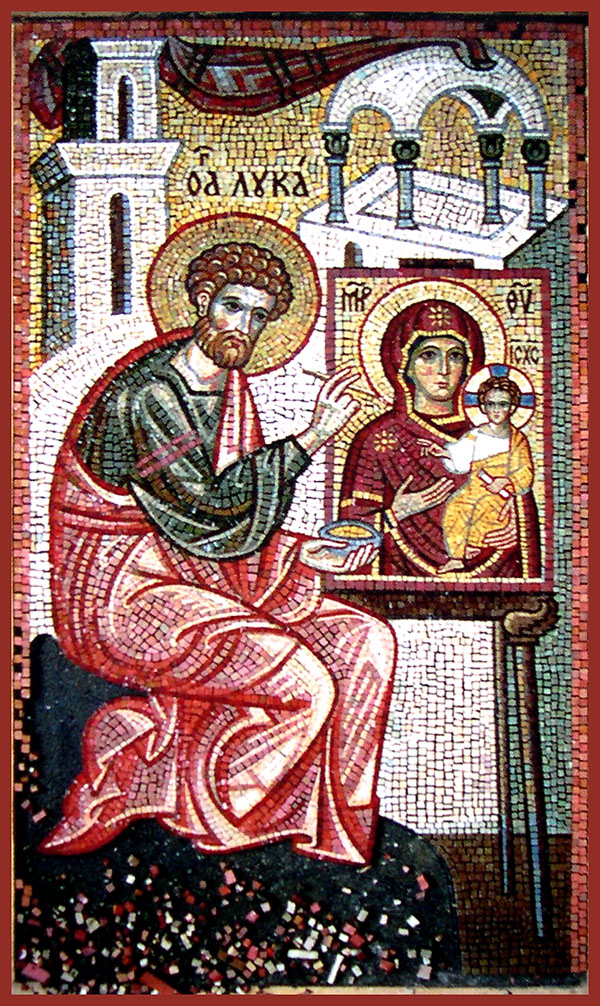
Luke is also reputed to be the first Christian iconographer. Ancient Christian oral tradition also states that Luke was a skilled artist and the first icon writer, i.e., icon painter. While the oldest written record of this is from the 8th century, the oral tradition is much older.
Luke is said to have written (painted) icons of the Most Holy Theotokos (the Virgin Mary holding the Christ Child); not just one, but three, including The Hodegetria image in Constantinople. Hodegetria is Greek for she who shows the way. This icon is believed to have been painted during Mary’s lifetime, making it a deeply reverenced image in Christian art and tradition.
He is also recorded as having written icons of the Holy Apostles Peter and Paul. Again Luke had spent a considerable amount of time with the subjects of these icons, and he, no doubt, knew their faces well.
As a result of this aspect of Luke’s life, he became the patron saint of artists.
An icon believed to have been painted by Luke is said to be preserved in the Basilica of Saint Mary Major in Rome.
After Nero Had Peter & Paul Martyred in Rome Luke Continued His Missionary Journeys
According to ancient oral tradition, after the martyrdom of St Paul around AD 67, Saint Luke continued to preach throughout the Mediterranean. He left Rome to preach around Italy, and then he traveled throughout Dalmatia, Macedonia, and onto Achaia (on the Peloponnesian Peninsula of Greece). He is then said to have traveled to Libya (north central Africa), and to Egypt, where Saint Mark had established a thriving church and Christian community Link to Mark the Evangelist.
Luke Passed From Faith to Knowledge Around AD 84
Saint Luke’s earthly life ended at the age of 84 when he suffered martyrdom. He is reported to have been martyred by Hellenistic idolaters who tortured him and hanged him on an olive tree in the town of Thebes, in Boeotia, north of Athens.
Luke’s Tomb and Relics
The provenance of ancient relics is always difficult to establish, hence it is often controversial and may even be a bit dodgy. Luke’s miracle-working relics were eventually placed in the Church of Luke the Evangelist at Thebes which was said to have been built around Luke’s tomb and relics, although that reliquary now apparently only contains a rib.
Sometime after Constantius, the Son of Constantine, became the ruler of the Roman Empire in AD 357 he ordered most of Luke’s remains to be removed from Thebes and transferred to the Church of the Holy Apostles in Constantinople.
They were later reportedly moved “for safety” to Padua in northern Italy during the iconoclastic revolt. In fact this “act of protection” occurred during the Fourth Crusade, in AD 1204, when Constantinople was conquered and sacked. Luke’s relics were stolen and transferred to Padua in Italy. They were laid to rest at the Basilica di Santa Giustina. In 1354, the relic of Luke’s skull was taken by the Holy Roman Emperor to Prague Cathedral.
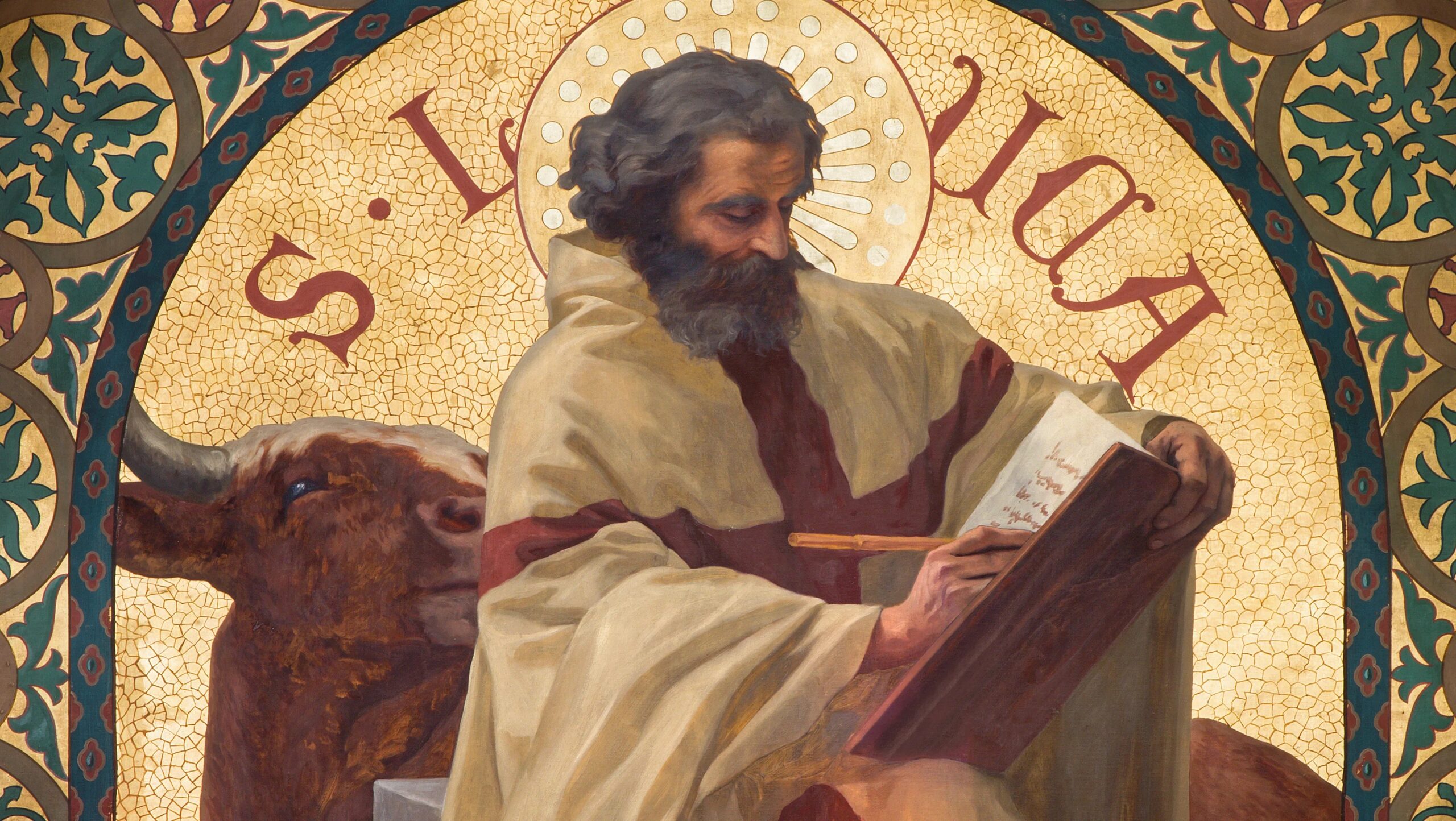
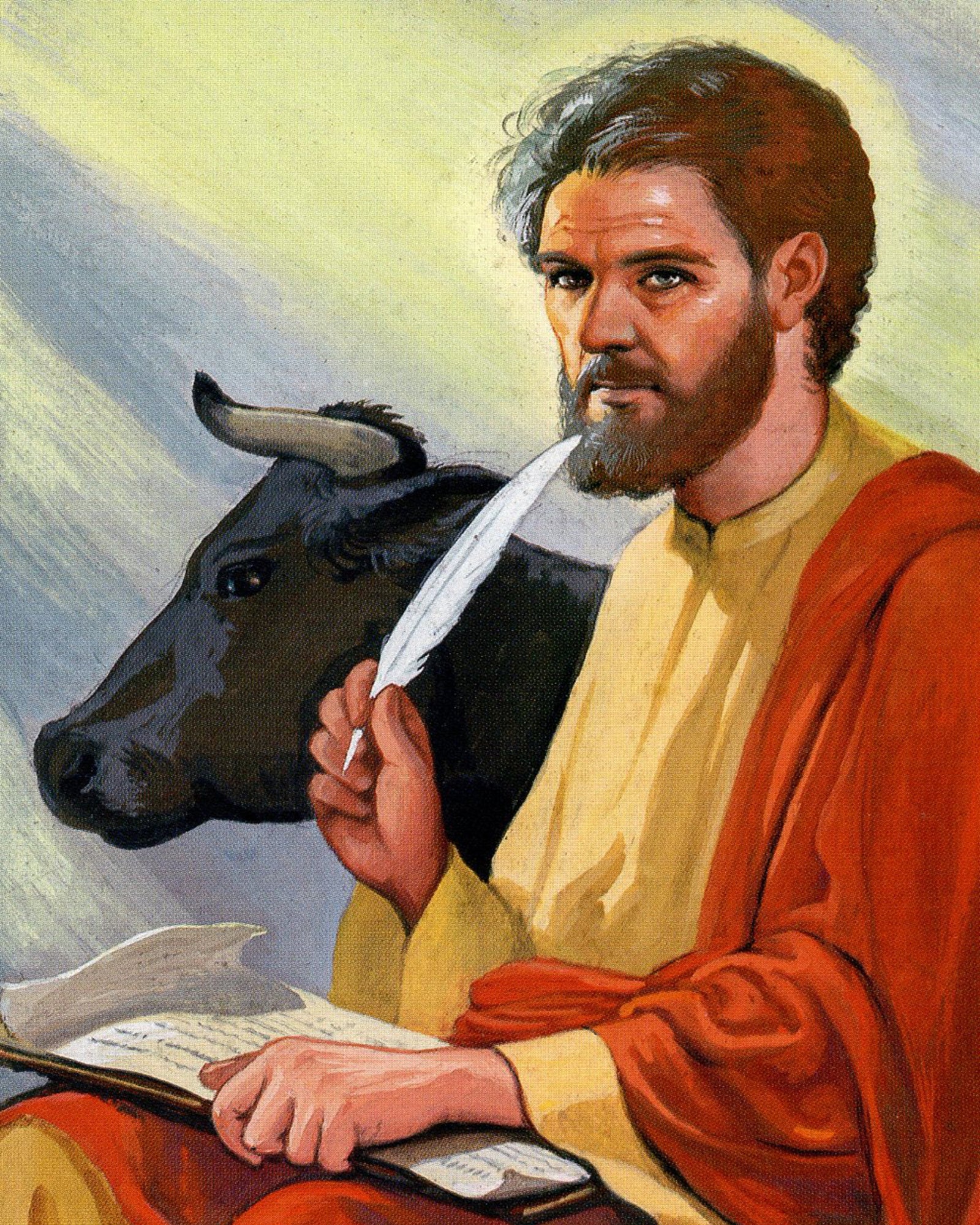
Luke is Symbolized as a Winged Ox in Ancient and Modern-Day Art Works
In Christian art, the Evangelists are each depicted as one of the four living creatures (The Cherubim) which support and defend the throne of God mentioned in the first chapter of Ezekiel and in the fourth chapter of the Book of Revelation.
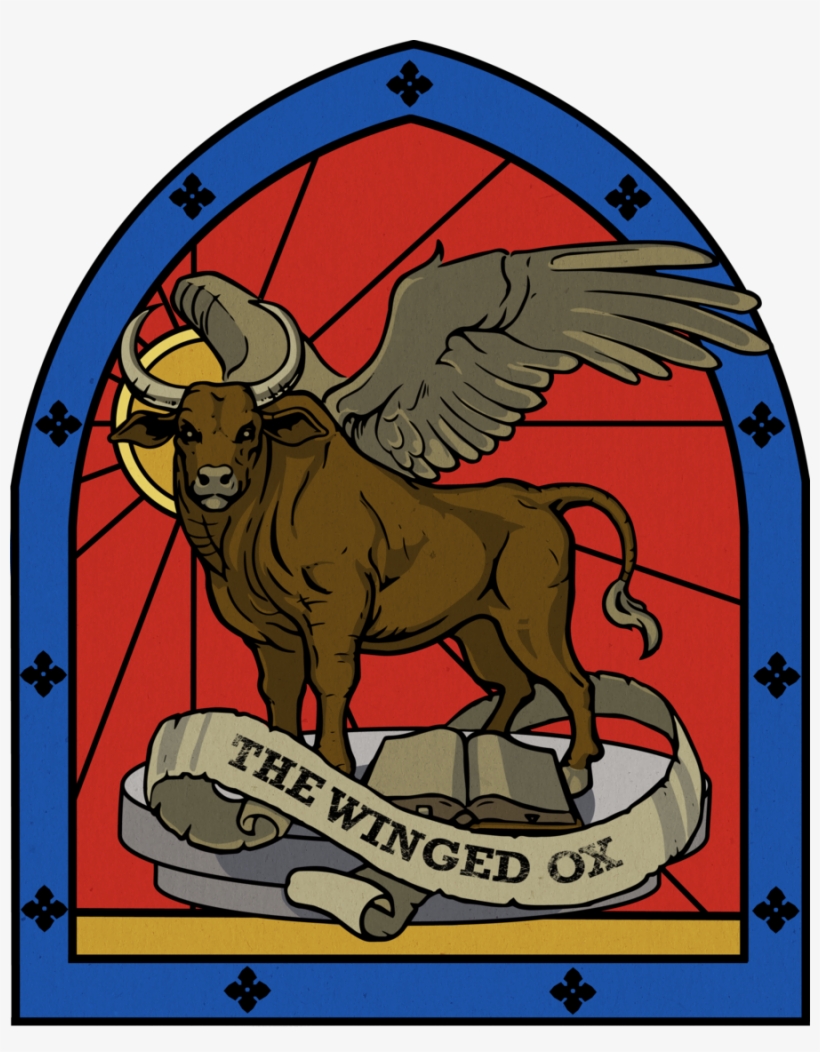
Saint Luke is symbolized as a winged ox or bull. Matthew is shown as a winged man or an angel. Mark, is shown as a winged lion. John is illustrated as an eagle.
The ox is a symbol of both sacrifice and of the gentle strength which pulls the plow in farmer’s fields. The ox also recalls the priestly sacrifices of the Levites at the Temple in Jerusalem and it also reminds us of Christ’s ultimate sacrifice on the Cross. It’s a fitting image for the Evangelist who highlighted Jesus’ compassion for the suffering and His divine call for discipleship marked by service.
Saint Luke’s Feast Day Remembers His Legacy of Healing and Hope
Saint Luke’s feast invites us to see the Gospel not only as a story to be read, but as medicine for our souls.
Luke is the patron saint of physicians, surgeons, nurses and other caregivers who seek to walk in Luke’s healing footsteps. He is also the patron saint of notaries, because of his meticulous documentation in writing an orderly account of Jesus’ life and of the birth and growth of the early Church. He is further regarded as the patron saint of artists and painters because he was the first icon writer. Finally, he is the patron saint of butchers, as he is often symbolized by the emblem of an ox or bull with wings.
The Collect for St Luke’s Day
Saint Luke is remembered on his feast day. In the Western Church that observance occurs on October 18th. The collect (specific prayer) for St Luke’s Day from the 1928 edition of the Anglican Book of Common Prayer is:
ALMIGHTY God, who didst inspire thy servant Saint Luke the Physician, to set forth in the Gospel the love and healing power of thy Son; Manifest in thy Church the like power and love, to the healing of our bodies and our souls; through the same thy Son Jesus Christ our Lord. Amen.
Conclusion
Saint Luke was the beloved physician, historian, and faithful companion of St. Paul. Though little is known about his early life, Luke’s written legacy has shaped the heart of Christian faith for two millennia. His writings reveal a man who understood both the frailty of the human body and the boundless mercy of God.
Scripture and ancient tradition tell us that Luke was a physician from Antioch. He may or may not have ever have met Jesus in person, but he encountered Him deeply through faith and friendship with the Apostles—especially St. Paul. Their travels together are documented in the Acts of the Apostles. In those journeys, Luke’s training as a doctor met his vocation as a disciple: he ministered not only to his patient’s bodies, but to their souls.
When Paul referred to him in his letters as “the beloved physician Colossians 4:14,” it was not just a title—it was a tribute. Luke healed with compassion, curiosity, and truth; the same qualities that flow through every page of his Gospel.
St. Luke’s contributions to Christianity, both as a physician and a writer, have had an enduring impact on the Church. His Gospel and The Acts of the Apostles provide a unique and detailed perspective on the life of Jesus and the Early Church.
He is often regarded as an ideal example of the Christian disciple, embodying both the compassionate healer and the committed evangelist. As the patron saint of doctors and painters, his legacy continues to inspire those in the fields of medicine and the arts, and his writings remain a source of spiritual nourishment for Christians worldwide.