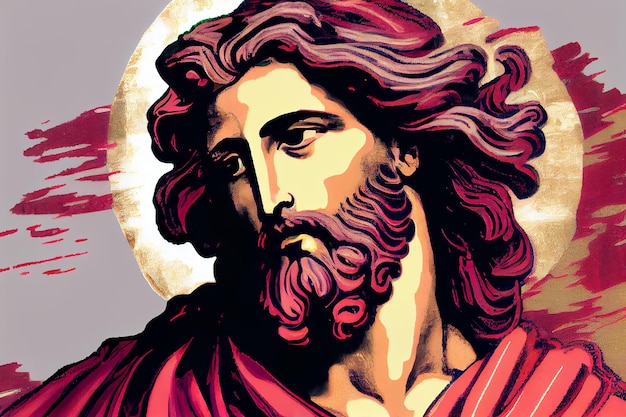
James was from The Seaside Village of Capernaum
The Apostle James, the Greater, was born in the little fishing village of Capernaum which is located on the northern shore of the Sea of Galilee. He was one of the two sons of Zebedee, the Fisherman, and his wife Salome who was also called Mary. Like several of the apostles, James was a Galilean.
James was the older brother of John, the apostle and evangelist (author of The Gospel According to John, the 1st, 2nd, and 3rd Epistles of John, and the Book of Revelation) Link to John.
The term “greater” is not a proclamation of importance. In the Aramaic vernacular of his day it meant either older or taller. James was apparently both older and taller than his brother, John.
The village of Capernaum was also the town in which the observant Jewish couple Jonah and Joanna lived with their two sons Andrew, the First Called, Link to Andrew, and his brother, Simon-Peter who were operating Peter’s fishing business. Link to Simon-Peter.
Jesus Used Capernaum As A Home Base
Though Jesus spent a lot of time walking around the Levant (Greater Palestine), He used the village of Capernaum as a sort of home base. The village itself had a population of around 3,000 people or more. The road from Damascus towards Jerusalem passed through Capernaum. The population of the Region of Galilee is estimated to have been around 200,000 people, some of whom no doubt attended and heard Jesus’ Sermon on the Mount.
Capernaum Also Had a Roman Tax Collector’s Office
Finally, the village of Capernaum is also the town in which Matthew the Apostle and Evangelist worked as the Roman tax collector. That made him a “publican,” meaning that he was employed by the Roman overlord, the Tetrarch of Galilee, Herod Antipas as a governmental administrator. Matthew is also the apostle who wrote The Gospel According to Matthew, hence his epithet “the Evangelist.” Link to Matthew.
Zebedee and Salome were Mildly Prosperous Entrepreneurs
Zebedee and his wife, the parents of James and John, were presumably working class people of means in Capernaum. They owned their own house, and a fishing business complete with at least one fishing boat (probably several), and all the associated nets, tackle and other gear they needed to catch the fish they sold. Zebedee also employed a crew of working men in Capernaum to help him with his fishing business Mark 1:20. Simon-Peter and Zebedee were business partners Luke 5:7-10.
At the time of Christ, fish caught on the Sea of Galilean was either salted or pickled for preservation and then transported and sold all over Israel. It was a commercially thriving enterprise.
The Nearby Seaside Village of Bethsaida
Bethsaida was another seaside fishing village located on the north shore of the Sea of Galilee. Is was about six miles east of Capernaum. It was the home town of Philip, the Pragmatic Apostle, Link to Philip, and his friend the Apostle Nathanael Bartholomew, who was initially skeptical about the idea that Jesus of Nazareth could be God’s Holy Messiah. However Nathan became convinced that Jesus was the promised Messiah the minute he met Jesus in person and heard him speak. Link to Nathan.
The “Sons of Thunder” Tried to Advise God’s Messiah
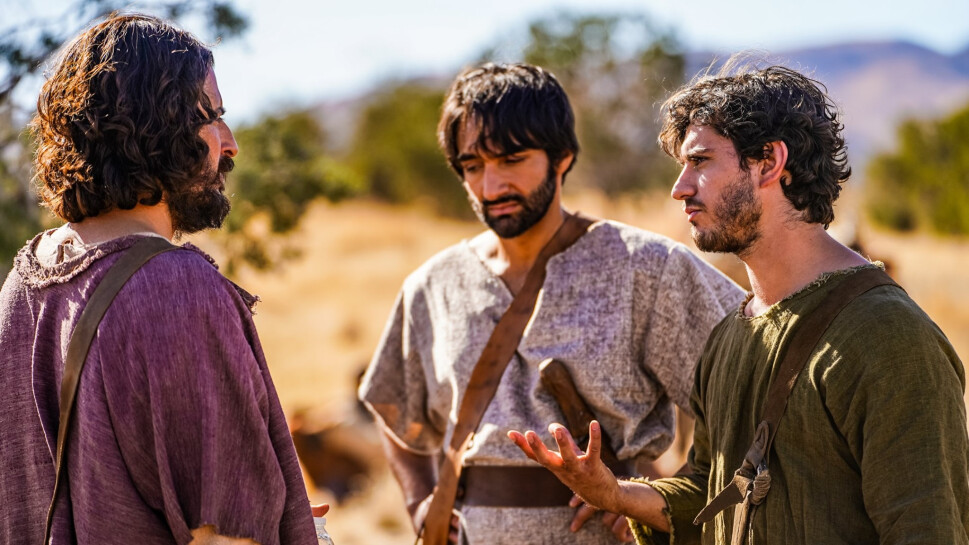
James and his brother John were overzealously incensed for Jesus’ honor when some Samaritans disparaged Him Luke 9:54. In that episode James and John asked Christ why he didn’t rain fire on the city the Samaritans came from, as the prophet Elijah had done on the 850 prophets of Ba’al 1 Kings 18.
In response Christ rebuked them for over reacting and humorously nicknamed them”Boanerges,” meaning the Sons of Thunder Mark 3:17. Suffice it to say that James and John were impetuous and passionate and had fiery tempers when it came to representing the Messiah of God.
James’ Mother Was Salome, Who was Also Called Mary
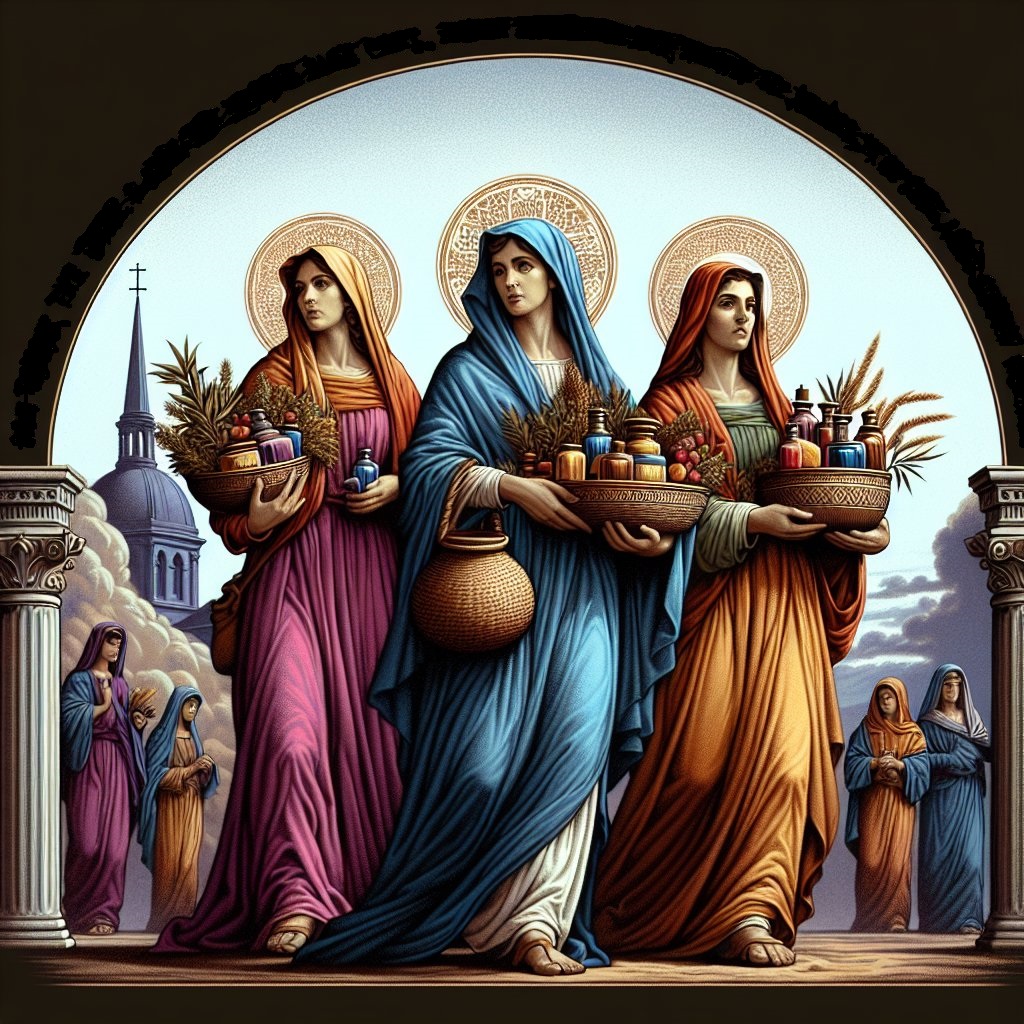
James’ mother, Salome was one of the women who traveled with Jesus and His disciples and looked after their practical needs (along with Mary the Mother of God, and Mary called Magdalene). Jesus exorcised Mary Magdalene from demonic possession soon after he had begun to publicly teach and perform divine miracles.
Salome was a direct eyewitness to the crucifixion and death of Jesus on Good Friday Matthew 27:55 & Mark 15:40. She also watched the dead body of Jesus as it was laid to rest in the tomb of the Jewish tin merchant, Joseph of Arimathea who did so with the help of the wise pharisee and priest, Nicodemus Mark 15:47.
Three days later Mary-Salome was one of the women who brought spices to the grave of Jesus early on the morning of Easter Sunday, after the end of the Jewish Passover Sabbath. Mary-Salome was with Mary Magdalene and Mary the wife of Cleopas, who was also the sister of Mary the mother of God John 19:25. Later that same Sunday, Cleopas, Mary’s husband, would be joined by the risen Jesus as he and his associate walked on the road to Emmaus Luke 24:13-35.
The Marys intended to anoint the dead body of Jesus. Instead they found the tomb open and empty Mark 16:1, because Jesus, the Son of God, who had been dead and buried, was no longer dead but rather, He was risen from death to life John 20:18. The mortal body of Jesus had died on the cross and then later it had been divinely restored such that the Son of Man and the Son of God “knew no corruption.” Jesus the Christ had trampled on death by dying!
James and John were called by Jesus While They Were Working as Fishermen
Prior to being called by Jesus to join His entourage, James worked with his brother John, and his father, Zebedee in Zebedee’s fishing business.
John had witnessed the remarkable baptism of Jesus Christ with his friend Andrew. Jesus, then called James and his brother John while they were sitting in their fishing boat with their father Zebedee, mending their nets Matthew 4:18-22. They immediately stopped mending the nets and left their father sitting in his boat.
James and his Brother John were Sometimes Embarrassing
James and John were the ones who asked Christ to let them sit on His right and left sides in the kingdom of heaven. Jesus rebuked them for their prideful request, and the other apostles were annoyed with their selfish and arrogant audacity.
James was the Third Apostle Who was in Jesus’ Inner Circle
The gospels record three specific events when Jesus did something witnessed a select few apostles. That inner circle included James, his brother John and Simon-Peter.
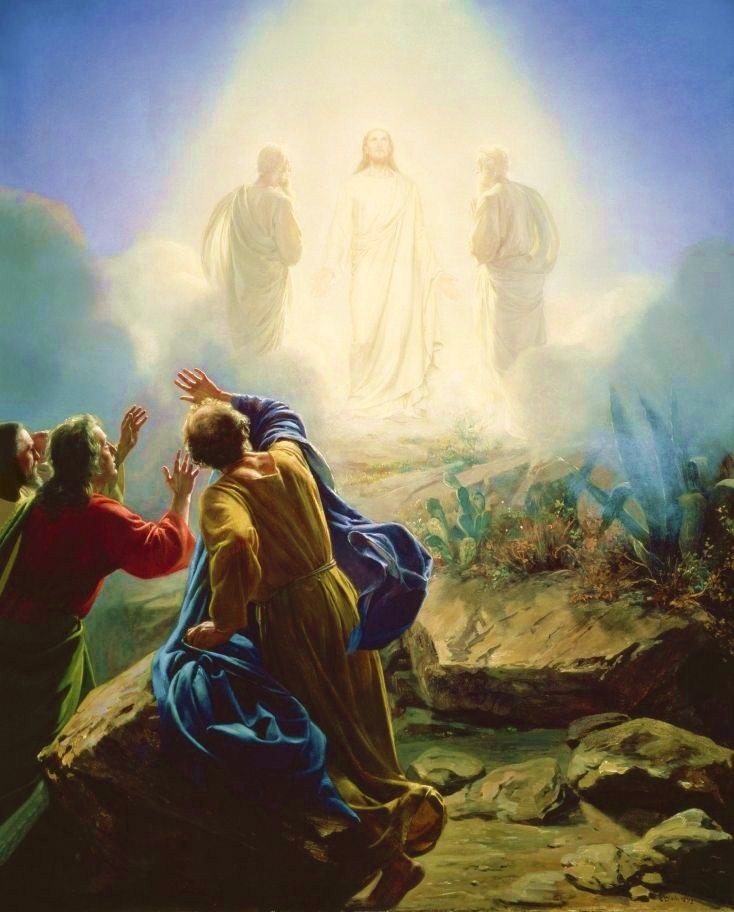
The first of these inner circle events was the Transfiguration of Christ which occurred on Mount Tabor. Christ went there to have a brief conference with Moses and Elijah, and he brought His trio of disciples with him so they could witness the encounter.
Moses had died and he was laid to rest just as the descendants of the Israelites from Egypt entered the Promised Land Deuteronomy 34.
The prophet Elijah, had previous battled with the Jezebel’s army of 850 Lebanese prophets of Ba’al on Mount Horeb. Later Elijah selected the future prophet Elisha to succeed him, and Elisha witnessed Elijah ascend into Heaven on a fiery chariot 1 Kings chapters 17-19.
The brilliance of God and of heaven is referred to as the Shekinah Glory of God. This uncreated light of God’s Holiness and Truth apparently envelops everything in heaven. It is the iridescent brilliance of the “fire that didn’t consume the burning bush” when God spoke with Moses at the base of Mount Sinai early in the Book of Exodus Exodus 3:2-4:17. It was the brilliance of Moses’ face after he came down from being with God and receiving the 10 commandments on Mount Sinai Exodus 34:29-30. It was the brilliance of Elijah’s chariot of fire 2 Kings 2:11. And it is what James, John and Simon-Peter witnessed on Mount Tabor a Jesus Christ spoke with Moses and Elijah there. It is also the Tongues of Fire which were seen over the Apostles on the Day of Pentecost Acts 2:3-4. It is the outward and visible sign of the inward and spiritual truth, that the Truth of God and his Son, Christ are the light of the world.
James, John, and Simon-Peter Watched Jesus Restore a Dead Girl Back to Life
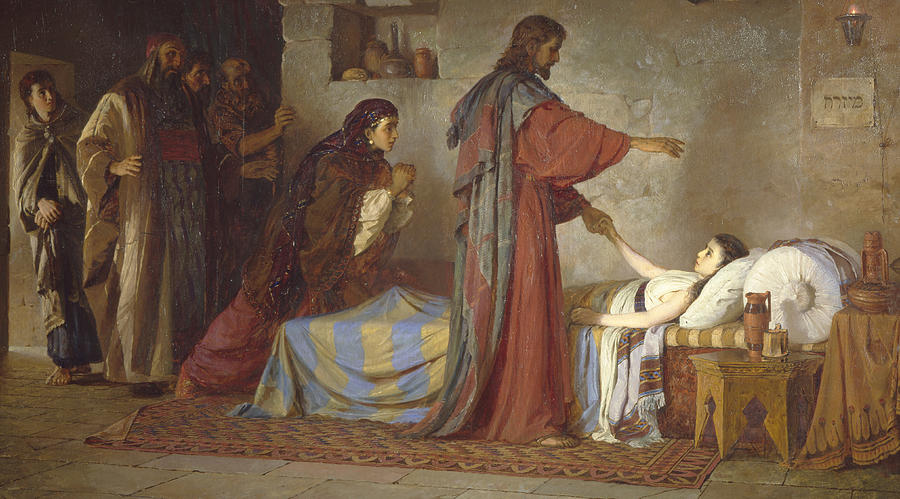
This inner circle of Christ also watched Christ raise the daughter of Jairus, from death back to life Mark 5:21-43, Matthew 9:18-26, and Luke 8:40-56.
Jairus was a faithful man who was the ruler of the synagogue in Capernaum, on the northwestern shore of the sea of Galilee. Jairus approached Jesus with a profound sense of urgency and humility. As a synagogue ruler, Jairus held a position of considerable influence and respect within the local Jewish community. Despite his status, he fell at Jesus’ feet, pleading earnestly with Him, that He would heal of his twelve-year-old daughter, who was near death.
Jesus and His inner circle started for Jairus’ home, but on the way Jesus felt his divine power go out to heal a women who touched the hem of His garment. She had been plagued with chronic menstrual bleeding for years. Jesus stopped to speak with the faithful women and while that discussion was occurring a messenger arrived to tell Jairus that it is too late. His daughter had died.
Jesus, James, John and Simon-Peter went ahead to Jairus’ home anyway. There, they were ridiculed by the mourners gathering at Jairus’ house. Jesus and his disciples went up to the daughter’s room, where Jesus commanded the dead girl to get up.
She came back to life and did so. To everyone’s amazement she got out of the bed and started to walk around. This event is a powerful testament to the importance of faith and to the authority of the Son of God over life and death.
The Disciples were Flummoxed and Dumbfounded by the Events of Holy Week
Despite Jesus trying repeatedly to explain to His disciples what was about to happen to Him, it seems fairly clear that none of His disciples actually did understand what was happening when Christ was arrested and then rapidly tried and executed in Jerusalem during that fate-filled week of Passover.
James was One of The Twelve with Christ on Maundy Thursday
Maundy Thursday’s name comes from the Latin root word mandatum, meaning command. It is also the root word used for the English word mandate. In the Christian context maundy refers to Jesus’ command given during the Last Supper:
“A new commandment I give to you, that you love one another; as I have loved you John 13:34.”
This command to love one another is far more specific in the original Koine Greek than it is in English. In Greek, the specific word used for this divine type of love is agape. That word means selfless love, or altruism; that is, to put the love of others above your own life. The mandate Christ gave his disciples, with Judas Iscariot still present with them, is to love one another with a selfless, even sacrificial type of love.
The Inauguration of God’s Divine Pattern of Common Union with His Chosen People
The Last Supper is the first Holy Communion of believers. It is what Christ ordained and commanded us to continue Matthew 26:26-29, Mark14:22-24, Luke 22:19-20, “Do this as often as you shall drink it, in remembrance of me.”
This more-than-symbolic mandate became the perpetual focus of the regular Christian practice of worshiping God. More than a symbol, the marvelous and mysterious union between us (His people and our Triune God) which occurs during Communion with Him at His holy altar is a Christian sacrament. That is to say, it is “an outward and visible sign of an inward and spiritual truth.”
The unity with God (and with our fellow Christians) which we experience when we receive that consecrated bread and wine extends throughout the world, and includes unity with our fellow parishioners and beyond that to both all the living believers on earth and even to unity with the saints worshiping God in heaven. That is the traditional understanding of the full extent of the mystical union of the Holy Communion which Jesus established on Maundy Thursday. Christ’s imminent sacrifice restored mankind’s fellowship with God. The human closeness to God, which we lost in the Garden of Eden, was restored by Jesus Christ’s passion for mankind and his willingness to endure the cross on our behalf.
The regular practice of this mystery of the Holy Communion of Christians with God at His altar became the focus of all Christian services worshiping God. This continued to be true in liturgical churches until well after the Reformation of the 16th century.
However Protestant Reformation severely distorted the apostolic practice in many churches, which chose to minimize the practice of frequent communion, in favor of their pastors focusing on delivering lectures to their congregations.
Don’t misunderstand. There is nothing wrong with an insightful lesson, or a Holy admonition being delivered to the gathered parish. We can all benefit from good teaching.
However the reformational purists, knavishly removed the opportunity for their parishioners to experience the sacramental mystical union with God. That choice would not have been understood by the ancient apostles and their disciples that established the One, Holy, Apostolic, Universal Church, which had been founded by Jesus Christ. Those self-described purists were trying to resolve a false dilemma and they did so badly, and continue to do so. The false “either or” mentality is not the only way which they could have choose to proceed.
The Events in the Upper Room: The World Turned Upside Down – Divine Power Politics are a Radical Reversal of Worldly Power Politics
The common, “real world” understanding of power politics is that the most important are the most privileged, and the common people are unimportant. Heavenly power politics turns that idea upside down. Christ’s example of the even more real, divine understanding of power politics is a complete reversal what His disciples expected.
Christ Washing His Disciples’ Feet John 13:1-17
Christ condescending to wash Simon-Peter’s feet felt so wrong as to what Peter understood to be “normal and acceptable” behavior on the part of His Lord that Simon abjectly refused to allow Christ to humiliate himself by washing his feet.
Christ demanded that Simon-Peter allow it.
Christ rebuked Simon-Peter that if he couldn’t adjust to Christ’s heavenly version of power politics as loving service to others, then Simon had no place with Christ!
Simon-Peter submitted.
This was not an odd bit of biblical theater on Christ’s part. He was absolutely serious about performing this example of divine love on his apparent last night of life. The foot washing is a metaphor for everything Christ was trying to teach his disciples. Christ was unfolding it on the evening before His own ultimate example of Divine agape love for the world. His loving will was to be witnessed by all on the cross, the following afternoon.
This holy truth is all the more glaring when one realizes that it was not just being demonstrated to Christ’s chosen, pious and holy few.
It was being demonstrated with Judas Iscariot watching and trying to understand the point of Christ’s message to His disciples as well. Furthermore, The Bible tells us Satan had already entered into Judas Luke 22:3, so Satan was also watching this heavenly example of Divine love (and no doubt scoffing at it). This heavenly scene was being performed as a final example of Christ’s love for Judas, with Satan looking on as well!
“All things, visible and invisible” are in play here.

In the Garden – Jesus’s Inner Circle is a Disappointment
James, John and Simon-Peter were also the ones who slept instead of praying with Christ during His agony in Garden of Gethsemane Matthew 26:36-38. These chosen three lazily slept while Christ prayed that God’s will would be done.
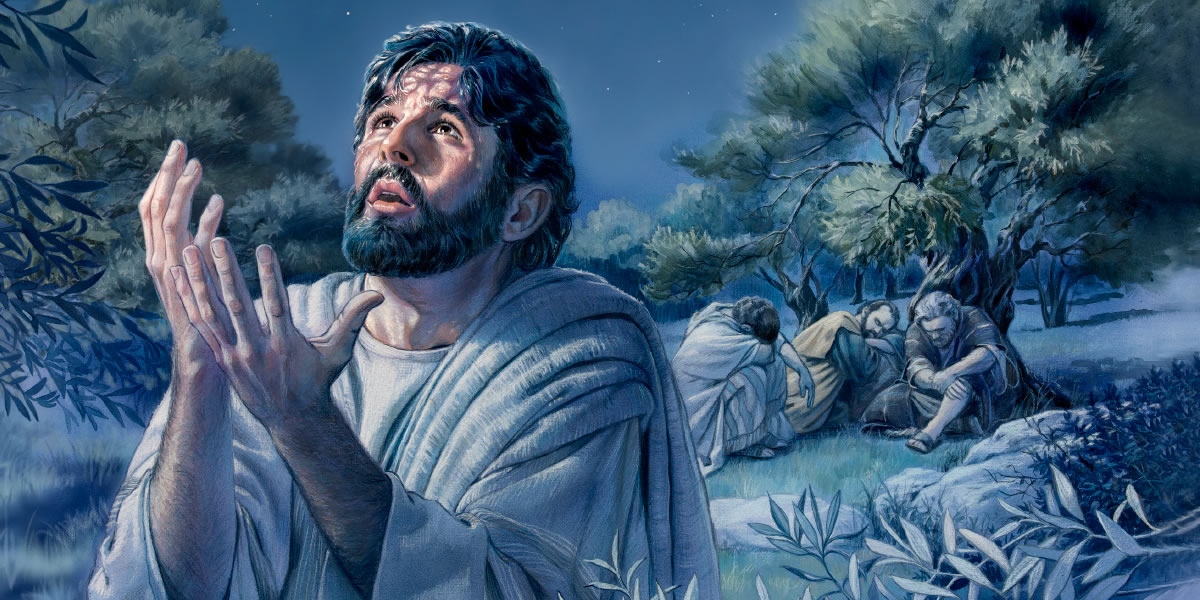
This also means that the trio witnessed the betrayal of Christ by the Disciple Judas’ kiss.
Jesus, thus identified by Judas, was then immediately arrested by the Sanhedrin’s police force, their temple soldier guards.
Simon-Peter indignantly and instinctively drew his sword and cut off the ear of the arresting policemen Matthew 26:52-54; Mark 14:47; Luke 22:49-51; John 18:10, 11. Christ then reattached the temple guard’s ear, and chastised the then confused Simon-Peter for doing what Peter thought was a valiant act. Clearly the disciples present still did not get what was happening.
Good Friday
Christ’s apostles and disciples were deeply confused and distraught by Christ’s rapid arrest, his midnight trial by the Sanhedrin’s tribunal, and His daylight show trial by Pontius Pilot which was rapidly followed by His execution on a Roman cross.

James and the rest of the confused apostles quickly and instinctively scattered and hid for fear that they too would be arrested.
James’ brother, the Apostle John and the Virgin Mary were standing near the cross watching John 19:25. The other three Marys watching from afar (Mary Magdalene, Mary the mother of James the Lessor, and Mary-Salome Mark 15:40). together they were the only ones who watched and were with Christ at the cross as He died.
The events of the trial and execution of Christ shattered the expectations of the apostles, who did not yet understand the power politics lesson of God’s love which Christ had tried to teach them by washing their feet. That Divine love gives everything of one’s self for the good of others. Even one’s own life must be given up.
Satan thought the victory was his.
Holy Saturday
More silence. More confusion. Christ had “trampled on death with death,” but the apostles and disciples didn’t yet understand it.
Easter Sunday
The same three Marys who were at the cross went to the tomb early to prepare Christ’s dead body for His final burial Mark 16:1. Yet the stone had been rolled away, and an angel told them that Jesus is no longer dead.
He is Risen!
Jesus personally appeared to Mary Magdalene at the tomb and called her name. She responded with astonishment “Rabboni!?” meaning “Teacher John 20:12-16.”
The Marys then ran to tell the apostles.

Simon-Peter and John were already walking to the tomb when the Marys arrived to tell them the news. They took off running to see for themselves. John outran Simon and got there first. Peter caught up and was the first to go in and examine the tomb.
Christ IS risen, Christ is risen indeed!
The Apostle Paul tells us that the risen Jesus first appeared to Peter 1 Corinthians 15:5.
The divine reality of Christ’s selfless, loving victory over sin and death dawned on his apostles and disciples slowly, but inexorably. They needed time to mull it over.
Christ Commissioned His Disciples to Becomes His Apostles
The term disciple means a follower of. The term apostle means one sent out or ambassador. The 12 apostles of Christ were actually his disciples when they sojourned with Jesus. After His execution and resurrection, the risen Jesus issued a final commandment to his disciples. The Great Commission Matthew 28:18-20:
“Go therefore and make disciples of all the nations, baptizing them in the name of the Father and of the Son and of the Holy Spirit, teaching them to observe all things that I have commanded you; and lo, I am with you always, even to the end of the age.”
This commission by Christ made His chosen disciples into His apostles.
After 40 More Days of Teaching His Apostles and Disciples, Jesus the Christ Ascended to His Father in Heaven
The Ascension of Christ back to his rightful place in Heaven is the restoration of all things back to their natural order. In the first chapter of The Acts of the Apostles, Luke tells us:
“Therefore, when they had come together, they asked Him, saying, “Lord, will You at this time restore the kingdom to Israel?” And He said to them, “It is not for you to know times or seasons which the Father has put in His own authority. But you shall receive power when the Holy Spirit has come upon you; and you shall be witnesses to Me in Jerusalem, and in all Judea and Samaria, and to the end of the earth.”
and
“Now when He had spoken these things, while they watched, He was taken up, and a cloud received Him out of their sight.”
The fullness of the divine cosmic order had been restored.
Ten Days Later, At the Festival of Pentecost the Christian Church was Born
Fifty days after the resurrection of Jesus, James and the rest of the Apostles and the disciples were present in Jerusalem when they were filled with, and empowered by God’s Holy Spirit in Jerusalem at the Jewish Festival of Pentecost.
James and the rest of the apostles immediately began to speak a variety of foreign languages, and they obeyed Christ’s command in His Great Commission by preaching to the crowds gathered there; to each in their native tongues Acts chapter 2. The result of their preaching and teaching on that day was that about 3,000, mostly Jewish, people accepted Jesus Christ as their Lord and Savior.
The apostles’ actions subsequent led to the conversion of many thousands more, of Jews and gentiles in Jerusalem to a faith that Jesus Christ was, in fact, God’s promised Messiah.
The next time James the greater appears in the Scriptures, is in the twelfth chapter of the book of The Acts of the Apostles.
James was Martyred by the Order of King Agrippa I, Presumably to Please the Apostate Jews of the Sanhedrin
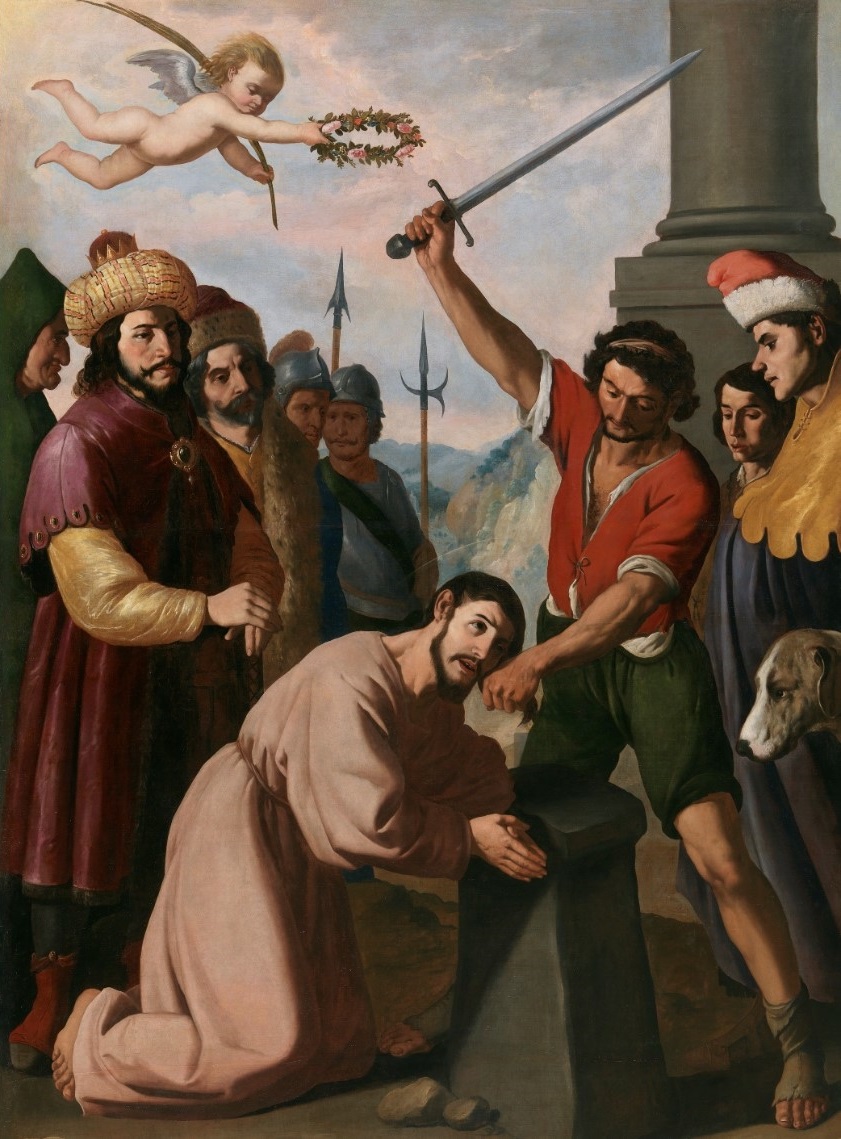
In Luke’s book, The Acts of the Apostles he tells us that James was the first apostle to be martyred.
Apparently King Herod Agrippa I, the grandson of Herod the Great, wanted to please the powerful local Jews (Pharisees and Sadducees) who controlled the temple in Jerusalem, so Herod put on a show and executed James by having him beheaded.
“Now about that time Herod the King stretched out his hand to harass some of the church. Then he killed James the brother of John with the sword Acts 12:1-2.”
The Great Apostolic Dispersion
At this same time Herod also had Simon-Peter imprisoned. Peter was to be held in Herod’s jail until after the Passover festival was finished. The Books of Acts states that Peter was released from prison by a heavenly angel. Peter then when to the house of Mary the mother of John-Mark, the author of The Gospel According to Mark. The Christian leaders were gathered there praying for God to spare Peter’s life. Peter told them about his divine deliverance from Herod’s Jail, and Peter then left Jerusalem.
James the Just Was Seated as the Bishop of Jerusalem
The ever brave, courageous and God-loving James the Just, the half-brother of Jesus and the author of the Book of James, was then confirmed and seated as the first Bishop of Jerusalem.
James the Just is also the compiler of The Liturgy of Saint James the oldest surviving description of the worship sequence used by the Apostolic church for their Sunday worship service to God. That liturgy was a modified version of the Jewish worship service to God, which was originally instituted by God, through Moses at Mount Sinai, and is documented in the Pentateuch (the first fives books of the Bible written by Moses). Of course, the Jewish ritual worship routine had to be updated to account for the arrival of God’s promised Messiah, Jesus the Christ, but that liturgy was still the updated format that God had directed His believers to use to worship Him.
finally, James was also the apostle who presided over the important Jerusalem Council (the de facto Zeroth Ecumenical Council) in AD 49, which decided that new Gentile converts to Christianity did not have to be circumcised and Judaized to become full Christians Acts 15.
Satan Meant it for Evil, But God Used it For Good
As is always the case, Satan meant it for evil, but God used it for good.
Just as Satan meant the Crucifixion of Jesus to be a victory for him and his selfish human “breasts” (the nefarious government authorities Revelation 13:1-4) and “the harlot who rides on the beast” (the atheistic and/or apostate religious leaders Revelation 17) who all worked in tandem together against God.
Instead, Satan’s actions wound up serving a far more important divine purpose. The Death of Jesus Christ was a prelude to his Divine Resurrection.
Likewise the beheading of the Apostle James also served a greater purpose for God.
After the martyrdom of James and the flight of Simon-Peter from Jerusalem, many of the apostles and disciples of Christ are believed to have begun leaving Jerusalem as well. Many of them apparently embarked to other places in the Roman Empire and well beyond it on personal missionary journeys, spreading The Gospel far and wide.
Again, Satan may have meant Herod’s actions for evil, but God used them for good.
The Tyrant King Herod Got His Gruesome Comeuppance
By the way, shortly after Herod the Blasphemer had the Apostle James beheaded, Herod experienced the reward for his actions. The blasphemer was eaten alive by worms and he died from that parasitic infection Acts 12:23!
Secular historians record the death of Herod Agrippa I as occurring in AD 44, so James’ martyrdom must have occurred in the spring of that year as well.
Legacy of Saint James – Santiago
Throughout history, James has been venerated as a saint by Christian believers, and his life continues to inspire believers to live with zeal and courage in their own faith journeys.
According to Spanish legend, sometime around the later 30s or early 40s James is reported to have traveled to the Iberian Peninsula to spread the Gospel there. His preaching journey reportedly took him to various regions, including Galicia in Northwestern corner of Spain.
The Santiago de Compostela Legend
According to an early medieval-era legend, after his beheading in Jerusalem, James’ disciples collected his body and his head. Fearing persecution, or further desecration of James’s remains they placed them in a boat without rudder, sails or oars, which was guided by Divine providence across the Mediterranean Sea and around the Iberian Peninsula to Galicia.
The boat came ashore at (or sank near) Iria Flavia (modern-day Padrón), where his body was reportedly found covered in scallop shells (cockle shells), which became a symbol of Saint James in medieval-era artwork. His body was then buried in a Roman cemetery there. For centuries, the location of James’s tomb was forgotten and presumed lost. However in the early 9th century, a hermit named Pelayo observed strange lights hovering over a field—a phenomenon he described as a “field of stars” or “campus stellae,” which later evolved into “Compostela,” which means field of stars.
In AD 813, the then bishop of the region named Theodemir investigated the claim and declared the tomb to be that of St. James. King Alfonso II of Asturias ordered a chapel built over the site. In 1075 the construction of a magnificent cathedral was begun on the site. The construction of the Cathedral of Santiago de Compostela was completed in 1211.
This cathedral soon became the most popular pilgrimage destination in Europe, and to this day it remains a popular Christian pilgrimage destination. In 1993 it also became a UNESCO World Heritage site.
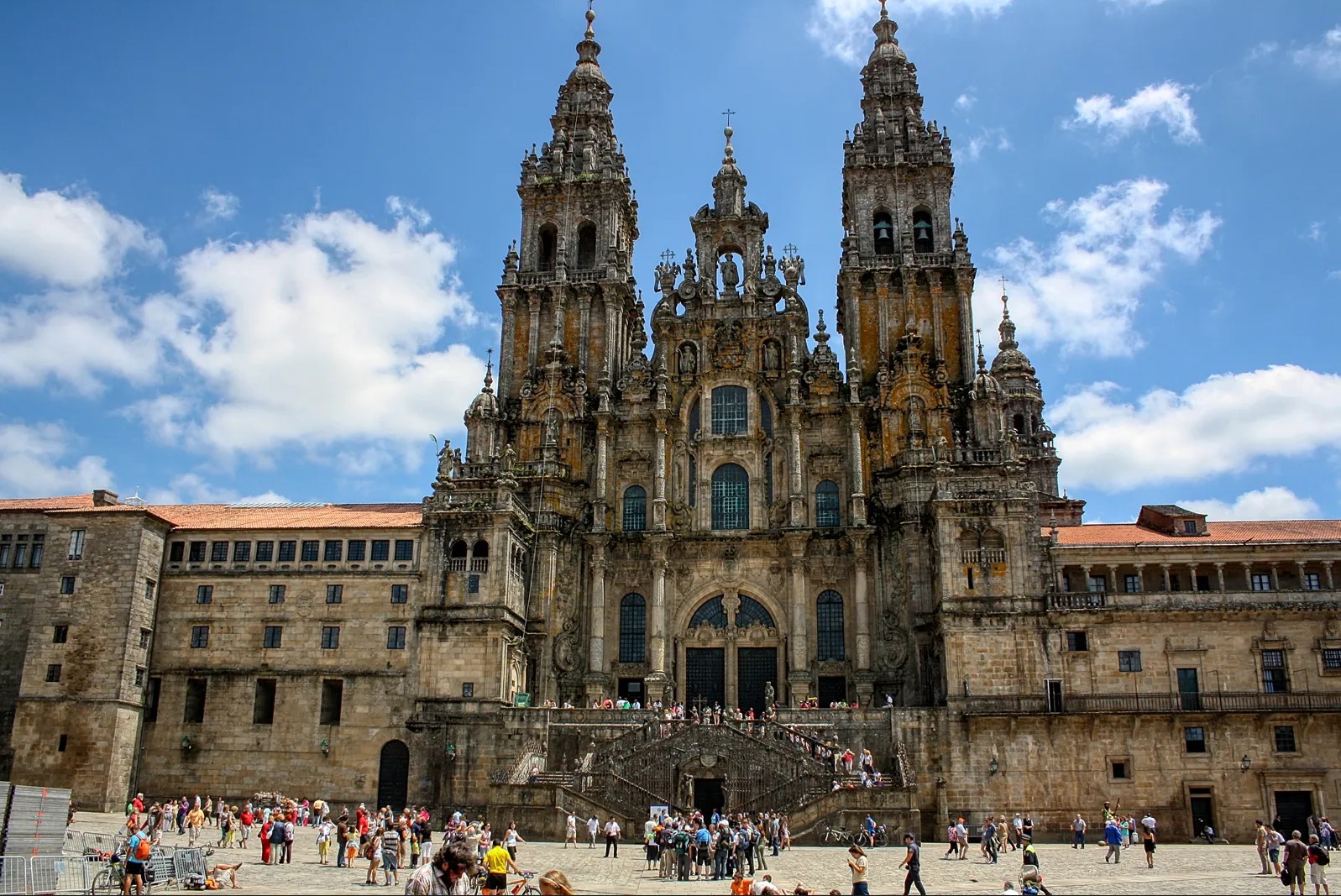
James (Santiago) is the Patron Saint of Spain
In Spanish Saint James is either San Diego or Santiago, and in Spain James’ relics are said to have been entombed at the church of Santiago de Compostela, which is located in the province of Galicia on far northwestern shore of Spain. Santiago is the patron saint of Spain.
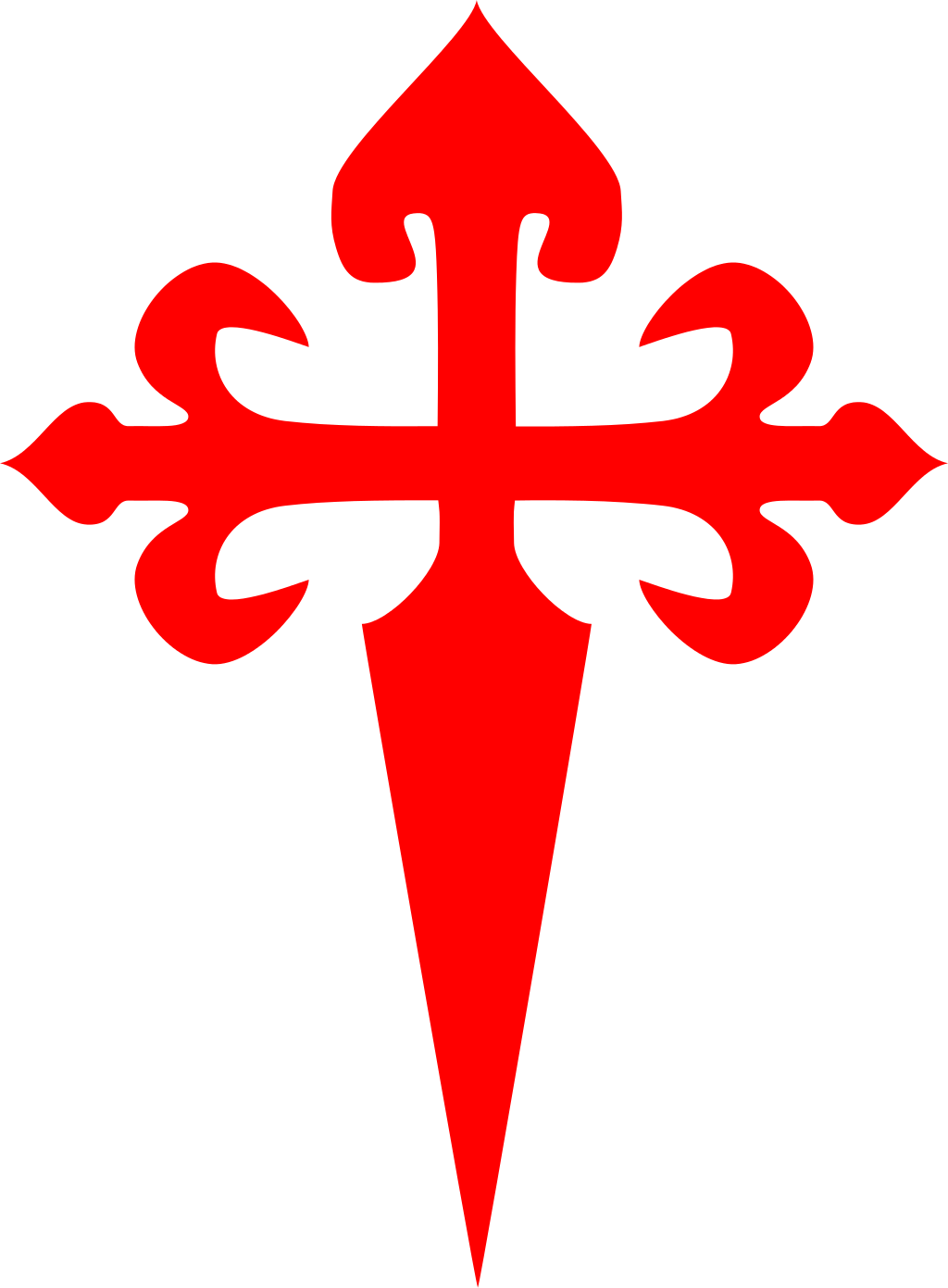
The Cross of Saint James is the medieval era heraldic symbol for the Roman Catholic Order of Santiago.
The Collect for Saint James’ Day
Saint James is remembered on his feast day. In the western church that observance occurs on July 25th. The collect (specific prayer) for St James’ Day from 1928 edition of the Anglican Book of Common Prayer is: