
Who was the guy that figured out what molecule is chained together to carry the coded message or instructions of life?
Few remember his name.
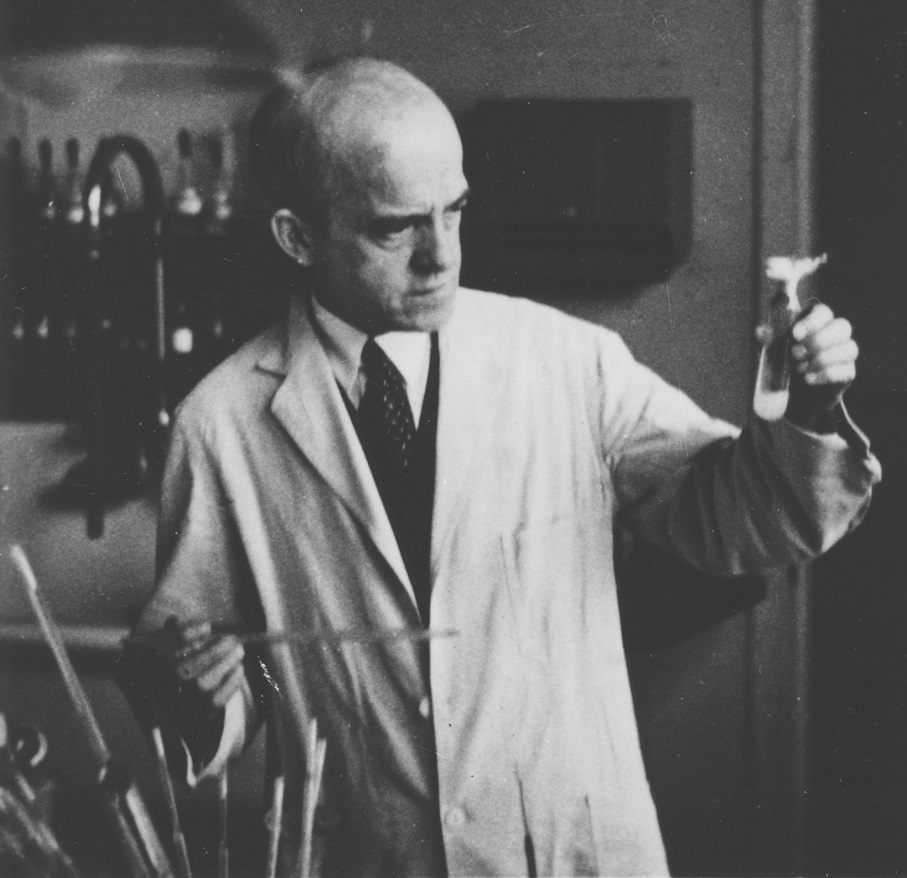
Oswald Avery thought that a scientist should follow the evidence, the way good police detectives do when they are examining a crime scene. He believed that evidence would demand its own verdict.
For him hunches or guessing would never be good enough, and facts needed to be indisputable to actually be facts.
The knavish modern day “my truth”, “your truth” malarkey would not have flown in his laboratory.
Most of Avery’s fellow molecular biologists assumed that the long and detailed coded message which is needed as the “blueprint” instructions describing how the molecules found in a living cell should be constructed and assembled had to somehow be encrypted in a sequence amino acid subunits making up a molecular chain. That is, the coded instruction had to be present in some kind of large protein molecule.
Biology, on the sub-microscopic molecular level, was then and remains today full of many such exceedingly complex enigmas.
The Elusive Enigma Was: Where Is the Coded Message Stored?
Avery and his team found a critical clue, a piece of evidence involving a species of bacteria called Streptococcus pneumonia. That bacteria, S. pneumonia, is the microbe which causes one type of fatal bacterial pneumonia in people.
It turned out that there were (are) two different strains of S. pneumonia, a virulent killer strain, and a harmless non-lethal strain.
The shocking discovery which Avery and his team focused on was that a pure culture of the non-lethal strain could be transformed (converted) into the deadly strain without the two different strains coming in contact with each other.
A bacteria free solution from the lethal strain could convert the harmless strain into the lethal strain. What could that transformative factor in the bacteria free solution possibly be? It had to be some kind of a molecule which contained a coded message being sent from the lethal strain to the non-lethal strain. If the harmless strain got the memo it became a killer.
Avery and his team were just the people to sleuth out this mysterious conundrum.

Avery and his colleagues developed a method to produce a purified solution of that “transforming factor” (a solution of the mystery molecule) which did not have any bacteria in the solution.
After a decade or more of diligent work, Avery’s team discovered that the virulent strain releases a molecule (later referred to as a bacterial plasmid) which can be absorbed by the non-virulent strain. The plasmid molecule has some kind of instruction set encoded in it which taught the harmless non-virulent strain to become a member of virulent killer clan.
Solving the First Enigma Led to a Second One
What was this mystery molecule?
Was it some kind of protein as most biologists assumed?
How were the instructions for its deadliness coded in that molecule?
How were those instructions copied when the cell replicated itself?
Oswald & Colleagues Proved that DNA is the Molecule Which Contains the Messages Encoded in the Molecular Book of Life
Oswald and his colleagues, working at the Rockefeller Institute for Medical Research, spent 31 years (from 1913 until 1944) solving this mystery. They isolated this molecule in the bacteria free “pure” solutions and then analyzed the molecule’s chemical nature to prove that they had, in fact isolated the molecule which carries the coded message (the instructions) for how to transform the harmless non-virulent bacteria into killers.
Then he and his team analyzed the molecule and proved that it was (is) Deoxyribonucleic Acid, more commonly know as DNA.
Avery and his team never got the Nobel Prize for their work.
It took another decade for his molecular biology colleagues to prove that his work was both correct and independently reproducible. By that time the wider scientific community was slowly but surely starting to understand the importance Avery’s work.
Watson and Crick Deduced the 3D Structure of DNA – A Double Helix
Most people who are even slightly interested in biology know about the American graduate student James Watson and his fellow graduate student colleague, the Englishman, Francis Crick, were the ones who used molecular models to correctly deduce the 3D structure of the DNA molecule. They published their model of that structure in British biological science magazine Nature, in 1953.
More than anything else Watson and Crick’s discovery led to a subsequent explosion of research, new findings and vastly increased knowledge in that field.
One of the most audacious of these research programs was the global Human Genome Project which, after 37 years of massive and coordinated international scientific effort, announced in 2022 that it had completed the sequencing of one person’s genome. That means they had figured out the exact sequence of the base pairs which are the de facto letters the DNA code is written in.
The astounding amount of time and amazing global scope of that project clearly illustrates the vast complexity of genetic code contained in every living cell of every living creature in creation.

Molecules Are Not Messages, But They Can Contain Messages
Words written on paper are a sequence of letters. Words are, in turn, combined into groups separated by blank spaces to form meaningful sentences. A sentence is a message written in the intelligible code system of a human language.
The individual letters in the coded messages in the DNA molecule are the nucleic acid molecules which the subunit molecules of DNA. Each nucleic acid subunit molecule is comprised of 20-25 atoms arranged in one of four a specific structural arrangements. During assembly these subunits are chemically bound to one another to form a molecular chain.
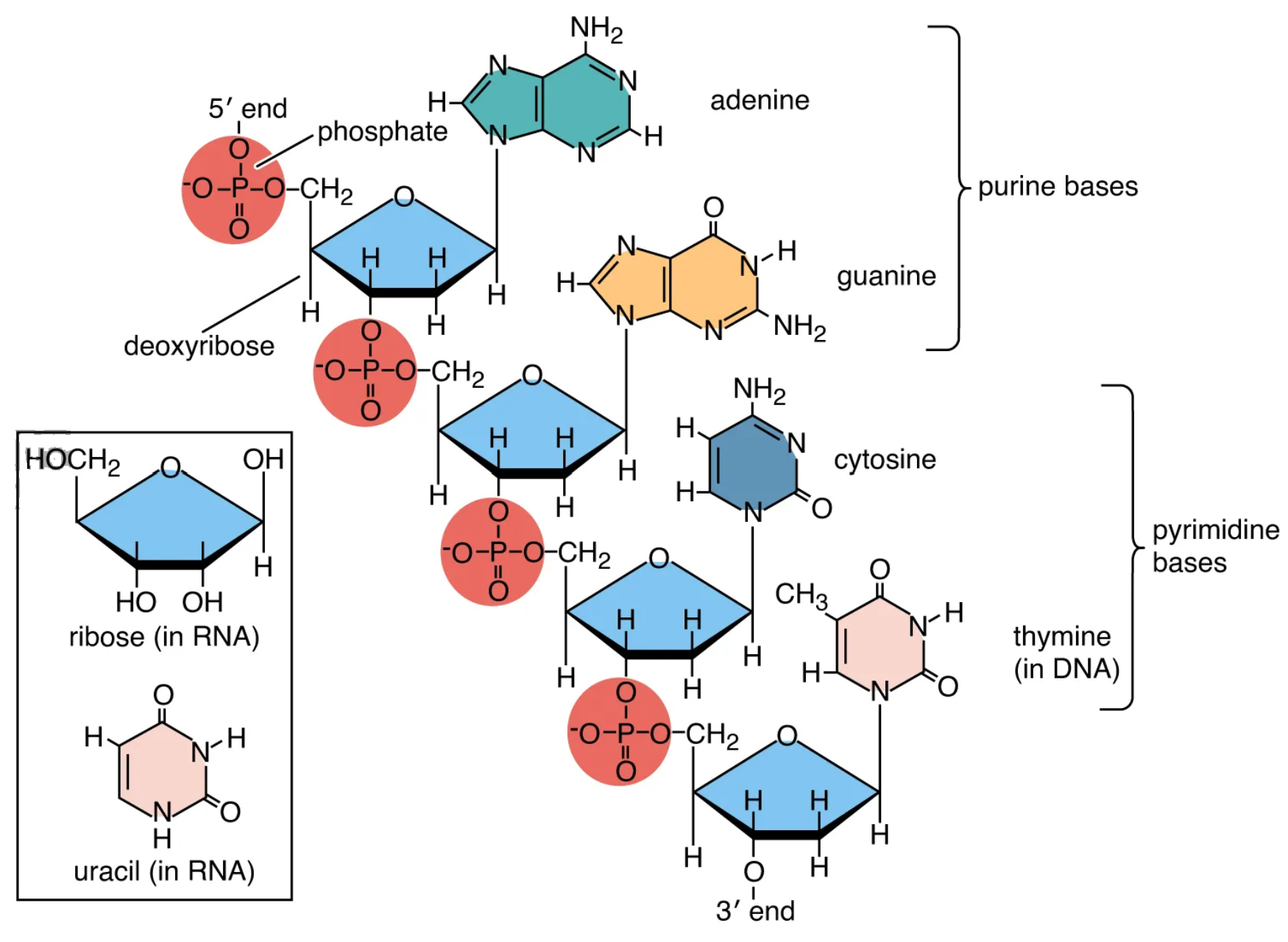
The intelligent or meaningful messages written on the molecular paper of DNA are referred to as genes. A gene is a coded message.
A gene is not the molecule (!); it is the message.
Each gene contains the instructions need for the cell’s molecular factory to manufacture a particular protein molecule. The total group of all the genes in a given organism is referred to as the organism’s genome.
Continuing with the human language analogy of the genetic code, an organism’s genome would be the entire book of the information contained in that single organism’s genetic code.
The Simplest Possible DNA Message of Life
The genetically simplest naturally occurring bacteria is Mycoplasma mycoides.
In an attempt to produce the genetically simplest imaginable living organism scientists have produced a synthetically simplified strain of this microbe which only contains the absolute minimum number of genes needed for life in its genome (the “book” of M. mycoides life). The synthetically simplified strain of M. mycoides is known as JCVI-syn3.0. This strain’s minimized genome contains just 473 genes.
Again, this man-made microbe is the smallest genome of any living, self-replicating organism known.
The average length of one gene in M. mycoides is approximately 982 base pairs long. That means the number of “letters” in the minimal-sized coded message for a living cell is 982 base pairs (or letters) times 473 separate genes (or sentences), which is 464,486 nucleic acid base pairs.

The Improbability of the Correct DNA Message Spontaneously Appearing by Random Chance
If one assumes that an A-biogenic (lifeless, non-biological) chemical factory exists somewhere on the surface of the primordial planet earth. And we assume that this favorable environment has plenty of the nucleic acid sub-unit molecules needed. And if you further assume that this primordial factory is somehow assembling DNA subunits in random sequences to manufacture DNA test molecules to produce the first living cell, then what is the chance that the correct sequence can be randomly achieved?
The sequence must be 464,486 base pairs long. Each base pair needs to be one of four nucleic acids. So the probability is 464,486 to the 4th power (464,4864). This is a one in 4.65468734 x 10²² or: one chance in 46,546,873,400,000,000,000,000 . In other words, that is one chance in 46 trillions, of billions that a random process will produce the sequence needed to create a living cell.
Of course you still need to explain how this inconceivably favorable molecular environment could have occurred naturally on the surface of the primordial earth.
No scientist anywhere has ever come even close to proposing a detailed mechanism by which that environment could have occurred, even for a moment.
The Extreme Improbability of the Spontaneous Abiogenesis of Life
Continuing with the man-made simplified M. mycoides strain example of genetic “simplicity:” That means 464,486 letters (base pairs) have to be arranged in the exactly correct order (sequence) on this DNA molecule for a single Mycoplasma mycoides organism to exist.
However, that DNA molecule must not only spontaneously arise from an inert environment. It must also arise inside of a cell which already has a functioning cell wall, and all the biological molecules needed to maintain the cell’s homeostasis, metabolism, nutrition, and reproduction.
The existence of a one double helix strand the DNA with the genes correctly encoded on it is only the beginning of what a cell needs to be alive, to sustain its life, and to reproduce more of its kind.

Conclusion on the Conundrum of the Existence of Life
The existence of life on our planet is one of the strongest proofs of the existence of an intelligent designer. While that fact certainly does not prove the existence of the God of The Bible, it strongly denies the possibility of random abiogenesis ever explaining life’s existence.
The statement “Yes, but it happened! Life does exist!” is of course a pathetically superficial circular argument which begs its own question and proves nothing.
That fact that the random abiogenesis of biological life is a virtual impossibility must be paired with associated fact of the inexplicable “singularity.” That is, of the impossible pre-condition for the Big Bang being able to be explained by any known and reproducible physical phenomenon which occur within the known universe. That singularity problem is described in detail in The Big Flash (Big Bang) Link to the Big Bang post.
Together these two facts both argue loudly that the creation of our cosmos, and the existence of life on our planet, are very strong evidence of a divine hand acting in this process and thereby being responsible for our existence.
A truthful, honest, and well-informed atheistic person must have a far, far deeper faith in a random stochastic chance process producing the universe and subsequently producing life on this planet than so-called people of faith do.
In honest practicality such opinions are almost always based on personal a priory presuppositions rather than being based on an unbiased examination of scientific facts. Those people started with their conclusion and “reasoned backwards” generally ignoring all of the evidence to the contrary. The faith of a deist, a believing Jew, or a Christian is far more intellectually honest and compatible with the observable facts of the cosmos than that required of an atheistic materialist or a scientist who starts by presupposing the non-existence of the supernatural or the divine.