Korea’s Entire History Was One of Being a Vassal State in Asia
Korea’s long history of subservience to its larger neighbor China started before the Mongolian rule of the Yuan Dynasty period (AD 1271 to 1368). In 1897, at the behest of Japan, Korea declared independence from their Chinese overlords. The Qing Dynasty was crumbling under its own weight and the pressures from various European states and the time seemed opportune to the Koreans. The ‘independence’ of Korea was overseen by Japan, and even that was short-lived. In 1910 Japan invaded Korea and then cruelly ruled it as the first of several colonies of Imperial Japan until the end of World War II.
Korea Divided
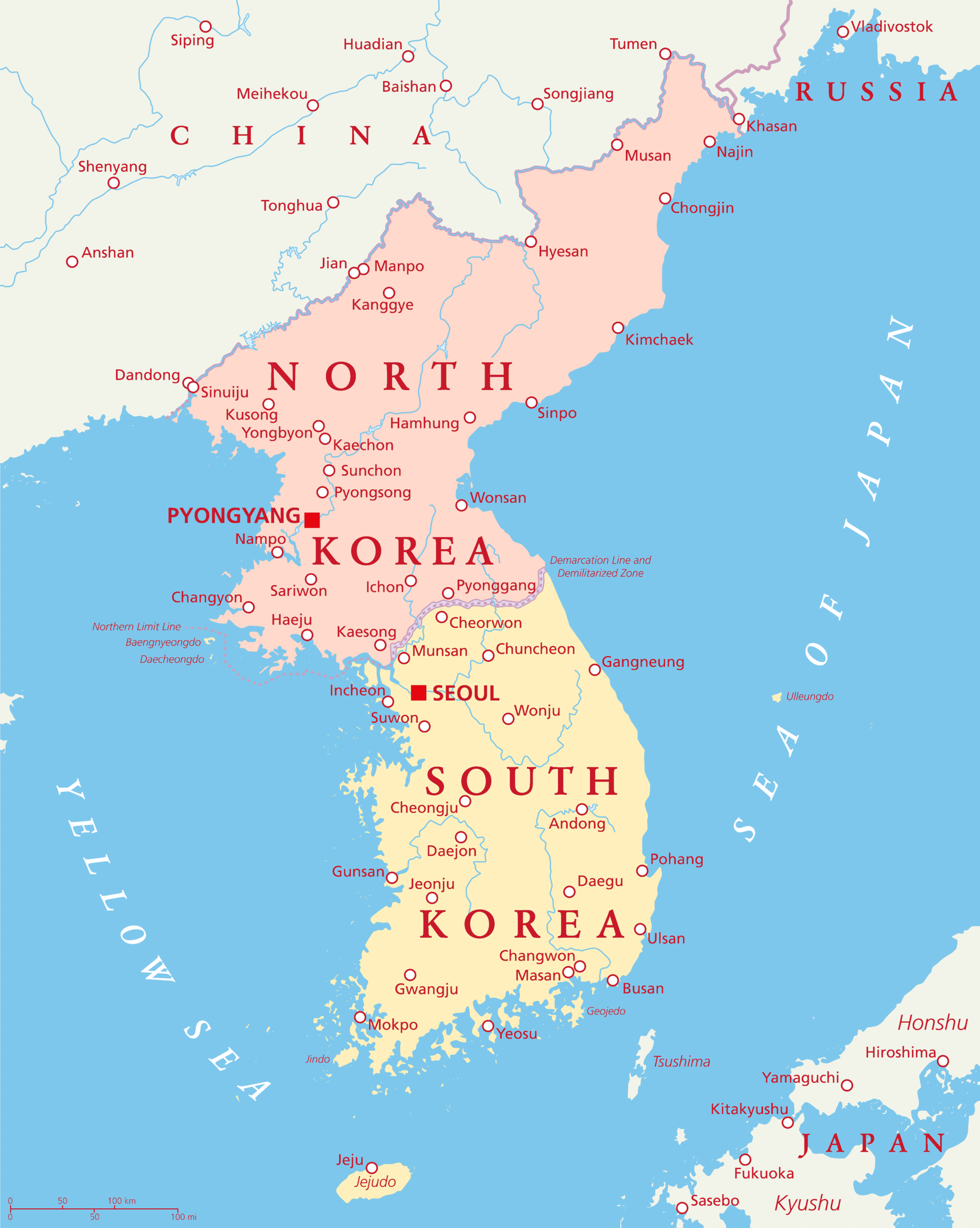
With the surrender of Japan at the end of the Second World War (in 1945) the newly born United Nations developed plans for a trusteeship to administer the Korean Peninsula. The Soviet Union would administer the peninsula north of the 38th parallel and the United States would administer the southern half. As the politics of the Cold War became undeniably obvious, one of the results of that reality was that in the 1948 the UN established two separate governments on the Korean Peninsula. One ruling the north, and one ruling the South.
Invasion from the North – The Korean War was the Worst Possible Thing for Nascent South Korea
Five years after the end of the Second World War, the Russian proxy of North Korea crossed the 38th parallel with Russian T-34 tanks and invaded South Korea, attempting to establish a Communist-based forced “re-unification” of the peninsula. During the Korean War (1950 to 1953) South Korea’s barely existent economy was further destroyed. Every city in both the north and the south was devastated during that war. Nearly 5 million people lost their lives. More than half of those casualties were civilians. Additionally, some 1.5 million people suffered significant and disabling physical injuries.
The Long Chain of Authoritarian Rulers in South Korea
In 1948 Syngman Rhee became the first in a long line of authoritarian strongman “president” dictators of the Republic of Korea (as South Korea is officially known). He ruled it through the turmoil of the Korean War and afterwards until 1960. Dr. Rhee’s administration was dictatorial to begin with and it became all the more authoritarian throughout the period of his reign. It was marked by electoral fraud and suppression of dissent, leading to widespread public unrest and his eventual resignation in 1960 following violent protests. South Korea’s rule by strongman dictators continued until 1989.
South Korea’s Transition from Pure Dictatorship to Nascent Democracy – 1989
In 1989, the government South Korea was transitioned from a military dictatorship to nominal democracy. This event followed the end of Chun Doo-hwan‘s rule in 1988. The country held its first free presidential election in December of 1987, marking a significant, but incomplete shift, away from authoritarian governance.
In 1945 South Korea Started out as One of the Poorest Countries in the World
Suffice it to say that at the end of the Japanese occupation of the Korean Peninsula, South Korea was a backwards, illiterate, undeveloped, and agrarian-based country. In 1945 only 22 percent of the population of South Korea could read or write. That illiteracy rate was a portion of Korea’s inheritance from its colonial master, Japan. At the same time, South Korea’s national economy was primarily agrarian, lacking any significant industrial infrastructure due to its previous role in supporting the Japanese Empire. Again, during the Korean War, South Korea’s barely existent economy was further devastated.
In 1961 South Korea’s mean yearly income stood at a paltry $82 per person. Sixteen years after the end of the Second World War, South Korea was still one of the poorest counties in the world. The country’s main exports were tungsten, fish and other primary urban commodities such as low grade clothing and household items. However during the short 12 years of his authoritarian government of Syngman had pushed the national literacy rate up from 22% to 71%.
Almost all of South Korea’s banks were state owned. From the point of view of Daniel Defoe, Friedrich List and what later became known as the East Asian Economic Developmental Model, that was an advantage to South Korea. The government could easily control the capital flows of the nation.
Korea’s chaebol Corporate Development System
The South Korean economic development process utilized the already existent Korean chaebol system of industrial development. The term chaebol comes from the Korean word 재벌 (jaebeol) which is derived from the Sino-Japanese root words zaibatsu, “財” which means wealth and “閥” which means clan. A Korean chaebol is an extended family-controlled industrial conglomerate. Korean chaebols are generally closely linked to and supportive of the government’s broader development plans, and nascent enterprises of Korean chaebols often receive both government subsides and internal financial support from their conglomerate chaebol owners until they reach a level of competitiveness and become self-sufficient.
Examples of Korean chaebol family conglomerates include Hyundai Heavy Industries, the SK Group, Samsung Corporation, the Lotte Corporation, Posco Holdings, the GS Group, and the LG Group.
Samsung is a Good Example of the Korean chaebol System
A good example of Korea’s story of economic development via its chaebol system is that of the Samsung Corporation. The company name Samsung is the Korean word for three stars. Samsung started out in 1938 as an exporter of fish, vegetables and fruits, mostly to Korea’s overlord Imperial Japan.
Until the mid 1970s its primary business lines were the sugar refining and textile manufacturing processes that it had set up in the 1950s. When Samsung acquired an interest in Korea Semiconductor in 1974, no one took the endeavor seriously. When it declared its intention in 1983 to take on the big boys of the semiconductor industry from the US and Japan by designing its own chips, few were convinced. Today Samsung is one of the world’s leading producers of cell phones, large screen TV display systems and numerous other electronic products. This remarkable growth occurred throughout the dark times South Korea’s numerous repressive military dictatorships. Today Samsung Corporation is run by Lee Jae-Yong, a member of the third generation of its chaebol family founder.
Friedrich List & The East Asian Economic Developmental State Model
After the Korean War, South Korea was clearly in the western alliance system. As such America, the World Bank and the International Monetary Fund (the IMF) applied strong international pressure on the South Korean government to follow its ill-advised quasi-open market developmental system.
The South Korean leaders were wiser than their western advisors. They rejected the proto-globalist international developmental model in favor the advice of the long-dead German economist Friedrich List which he detailed in his seminal but often neglected book, The National System of Political Economy. List’s wise nationalist advice had been adopted by Japan during its Meiji Restoration which began in 1868, and the Japanese had reinforced that plan when they established their renowned Ministry of International Trade and Industry (MITI) in 1949.
Roughly the same overall plan was adopted by each of the so called Four Asian Tigers, of South Korea, Hong Kong, Taiwan and Singapore. The economist Robert Wade called it the East Asia Developmental State Model (EADSM) of economic development, as that term stuck.
The East Asian Developmental State Model refers to a form of state-led economic planning that emphasizes strong government intervention and strategic guidance in the nation’s economy. The EADSM was followed adroitly in countries like Japan, and the Asian Tigers. This model has been credited with driving the rapid industrialization and economic growth in the region during the late 20th century by fostering cooperation between the state and the major industries in the nation.
The Six Pillars of National Development
The EADSM is describe in detail in the Asian Tiger Economies post (linked below). To summarize, the six pillars of the plan include:
- An aggressive literacy campaign to develop the human capital of the nation. The South Korean people have invested heavily in education, which has helped them to create a skilled workforce.
- An aggressive land redistribution program to put farm land into the hands of the farmers.
- The development and support of an export oriented manufacturing program. The South Korean State has focused on exporting goods and services, which has driven its economic growth.
- Extensive state development of national infrastructure assets to support export industries.
- The financial repression of aggressive capital control laws. The South Korean State has intervened in the economy to maintain its capital resources in order to promote national growth and development.
- Extensive South Korean State government based controls, regulations and tariffs to protect infant national industries until those industries could complete internationally on their own. In South Korea this intervention has included extensive infrastructure development, providing financial subsidies, tax breaks, and other forms of government support to businesses.
A Few of The Details of Korea’s Economic Miracle – 1969 to 1981
In 1973 the military dictator “president” Park Chung Hee launched the ambitious Heavy and Chemical Industrialization (HCI) program. South Korea’s first steel mill and its first modern shipyard went into production. The first locally designed cars began to roll off assembly lines. Initially those cars were mostly made by using imported parts.
In the following year the sugar refining and textile manufacturing company Samsung acquired an interest in Korea Semiconductor. New firms were set up in manufacturing machinery, and producing chemicals, and other advanced industries.
From 1972 to 1979 South Korea’s per capita GDP grew by more than five times it previous value. Dictator Park’s initially delusional goal of achieving a $1,000 per capita GDP by 1981 was realized four years ahead of schedule. Buying domestically made products became the patriot duty of every South Korean citizen. The valuable foreign currencies obtained by exports were really the blood and sweat of their “industrial soldiers” fighting the export war in the country’s factories.
The South Korean State used import bans, high tariffs and excise taxes (luxury consumption taxes) to achieve its goals of the rapid economic development of the nation.
Korea’s economic miracle was not, of course, without its dark sides. The State ignored Dickensian working conditions in factories and it allowed 12 hour work days. Young girls were forced to get jobs after they finish primary school so their family could make enough money to be able to allow at least one brother to receive a higher education. Later that son’s relative prosperity would be used to raise the living conditions of the entire family. South Korea literally lifted itself up by pulling on its own bootstraps.
The rising general economy of South Korea did not change its military dictatorship heritage. In October of 1979 President Park was assassinated by his own Intelligence Service chief. A brief “Spring of Seoul” period followed with hopes of democracy welling up in the hearts of the South Korean people. But that vain hope was brutally ended by the next military government of General Chun Doo-Hwan, which seized power after the two-week armed and popular uprising that was crushed in the Kwangju Massacre of May 1980.
Despite this grave political setback, by the early 1980s, South Korea had become a solid middle-income country, on a par with Ecuador, and Costa Rico.
By 1996, the country even joined the Organization for Economic Co-operation and Development, the OECD. The OECD was a club of wealthy western-block countries that co-operated with each other economically.
Conclusions
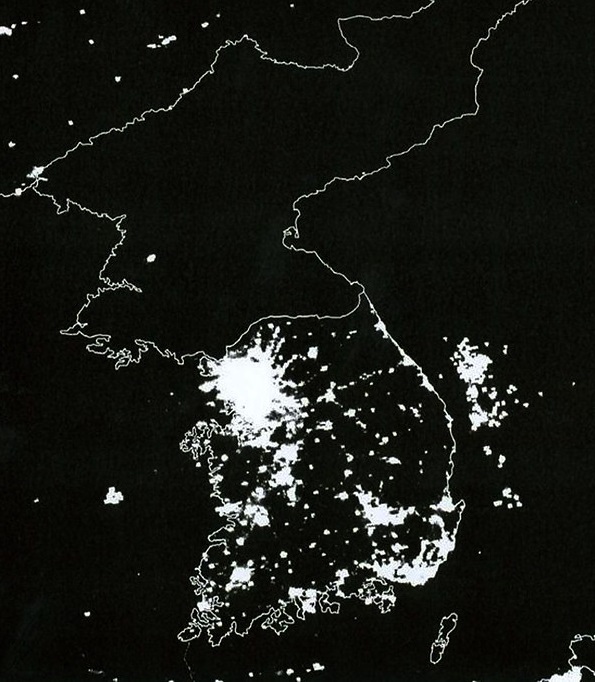
South Korea’s “Asian Tiger” economic miracle did not have anything to do with the typical western love of the ancient Greek city-state ideal of democracy. Nor did it happen because the people of South Korea embraced the American constitutional ideals of personal freedom or individual liberty. Those things came to South Korea long after it had paid the blood sweat and tears of developing its national economy, mostly on its own.
South Korea succeeded, in part, because it ignored the proto-globalist free-market advice which had become the fashion of the Unholy Triad of western economic wisdom. That Triad of the International Monetary Fund (the IMF), the World Bank, and the World Trade Organization (WTO), had not, and do not give economically sound advice to the developing nations of the world.
Rather, the triad routine offers advice which is likely to perpetuate the servitude of those nations to the power elites of the World Economic Forum types and its ilk and to the nearly endless pocket minions of the Western Nations which kowtow to those Globalists.
During the Cold War, developing nations were often told they had to make a decision between the baseball, hot dogs, apple pie and Chevrolet-loving American West and the ruthlessly authoritarian orbit of the communist-block nations. Several nations chose to abjure that false dilemma. Instead they chose what was then considered economic heterodoxy and they prospered despite their national disobedience to Western economic orthodoxy and wisdom. South Korea is an example of such a nation. South Korea chose its own path and walked that path to great success.
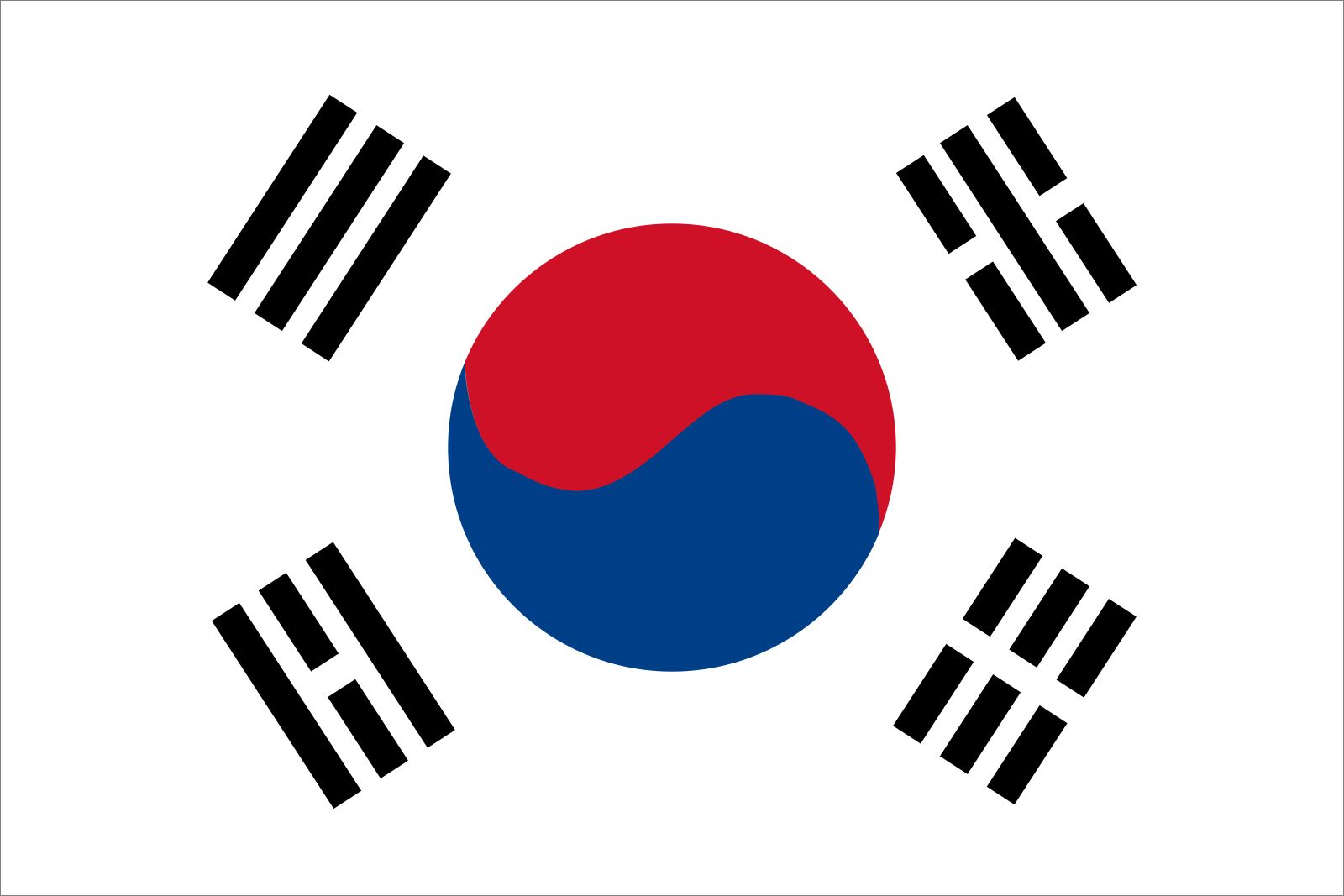
The South Korean flag known as the Taegeukgi. It features a white background symbolizing peace and purity, a central red and blue taegeuk representing harmony between opposing forces (yin and yang), and four black trigrams in each corner that symbolize movement and balance in the universe. Together, these elements reflect the interconnectedness of all things and the values of the Korean people.