
After the Second World War the victorious Americans did something utterly unique in world history. They launched a massively generous global campaign to help the previously embattled and badly damaged nations of the world to rebuild themselves.
In Europe the campaign was referred to as the Marshall Plan. All the war-torn nations of Europe gladly accepted the massive financial assistance offered accept the Communist Soviet Union which summarily and abjectly refused the American offer. A similar helping hand was offered throughout Eastern Asia, not just to the former enemy of the allies, Japan, but to essentially all of the war-torn nations of the region. The scope of the non-Japanese East Asian assistance was not quite as grand as the Marshal Plan but it was present nonetheless.
The Western “Bad Samaritans” of the IMF & The World Bank
The intrusive advice of western economists working for the proto-globalist, free-market advocating World Bank and the International Monetary Fund was not always welcomed and it was generally recognized by the underdeveloped nations involved as the unwise advice it was. As the Oxford Trained, South Korean economist Ha-Joon Chang points out it was, in fact, not only unsound advice it was transparently “bad Samaritan advice” which would limit the national improvement of any nation which followed it.
The wise statesmen and economists of several East Asian Nations developed their own independent plans instead of listening to the western economists free-trade orthodoxy. While the East Asian nations involved each personalized their economic development plans in their own ways the overall model was dubbed The East Asian Developmental State Model by the Western economist Chalmers Johnson. He used that description in his insightful and influential 1982, book, MITI and the Japanese Miracle: The Growth of Industrial Policy 1925-1975, and that term has pretty much stuck ever since. However it is not really accurately descriptive and Johnson failed to describe the older, more established basis for the plan.
The Secret Which was Never Actually a Secret
The East Asian Developmental State Model is, in fact, just the latest rendition of the economic model proposed by the German economist Friedrich List in his seminal 1841 book The National System of Political Economy. While much of List’s work is original, what he winds up describing is the state economic developmental model originally followed by King Henry VII of England, starting in 1485, which was described in detail by Daniel Defoe in his insightful seminal book A Plan for English Commerce which predates Adam Smith’s famous work on Economics. See The Zeroth Industrial Revolution post on this web site for more details.
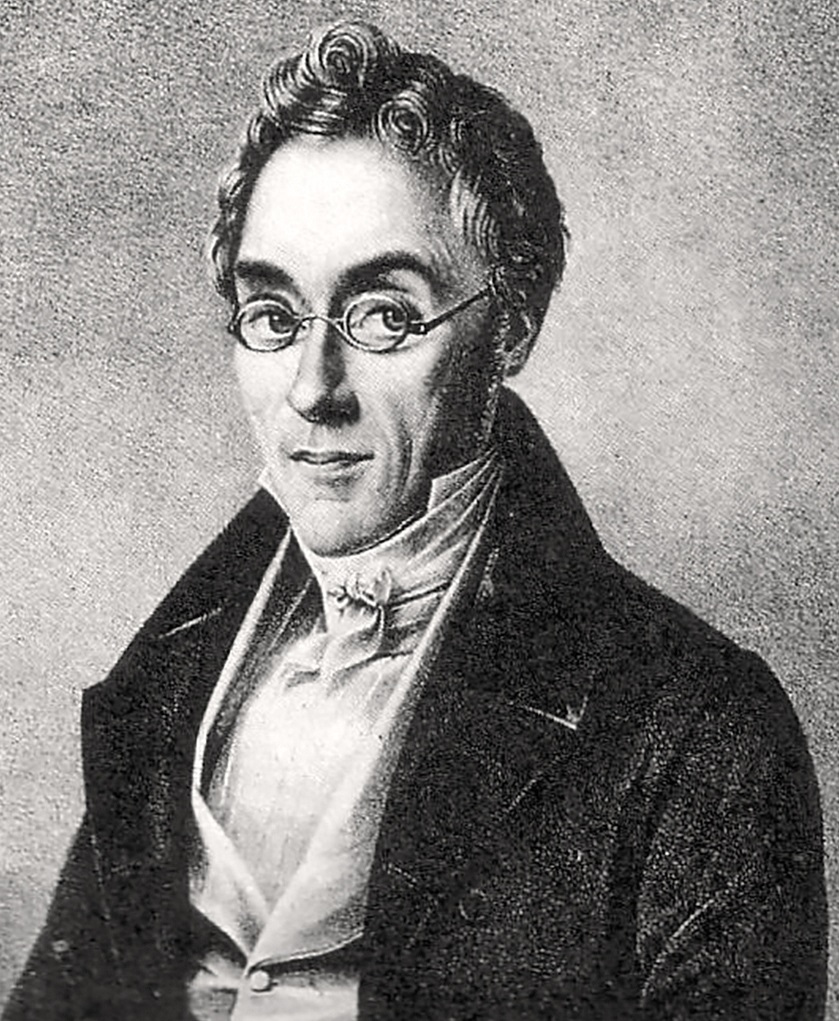
Both England’s First Industrial Revolution and America’s Second Industrial Revolution followed essentially the same developmental plan originally described in detail by Defoe & List.
What is more, after US admiral, Matthew Perry opened up Japan in 1854, the Japanese nation launched its 1860 Mission Tour of the United States. The Japanese delegation was comprised of three samurai ambassadors and an associated entourage of 74 Japanese agents and scholars who were intent on studying the Western way of doing things. By 1868 the Japanese had embarked on their national economic developmental journey known as the Meiji Restoration, which incorporated many of the economic principles described by Friedrich List.
The point is that there was nothing secret, unique or overly insightful about the economic plan which was dubbed The East Asian Developmental State Model. The economies of those nations which followed the established national economic development program meticulously developed rapidly. Those that followed it somewhat half-heartedly developed more slowly. Those who ignored it remained third world nations.
Fine Then! – What Are the Specifics and Details of This Development Plan?
Economic Development is not a stepwise sequential process. The pillars of economic development are not mutually exclusive and they should they occur more or less simultaneously. Like building a modern high-rise skyscraper, the pillars are each built progressively. If a single pillar is missing the entire structure can collapse. The economic development program does, however, start whatever land redistribution may be needed!
The First Pillar: Human Capital Development
It should be a given that national development is critically dependent on the education of the people. Near-universal basic literacy is a fundamental need in any modern nation. Even the poorest nations can support basic literacy programs. Higher education and trade skill education are also important, but all of that stands on a foundation of basic literacy.
The Second Pillar: Land Reforms – The Farmable Land Must Belong to the Tiller.
All undeveloped nations have an agriculture-based economy. Food and water are the most basic of human needs. An important early stage in the development of ancient societies involved the domestication of animals and the development of irrigation systems to support the farming of food crops. Those systems in turn provided more stable food sources for the people involved. In more modern times, poor people who have even the smallest amount of land can and will grow gardens.
The first step a developing state must take is to brake up large land holdings and redistribute them to the people who will till the soil and grow produce on the land.
After the American Civil War Abraham Lincoln and Ulysses Grant wisely and strongly supported Sherman’s “40 acres and a mule” plan for the agrarian land ownership to redistribute the agricultural land of the gigantic plantations which belonged to the Southern plantation-owning aristocracy. Sherman’s plan would have provided a means of independent survival and above-subsistence living for freedman families in the South. Lincoln’s assassination immediately led to Vice President Andrew Johnson becoming the president. Johnson was a card-carrying member of the pro-Southern aristocracy, pro-plantation, pro-slavery Democratic political party. The Democrats favored the plantation-owning Southern aristocrat’s neo-slavery plan of share-cropping which abjured land reform, disenfranchised the Freedman black families, and preserved the wealth of the Southern aristocrats. The Republican political party’s program for post-war Southern reconstruction was definitively ended by the compromise of the most corrupt election in US history, that of 1876.
The Great Ukrainian Famine and starvation of the still-forming Soviet Union was caused by Stalin’s foolish farm collectivization program. In Communist China Mao followed in Lenin’s and Stalin’s foot steps and collectivized Chinese farming. The first wise step in Deng Xiaoping’s period of “reform and opening up” in China in 1979 was the re-privatization of Chinese farming. Deng’s plan also allowed the produce of those farms to be sold at the market-based prices which growers of the produce were happy to accept.
The first socially and governmentally difficult act which starts the economic development of a rising nation is land reform. Agricultural land reform allows the individuals who are doing the work to have a stake in the produce they grow on the land. After the tillers of the land are enabled, their farm productivity increases beyond the subsistence needs of the nation. Surplus food becomes an export commodity. The hard-cash obtained from agricultural exports allows the developing nation to use the incoming funds to buy expensive foreign-made manufacturing equipment to support the second pillar, that of national manufacturing endeavors. The land reform program is the fundamental first step of every developing nation’s journey down the road to prosperity.
The Third Pillar: The Development of Export Oriented Manufacturing
A nation focused on its own economic development, and that of its common working people, must be exporting products into the global market to produce the hard cash payments which the developing nation can use to build its infrastructure. However, this is not necessarily a two-way street.
Protective tariffs don’t only protect infant industries growing within the developing nations. Tariffs also decrease the amount of money a country spends on foreign made imports. Developing nations need to retain all the hard cash they can.
Export manufacturing industries start as import substitution manufacturing endeavors which manufacture goods for domestic consumption which would otherwise need to be imported into the developing nation. This process starts with modest production of cheap goods such as household items and clothing, but it must not stop there. The nation’s bootstrapping efforts must push for both heavy industries and for sophisticated first-world high technology manufacturing as its target endpoint.
The State must husband the development process. It must vigorously protect and economically subsidize its infant industries. The State can provide prolonged tax breaks and regulatory relief to a favored industry. The state must also provide the extensive infrastructure required by the national industries to prosper. This includes roads, bridges, railroad lines, port facilities, airports, electrical power grids, and other energy resources.
National companies may need to purchase trade secrets or licensing agreements from foreign firms. The protectionist process may also involve national practices which are arguably “unfair.” These morally marginal, or even overtly immoral, practices often include rigging market rules in favor of the favored industries, facilitating reverse engineering so companies can learn “how it is done” by the foreigner engineers who proceeded them, or it may involve the government ignoring or even outright helping the theft of foreign intellectual property to occur.
The State must continue to steadily develop the national infrastructure. However, it must also progressively wean those protected industries off of state support. The weaning process allows and provokes those industries to improve their product quality, their manufacturing efficiency, and their personnel and supply chain management processes, all so they can learn to compete in the global market place. This process of state protectionism transitioning to competitive economic independence occurs at different rates for different industries.
The Fourth Pillar: Financial Repression
At first this pillar seams the most counterintuitive all. The term financial repression refers to a set of practices designed to control capital flows and financial markets so that the state can direct capital to the market sectors which are favored by the state’s developmental strategy. These practices typically include:
- Regulated low interest rates. Money is the oil which lubricates all commercial endeavors. The cash flows from economic growth must not be captured or diverted by the “rent-seekers” who wish to live off of interest income (e.g., banks and financiers), and hence desire the national interest rate to be higher. Lower interest rates also decrease government borrowing costs to fund state investments in infrastructure and corporate borrowing for investments in growing industries. Sadly while this practice has been foundational to all developing economies. It is also the underlying cause of recurrent market instability which has resulted in essentially ever market crash in the last 300 years of the modern industrial age. Hence this artificially low interest rate policy is an initially beneficial but nonetheless dangerous policy which should be carefully managed and progressively extinguished over time. However it rarely, if ever, actually is. There is a much safer optimum interest rate which favors stable national economic growth but that policy is not politically viable in most developing nations. It is not tenable in most modern developed nations, either.
- Undervalued Exchange Rates. A tightly managed and undervalued exchange rate for the national currency makes the nation’s exports less expensive in the global marketplace, and thereby increases the volume of products exported. An undervalued exchange rate also makes imported products more expensive than they actually are, and hence it limits hard cash leaving the country that way. At the end of the First World War, France used this “bugger thy neighbor” trick to rapidly economically recover from the devastating effects of that war. The French thereby caused their “ally” England to struggle to recover from the costs of the war, which England had just accomplished when the Great Depression arrived and changed the game for everyone.
- Capital Controls. Capital controls are a group national of policies and regulations which are combined to prevent wealthy companies and individuals from siphoning off the developing nation’s wealth and capital resources into investments abroad. Capital controls thereby encourage or compel the profits achieved to be reinvested in the domestic economy.
The Fifth Pillar: Government-Business Coordination – Protected State Capitalism
This pillar of the developmental state model is simply a broadening and expansion of the third pillar, of developing export industries. Practices associated with this pillar may include the establishment of special economic zones, and the recruitment of Foreign Direct Investment in the developing nation, or even Greenfield Investments in which a foreign corporation builds an entire turnkey factory into the developing country. State owner enterprises (SOEs) are also part of this pillar.

The Strange Bedfellows Connection
During the Cold War and since the developmental state has had to try to build itself up in an increasingly adversarial environment. As Lord Acton adroitly pointed out “Power corrupts, and absolute power corrupts absolutely.” There is always a would-be insurgent with friends who opposes the existing power elites and wish to depose them.
The wise counterinsurgency program which provides a steady improvement in the lives of the common people of a developing nation is fundamental to avoiding insurgencies. Preventing insurgencies is a critical part of the process of national development.
Dictatorial autocracy is not necessarily the enemy of democracy. This is particularly true in today’s post-democracy world. Many of the democratic republics of the West are far closer to being surveillance police states than they are similar to the paradigm of the ancient Greek city state democracy.
Conclusions – What works, Works!
The modern Post-WW-II developmental state model is just the latest iteration of a roughly 550 year old process by which nations can raise themselves up by their own bootstraps. Despite all that has changed in that period of time, the constant throughout it all has been human nature, which does not change.
Despite all its flaws and pitfalls the fundamental nature of free-market commercial exchange, and of self-interested economic decision making is still the basis by which more of the world’s poor have been raised out of the extreme depredations of poverty and into the relative prosperity of the modern age. What Karl Marx described derisively as “capitalism” has done more good than all other economic system in the history of mankind combined. Even Communist China eventually used a market-based system to develop itself economically and to thereby enter the modern world. China’s exit from its long and deadly period of Maoist isolationism, was the best historical moment in the entire history of communist states.
What works, Works!