

The modern American administrative state is not a product of the American of Constitution. This transformation did not come from the ordinary course of historical change and development.
It developed as a result of a radical “new” philosophy of government which was deeply antagonistic to the American Constitution and was instead modeled on the age-old elitist and aristocratic societies of various Western European nations, especially Germany and England.
Neither of these models were either new or modern. Nor were they historically “Progressive” as their American advocates proffered them to be.
By the Mid-1800s, the Wealthy East Coast Elite Families Were Sending Their Privileged Young to be Educated in Europe
By the mid-19th century successful East Coast American elite families were sending their children to European universities to obtain more sophisticated post-secondary and graduate level educations. Soon these young people were importing the European anti-democratic ideas they were learning there back into America.
In the late 19th century, these new advocates of those actually ancient concepts of a rule by the elites of society were (as they had always been) actually completely out of touch with the ordinary people, either in the Europe nations they were being schooled in or in their America society, back home.
The young Americans returning with their new European educations became avid proponents of rule by an isolated, unelected oligarchy of elite “administrative professional experts;” that is by people like themselves. They declared themselves to be the “Progressives,” which made their ideas sound trendy and new. They began to actively agitate for a replacement of the constitutional and the populist based democratic government that the American political tradition had established.
Don’t get me wrong many of the complex problems in modern industrial societies need experts to understand and solve them, but that regulatory process needs the function within the system of anti-corruption safe guards that the Founders carefully constructed in our Constitution. Technical progress in society does not make “government of the people, by the people and for the people” obsolete. Selfish human nature is not new and it is not changing. Wise government is not “historically contingent,” as the self-described “Progressives” claim.
This Progressive “new” thinking about the principles of government was openly hostile to the existing American Constitution. Nonetheless it soon led to a host of concrete changes in the fundamental political institutions in America.
Our government today incorporates in it many modifications which were originally initiated as these modernizing Progressive innovations. They are often unrecognized as such because they are, now, so deeply ingrained in American political culture.
This quiet, gunless coup d’etat ultimately changed American from being Abraham Lincoln’s populist government “of the people” into a government ruled by an isolated progressive elite oligarchy.
This new class of policymakers actually disdain the ordinary people of the American demos, and condescendingly think of us all as Hilary Clinton’s “basket of deplorables.”
Human Governance is a Tricky and Complex Thing
The Strange Bedfellows of Geopolitics series of posts on this website gives multiple examples of modern nations whose autocratic rulers provided significant and lasting benefits to the common people of their countries. Link to Strange Bedfellows of Geopolitics.
The democracy and the individual freedoms of a representative republic such as the one founded in the United States in 1776 is not the only road to human thriving. However government by a representative republican democracy of the ordinary people, is certainly the most direct, and the most generally-just path to that flourishing.
One of the Wise First Principles of the Founders was that Selfishness is Everyone’s Basic Nature
The most important assumption about unchanging human nature which was made by the Founding Fathers of America is that core human nature is selfishness. One of the first words learned by a developing infant is “MINE!”
From a Darwinian perspective, self-interestedness makes sense.
Nonetheless, good parents work to teach their growing children to share with one another. However, at best, a “sharing nature” is a newly taught thing that is overlaid on the core, most natural, and most basic true nature of self-preservation and self-interest.
Great statesmanship is altruistic.
The heroes in western history and literature are those who were (are) altruistic and selfless. They are remembered because their selflessness was or is exceptional in human society.
The selfless agape love of God, demonstrated by Jesus Christ giving up his own life for the sake of others, is the ultimate example of such altruism.
As the primary author of most of the text in the U.S. Constitution, James Madison said in Federalist Paper 51:
“If men were angels, no government would be necessary. If angels were to govern men, neither external nor internal controls on government would be necessary.”
And a little after that:
“A dependence on the people is, no doubt, the primary control on the government; but experience has taught mankind the necessity of auxiliary precautions.”
To be sure selflessness is a higher, learned level of behavior.
Nonetheless these nobler learned behaviors such as sharing are an unnatural overlay on our most basic selfish nature.
A Broad Philosophical Question Regarding Human Governance
Is it even possible to construct a generally just society when the core of mankind’s nature is so flawed and selfish at its most basic level?
Maybe.
Maybe not.
The eternal truth about the critical flaw involved in human action leads to a corollary fact.
People in positions of power and their lieutenants are naturally corruptible.
At the very least the structure of a just government needs to be rigorously sought and if achieved it needs to be actively defended and maintained.
America’s Founding Fathers Wrote a Wise Constitution

The problem of the natural corruptibility of the movers and shakers of nations was one of the primary guiding assumptions used by the Founding Fathers when the US Constitution was written by those wise men who labored behind closed doors in the Philadelphian heat of the summer of 1789.
It is why James Madison’s fleshing out of the ideas of his French mentor Montesquieu which were incorporated into the American constitution required him to carefully devised system to separate the powers which were granted to each of the three branches of government. It is why the system of Constitutional checks and balances is eternally needed in every bureau of government. It is why the process of government regulation should never be isolated or remotely administered away from the sight of the ordinary people who are ruled by those regulations.
The founders also wisely feared the tyranny of the majority which direct democracy produces. Hence they required supper majority votes for many items, such as the process of adding amendments to the Constitution.
Their realistic understanding of human nature is why the Founders incorporated those protective systems in the Constitution and the structure of the American system of government which they devised.
Those Founding Fathers and their many peers had experienced tyrannical government in detail and they wanted to protect the people of the nascent United States from becoming subjected to that bad experience again, if such a goal was humanly possible.
They were not wrong!
The truth of their clear-eyed concept that flawed nature of mankind is eternal, and that it runs through every thread of human history stimulated them to provide the protections they devised.
Famously, at the conclusion of the Constitutional Convention, when Benjamin Franklin was asked what kind of government the convention had established for the new nation, he replied:
“A republic, if you can keep it.”
The last half of that statement is the topic of this post. The knavish denial of the truth about mankind’s flawed nature is the core mistake that led to the folly of both Hegel and Marx.
It is why neither of those ideals has ever produced a just society.
The Common Mistake Both Hegel and Marx Made in Their Models of Human Governance Was Their Idealistic Belief in the Probability of Human Selflessness
In the Germanic countries of Napoleonic and post Napoleonic Europe, Prussia dominated the German States. Fredrick William III was the King of Prussia from 1797 until his death in 1840.
He was, by all measures, an enlightened ruler.
He was the Holy Roman Emperor, until that empire was abolished by force by Napoleon and the Federation of the Rhine was established, in 1806.
Fredrick William was also one of the architects of the German Confederation that was established at the post-Napoleonic Congress of Vienna in 1815.
Fredrick was ardently aristocratic and he feared the principles of American democratic self-governance. He especially feared the radical anarchistic principles of the French Revolution. He scorned and abhorred the burgeoning theories of democratic government.
His “enlightened” view was one of wise government rule provided by the best and brightest minds of the academic elites in Prussian Society. Progressive rule by an oligarchy of the experts would surely be superior to rule by the rabble; rule by the ignorant masses of the mob, in a democracy.
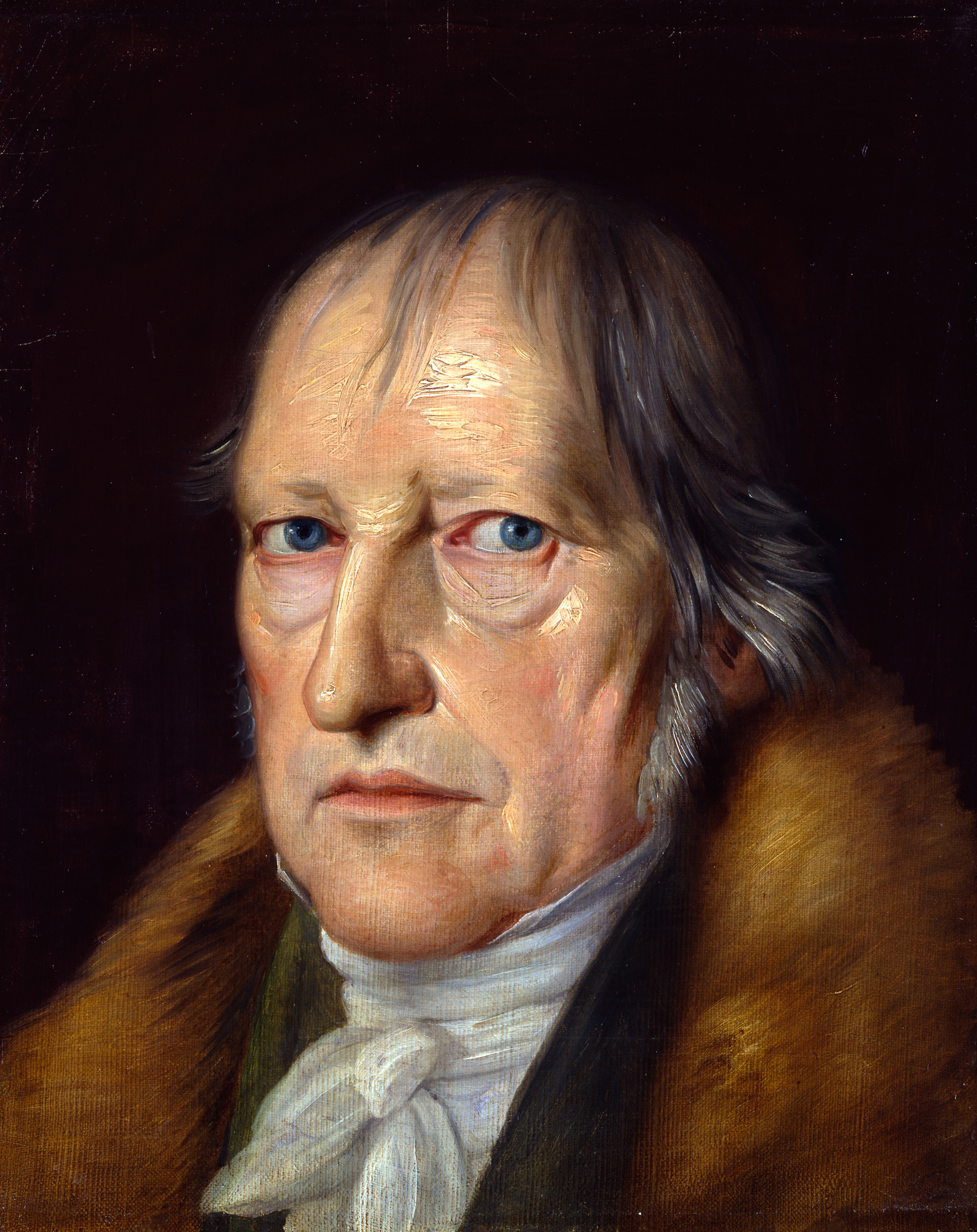
Georg Wilhelm Friedrich Hegel‘s support for the elitist Prussian form of governance is often linked to his view that Prussia represented a rational, constitutional state embodying ethical life, as outlined in his Philosophy of Right. He argued that the state, is an “earthly divinity” and therefor it should be venerated because it actualizes freedom through institutions like monarchy and a representative constitution.
Of course Hegel was himself one of the privileged elites he thought should be allowed to rule the unwashed masses.
Progressive Rule – Prussia’s Professional Bureaucracy
Bureaucracy is a French term which literally means “Rule by the Desk.” The French word for desk or office is bureau. That term was combined with the Greek word kratos, which means rule or political power, to form the English word bureaucracy.
The enlightened Prussian concept that government decisions should be made by the most professional and well-educated people for the task, is an inherently elitist idea. But it was not a crazy or foolish one.
Their folly was their idea that such bureaucrats would be (or even could be) truly disinterested, and that they would not be subject to or influenced by the interests of those they were purported to regulate or rule over. No person is every truly disinterested.
The concept of rule by an elite oligarchy is in direct conflict with the American ideal of “government of the people, by the people and for the people,” which most of the European elites found to be laughable, at best.
This tension between wise governance and popular governance is typified by the distinction between the ancient Greek view of the ordinary people, who were referred to respectfully as the demos, and the Roman Imperial view of the common men, who were referred to derisively as the mob or the rabble.
The Roman view was aristocratic.
The Greek view was democratic.
The tension between popular rule and wise governance is however not irreconcilable. It is possible to have wise rule by experts with the consent of the governed within the context of a representative republic and the American Constitution.
The foolhardy and idealistic early American Progressives simply chose to ignore the law and the American constitution and to apply the Hegelian structure as the aristocratic Prussians had devised it; as an oligarchy of ruling elites who were isolated from and indifferent to the needs and interests of the ordinary people they purported to rule over.
Progressivism is at it Core – Rule by an Elitist Oligarchy of the Experts
While some opinions may vary, the term Progressive is at its core nothing but a new label for the age-old concept of rule by the power-elites of a society. They fashioned the new label and called themselves “Progressives.” However, what they proposed for America was the nominally “enlightened” changes which had already existed in aristocratic Western European society for centuries.
This not-new European political faction was elitist to its core.
This pretty new paint job simply covered the age-old elitism of Europe and dressed it up in a costume that was more acceptable to the American political factions, which was nonetheless still elitist and anti-democratic to its core.
Modern Progressive Liberalism soon replaced the quite different preceding Traditional Liberalism, with its abiding concept of a limited government. Instead Progressive Liberalism advocated for an expansive regulatory state purported to “fix” every social woe it could identify. Because it was hopelessly idealistic, it also chose to ignore the actual real-world effects and unintended consequences of the programs it devised.
Progressive Liberalism was also ardently unconstitutional and overtly anti-constitutional, and it denied the reality of the flawed human nature described above.
The enlightened Progressives claimed their new and anti-democratic system of government which they aggressively advocated would become the disinterested and apolitical umpire of modern society. While it is clearly true that all societies need policemen, there was nothing either overtly just or anywhere near “disinterested and apolitical” about the progressive movement.
Nonetheless this Progressive System continues to thrive in both Europe and in America today.
Unconstitutional American Progressivism was the Quiet Second American Revolution – The de Facto Overthrow of the US Constitution
The adoption of the aristocratic and elitist European concepts of enlightened governance was a slow, gradual and quiet sea change which began to occur in America just after The Civil War ended.
Quiet as the progressive revolution may have been, it was an absolute and utter coup d’etat which overtook the American system of government.
It ignored the American Constitution completely.
These Aristocratic Activists Demanded Changes in America
The new generation of European-trained activists who were returning home began to spread their new found “aristocratic wisdom” in America.
Johns Hopkins University was founded in Baltimore in 1876 to import and propagate these progressive Hegelian Germanic ideas into America. With the founding of Johns Hopkins University, the youth of the American elites no longer needed to go to Europe or learn a foreign language to be indoctrinated in European concepts of elitist rule over the ordinary people of our society.
The First Congressionally Established Independent Regulatory Agency
The first Congressionally established independent regulatory agency based on the “Progressive” Prussian/Hegelian ideal was the Interstate Commerce Commission. The ICC was established in 1887.
During that era, Congress had unquestionably become the most powerful branch of the US government. It was deliberately and self-consciously seeking to usurp the role of the executive branch in the administration of American law. Congress sought to be both the national legislators (lawmakers), the government’s administrators (executors), and the judicial overseers all in one.
This Congressional seizure of power was modeled on the British Parliamentary System in which a member of Parliament is chosen as the Prime Minister. The Parliament’s Prime Minister then establishes a cabinet of Members of Parliament (MPs) who act as the administrative departmental Ministers. The Prime Minister and his cabinet run the government with the consent of Parliament. The Prime Minister is only accountable to Parliament. He does not answer to and is not generally interested in the concerns of the common people.
The British system does not separate the power of making laws from the power of the administrative state. The two jobs are intertwined in their Parliament.
What is more, only the dominant political party (or a consortium of those parties) runs the government. The less popular party or parties are utterly disenfranchised spectator factions who have no real say in either process.
The American Progressives like Woodrow Wilson deeply admired both the British and Prussian systems as being vastly superior to and more “modern and enlightened” than the American system which, from their aristocratic perspective, they utterly disdained, and were ashamed of.
The ICC was a Congressional Attempt to Regulate the Railroad Industry
The Progressive Congress’ proposal of the ICC was an attempt to solve the problem of capitalist monopolies in the railroad industry. In the railroad business, each railroad line was a de facto monopoly. These monopolies allowed the railroads to charge high rates for travel and for shipping goods such as farm produce to its markets.
In effect every railroad track was a de facto monopoly. The ICC board was established to control and lower these rates to more reasonable and affordable levels for the common good of ordinary people.

The independent regulatory agency concept was supposed to be a disinterested, nonpartisan and apolitical rule by the experts in keeping with the supposedly superior Prussian model governance established by the ruling American parliament. Hence, the agency experts were allowed to write their own regulations which then became de facto new laws.
The Anti-Constitutional Nature of “Independent” Congressional Bureaus
Congress unconstitutionally delegated to the new ICC agency independent legislative powers to make its own regulations which then became new laws.
Those new laws were not passed by elected congressmen (who could be recalled by the people if they did not like the new laws). Nor were these new laws signed into law by the duly elected President.
Instead, those new regulations were simply entered into the annual Congressional Record (which is generally read by nobody). Congress then asserted that, that act made the process legal and binding on those who were to be regulated.
Clearly the agency executed and administered its new laws; hence the agency had been endowed with executive duties. That violated the Constitutional principle of the separation of the power of legislation from that of administration.
Finally, Congress declared that legal disputes over these dubious regulatory practices had to be adjudicated in administrative law courts, which were also located within the agency and staffed by agency personnel. Appeals to rulings made by those courts were also handled internally within the agency.
What is more, the person potentially being wrongly regulated was routinely denied his/her Constitutional right to a civil court trial which would be decided by a jury of his peers. Even when legal disputes did get into the civil court system, the civil courts felt obliged to defer to the bureau’s experts regarding the matters of legal fact which the case was based on.
Judicial deference to the Bureau’s “experts” became a given.
A citizen defendant didn’t stand a chance in such a court system, which was clearly rigged against him/her, in favor of the agency itself.
These Hegelian independent agencies quickly became the self-serving legislators, executors, and adjudicators of all of the agency’s actions.
All of the Constitutional protections for American citizens against the tyranny of this kind of government had either been ignored or actively circumvented.
Nothing about the Hegelian independent Congressional agency concept was Constitutional.
Nothing about it was even remotely democratic.
The Unintended Regulatory Capture and Mission Creep Problems
Regarding the original ICC, the railroad industry had strong and obvious vested interests in influencing the actions of the agency. The mission of the agency was technical. As Samuel P. Huntington clearly and extensively documented in his mid-twentieth century, doctoral thesis for Harvard University, in less than a generation the ICC board was entirely occupied by “retired” railroad professionals who were acting in the interests of the railroads, not in the interests of the ordinary people of the nation.
The original mission of the agency was to decrease the rates and fees the railroads were charging to the ordinary people who were their users. This well-intended mission soon began to change until the new de facto mission of the ICC had completely changed. The ICC became the agency which was making sure that it did not set railroad rates so low that a given railroad would go broke or be driven out of business. The “expert information” the ICC used to make such decisions came from the very railroads they were supposed to regulate.
The agency which was established to lower railroad rates for the general good of ordinary people had become the agency which was guaranteeing that railroads could be operated profitably.
The Independent and Self-Regulating Nature of Congressional Bureaucracies Makes Them into Magnets for Corruption
Sadly the knavish foolishness of independent and “self-regulating” congressional bureaucracies has made those agencies into magnets for selfish individuals who wish to use the inexorable power of the federal government to enact personal agendas which are not in the best interests or the general good of the society in whose interests those agencies had been tasked with regulating.
These bureaucracies often also have very limited oversight or protections against the grifters who feed at the public troughs. A wide range of graft and fraud is common in these institutions.
Altruistic “Nonpartisan and Apolitical” Regulatory Wisdom Has Never Existed in Any Congressional Independent Regulatory Agency
Sadly every single supposedly independent Congressional regulatory agency in America has either mostly or utterly failed to achieve its stated original objectives.
American government has become bigger and vastly more complex, but it has not become more effective, efficient or just. The cost of government, which is ultimately borne on the shoulders of the ordinary taxpayers on Main Street, has increased enormously, without any clear or significant benefit to ordinary people occurring.
The many debacles and failures of the German, French, English and European Union independent, apolitical, expert bureaucracies are even worse.
The entire Progressive Liberal Movements in both America and Europe is, in fact, based on foolishly naive and starry-eyed idealistic concepts of human nature which at first pass sound great, but simply are not true. Blindly Trusting Unaudited, “self-regulating” agencies which are spending the other peoples money from those they regulate and from the government tax payers is foolhardy in the extreme.
Conclusion
Since the end of our Civil War and the assassination of President Lincoln the people of the United States have been subjected to a largely unsuccessful rule by an oligarchy of academic power elites who may have had good intentions (or may have been overly influenced by the nation’s financial elites).
Either way their “progressive policies” have grossly failed to produce a safer, more efficient, or more just society.
We the people have sadly failed to keep the democratic republic which Franklin and his peers provided to us.
Our aristocratic progressive elites have failed to actually provide anything better for us despite all their zeal and over regulation.
We the people continue to bear the burdens and pay the prices of their failures.