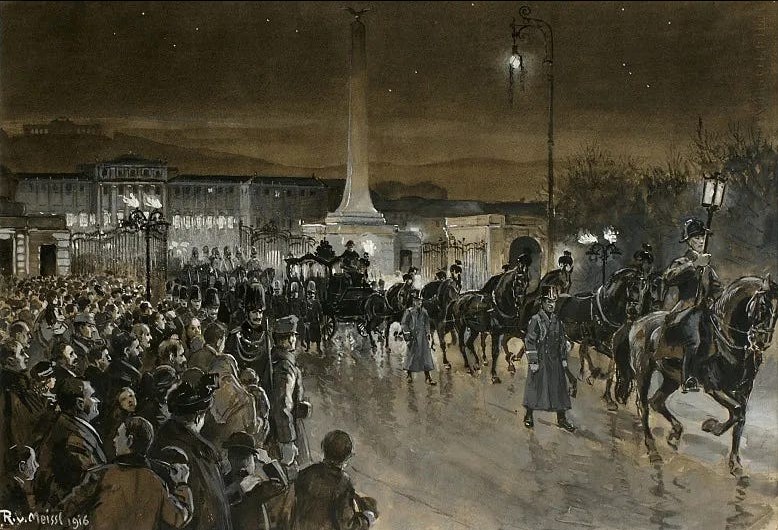
There is an old burial custom among the Habsburg emperors of Austria that, once heard, is not easily forgotten.
When a ruler died, his body was carried in solemn procession to the Imperial Crypt in Vienna. There, at the sealed door of the Capuchin monastery, the procession would stop. A monk stood inside. The door remained closed.
Then came the knock.
From within, a voice called out: “Who comes?”
And with that question, one of the most powerful theological dramas in European history began.
The First Knock: The Illusion of Glory
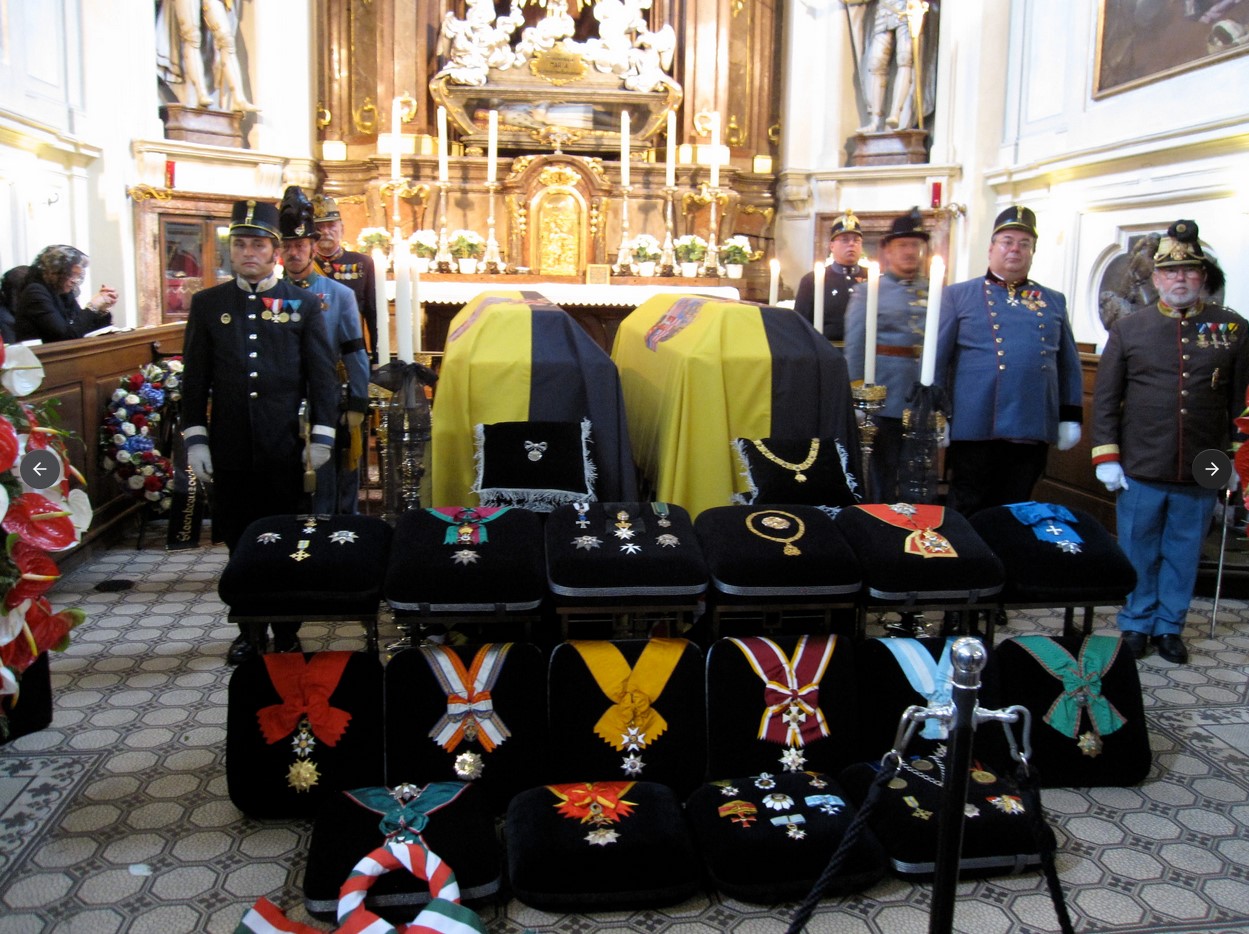
At the first knock, the herald would proclaim the full weight of imperial identity:
“His Imperial and Royal Apostolic Majesty, Emperor of Austria, King of Hungary, King of Bohemia…”
The titles went on—duke, archduke, sovereign of lands stretching across Europe.
Inside, the monk responded simply:
“We do not know him.”
The door remained shut.
Here, in a single moment, the illusion of earthly greatness is shattered.
All the machinery of power—crowns, thrones, titles, banners—meets a closed door. The world may recognize such a man. History may remember him. Nations may tremble at his name.
But heaven does not open for titles.
Scripture leaves no ambiguity:
“For no other foundation can anyone lay than that which is laid, which is Jesus Christ.” (1 Corinthians 3:11, NKJV)
The emperor arrives with everything the world can give him—and finds it is nothing.
The Second Knock: The Illusion of Achievement
The procession knocks again.
This time, the herald changes his approach. If titles do not suffice, perhaps deeds will.
“Franz Joseph, who ruled faithfully, who led armies, who preserved the empire, who accomplished great works…”
Surely a life of achievement must count for something.
Again the answer comes:
“We do not know him.”
The door remains closed.
This is where modern man feels the sting.
We are trained—almost from birth—to build a résumé of meaning. Degrees, careers, influence, legacy. We are told, subtly and constantly, that our worth is measured by what we accomplish.
Yet here stands the emperor of one of Europe’s greatest empires, and his lifetime of achievement cannot open the door.
The prophet Isaiah speaks plainly:
“All our righteousnesses are like filthy rags.” (Isaiah 64:6, NKJV)
It is not that works have no place. It is that they cannot save.
Before God, even the greatest life ever lived—apart from Christ—is insufficient.
The Third Knock: The Truth of the Soul
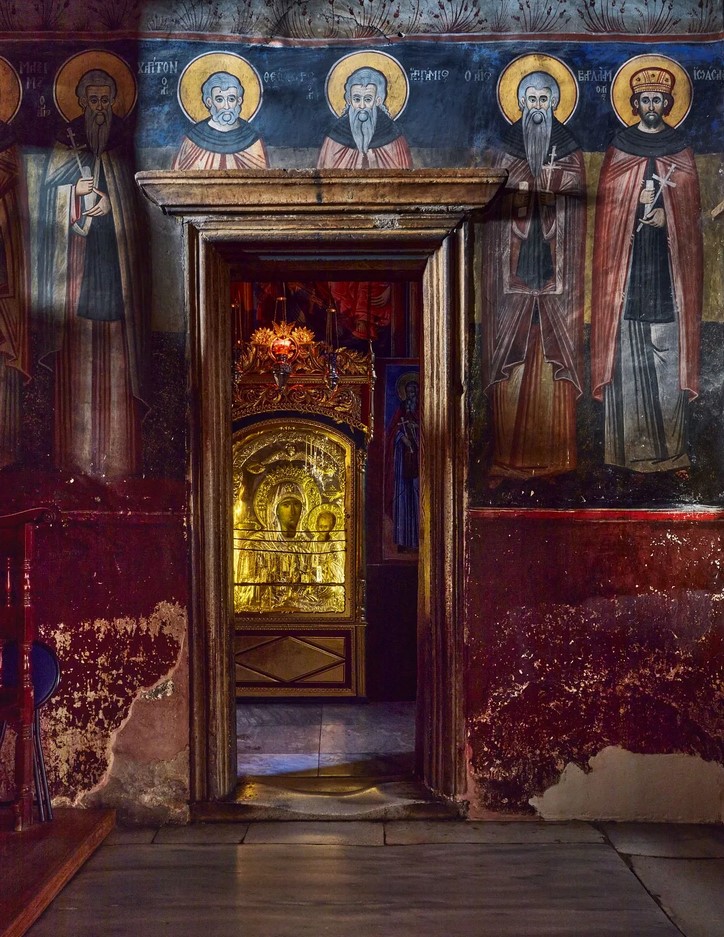
The procession knocks a third time.
Now everything changes.
Gone are the titles. Gone are the accomplishments. All that remains is truth:
“Franz Joseph, a poor sinner.”
And for the first time, the answer is different:
“Then let him come in.”
The door opens.
This is the heart of the matter.
Not emperor.
Not ruler.
Not builder of kingdoms.
A sinner.
And paradoxically, it is only here—at the point of complete humility—that the door opens.
Christ Himself gives us the pattern:
“For everyone who exalts himself will be humbled, and he who humbles himself will be exalted.” (Luke 18:14, NKJV)
The tax collector in the temple, who would not even lift his eyes to heaven, leaves justified—not because of who he was, but because he knew what he was.
A Ritual the Modern World Cannot Understand
We live in an age that has largely abandoned the category of sin.
We speak of mistakes, dysfunctions, systemic pressures, psychological wounds—but rarely sin. And when sin disappears, humility disappears with it.
If man is not a sinner, then he does not need mercy.
If he does not need mercy, then he does not need a Savior.
And if he does not need a Savior, then the Cross becomes unnecessary.
The Habsburg ritual cuts directly against this modern illusion. It forces the truth at the final moment:
You are not your titles.
You are not your achievements.
You are a soul before God.
The Door That Will Not Open Otherwise
Every man, whether he realizes it or not, will one day stand at that same door.
There will be no herald.
No titles will be read.
No résumé will be presented.
And the question will come:
“Who comes?”
And what shall we say?
If we come as self-made men, the door will remain closed.
If we come as accomplished men, the door will remain closed.
But if we come as what we truly are—
sinners in need of mercy,
—then we come rightly.
And more than that, we come with hope.
Because the Christian does not say “poor sinner” in despair, but in faith.
For the one who is in Christ does not arrive alone.
He comes clothed in Another.
The Final Answer
The Habsburg ritual stops at humility—but the Gospel goes further.
For the Christian, the final answer is not merely:
“a poor sinner,”
but:
“a sinner redeemed by Jesus Christ.”
And that is the difference between a closed door and an open one.
The Rev. Dr. Ronald H. Moore
3733 County Road 100, Corinth MS 38834
USA
https://southernanglican.substack.com/p/three-knocks-at-the-door-of-eternity?img=https%3A%2F%2Fsubstack-post-media.s3.amazonaws.com%2Fpublic%2Fimages%2F7a84f3b3-6d5f-4888-8e86-393d2dcad23f_780x532.webp&open=false
Re-posted with permission.