The Pro-log – The Banking Panic of 1907:
The Bank Panic of 1907 was a short-lived banking and financial crisis in New York City and along the US Eastern seaboard. It occurred during the rising tide of progressivism, at the beginning of the twentieth century.
The banking panic resulted from the collapse of highly-leveraged speculative investments propagated by the easy money policies pursued by the US Treasury in the years leading up to the crisis. During the banking crisis runs occurred on New York banks and trust companies that had been financing the securities companies which were making the risky investments. Stock market liquidity shrank further as smaller regional banks, in turn, drew down their deposits from the large New York banks in which the smaller regional banks kept their reserve funds.
Without a Walter Bagehot style central bank to fall back on as their lender of last resort, leading wealthy financiers, most notably J.P. Morgan acted almost single-handedly, stepped in and put his own money on the line to bail out the Wall Street banks and other financial institutions which were fiscally sound, but endangered.
Mr. Morgan and his associates personally knew almost everyone who was anyone on Wall Street or was involved in large stock market investment programs. He specifically knew which individuals and firms were solvent and which were shaky, underfinanced speculative firms or individuals. He quickly made huge loans to the solvent ones, and abjured the fraudsters. With the support of Morgan the Wall Street banks and investors quickly recovered (and the flimsy fiscally irresponsible institutions perished).
Morgan and his associates had acted responsibly as Bagehot’s lender of last resort (see the Financial Panics – Walter Bagehot & the Lender of Last Resort post in this thread which is linked below for a more detailed description). The responsible and prudent action of well-heeled private lenders like J.P. Morgan made the panic of 1907 a short-lived crisis and averted a prolonged national financial depression.
Nonetheless, by 1907 American financiers had essentially all read Bagehot’s seminal book, Lombard Street, began to long for a wise but independent central bank in America, based on Bagehot’s model. The Banking Panic of 1907 became the impetus for the establishment of The Aldrich Commission and the infamous meeting at Jekyll Island, Georgia, where the foundations for the Federal Reserve System would be laid. Sadly and foolishly those progressive modern politicians and government-oriented financiers chose to form a Hegelian style independent-agency run by nominally disinterested, highly trained professionals.
The Birth of the Federal Reserve System – Jekyll Island & The FED:
Nelson W. Aldrich was born in 1841. He was a pro-business Republican politician and financier who represented Rhode Island in the U.S. House of Representatives (1879–81) and then served as the Senator from Rhode Island for next 30 years, until 1911. He had worked on the knavish Aldrich-Vreeland Currency Act of 1908, a tardy and belated government response to the Bank Panic of 1907, which only appeared too late to help at all, long after the private financiers of Wall Street like J.P. Morgan has already saved the day. The Aldrich-Vreeland Currency Act was a classic example of government’s propensity and often foolhardy “don’t just stand there; do something” actions.
In 1908 to 1912 Senator Aldrich chaired the National Monetary Commission in the US Senate.
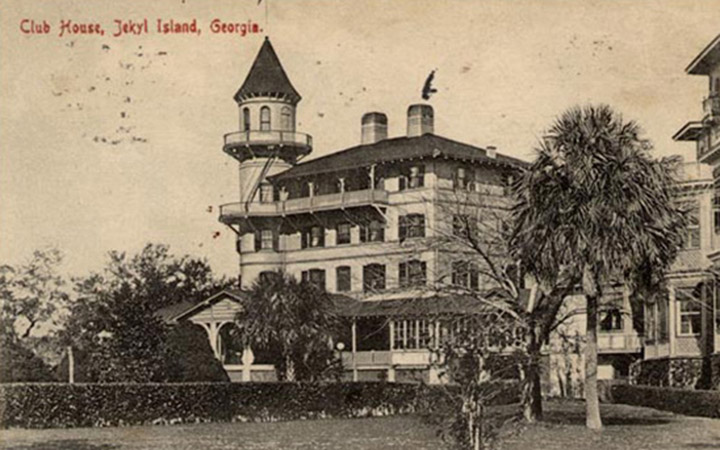
In 1910 Senator Aldrich convened and chaired a secret meeting on Jekyll Island. The attendees were prominent bankers and politicians, including A. Piatt Andrew, Henry Davison, Arthur Shelton, Frank Vanderlip, and Paul Warburg. They gathered to discuss designing a system of reforms to stabilize the U.S. banking system. Jekyll Island is an exclusive resort island, located on the shoreline of Georgia, out of sight of the prying eyes and ears of nosy newspaper journalists. At that meeting plans were laid which established the groundwork for the creation of the Federal Reserve System. According the FED’s own official history, the participants were sworn to secrecy and they did not admit that the meeting had even occurred until the 1930s.
In a perfect world, the goal of that system would have been to produce a semi-private US version of Bagehot’s lender of last resort (the semi-private Bank of England) to prevent or avert financial panics like that of the Panic of 1907 from occurring in the future. The semi-private nature of the FED assured that the Hegel’s “disinterested professionals” would in fact be banking and finance industry professionals who would be far more dedicated to the survival of Wall Street banks and financial institutions than they were to the general good of the people of America. The FED has never once acted in the role of Bagehot’s lender of last resort.
In 1913 the progressive knavish modernist Democratically controlled 63rd Congress passed the Federal Reserve Act, and it was signed into law by the white racist president, Woodrow Wilson who racially segregated the federal government in the first month after his inauguration.
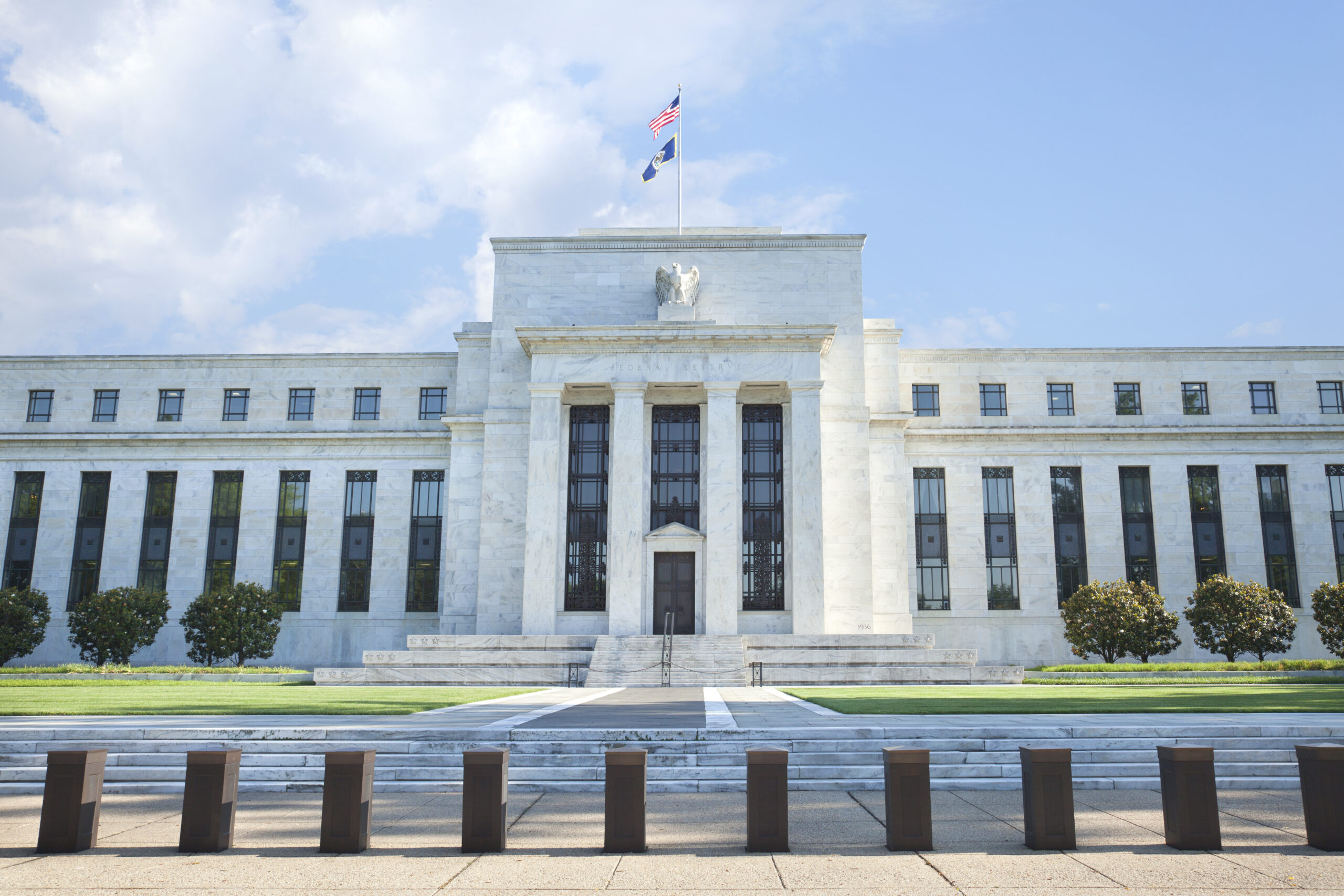
The Federal Reserve Act created the Federal Reserve System (the FED) as an “independent” banking regulator comprised of 12 regional Federal Reserve Banks. Initially the Bank of New York, directed by Benjamin Strong Jr., who was the fiscally wise leader of the FED system, and the most powerful bank in that system.
In theory the FED would act wisely as America’s version of Bagehot’s lender of last resort during financial or bank panics, and thereby restore calm and stability to the national banking system during moments of financial panic. It would do so by charging the private-for-profit banks being saved an interest rate which was 2-3 times the prevailing interest rate for the emergency loans it was providing to save those banks from the panic of their depositors. Doing so would cause the shareholders of those banks to pay a premium fee, and thereby burden the shareholders of those banks with the cost of their emergency assistance.
That increased cost to the shareholders would also act as a disincentive to the bank’s board of directors which had acted irresponsibly (by not maintaining an adequate cash reserve and had thereby indirectly caused the financial panic in the first place).
The Captured FED Becomes BFF with the World’s Wall Street’s Wizards of Oz:
In practice the “regulatory” FED was immediately the victim of the routine agency-capture which inevitably happens to all so called independent government regulatory agencies. The captured Fed’s mission quickly became to make sure the nation’s private, for profit banks not only survived, but to make them more profitable than they would be without bail-out money the Fed repeatedly gives to them.
In his post-retirement book, The Age of Turbulence: Adventures in a New World, Alan Greenspan (the chairman of the FED from 1987 through 2006) reported that never once during his tenure did the FED’s bank examiners find a case of banking fraud; every case of regulatory enforcement during his tenure as chairman was the result of a bank employee acting as a whistle blower and tripping off the Fed to report criminal actions involving bank managers.
The FED has acted poorly in every single financial crisis since it was established. The Panic of 1907 was short-lived because JP Morgan rapidly did as Bagehot recommended; Morgan and his associates made cash loans available to endangered banks, and that panic was quickly reversed.
Prior to the 1929 Wall Street panic, Benjamin Strong, the wise de facto head of the FED, saw that the stock market was heating up (stock prices were ballooning well above stock values). In response he increased interest rates and tightened the FED’s monetary policy, to encourage a market cool down. Sadly at this point Mr. Strong died of consumption (tuberculosis), and so his wisdom vanished from the leadership of the FED.
During the financial panic of 1929 the FED, working with the Treasury, actually tightened the money supply, and on advice from the chairman of the FED, President Hoover decreased government spending significantly. Because of these foolish actions, the short-lived Wall Street Panic then became the Great Depression, which lasted a decade and a half, until the end of the Second World War. Instead, a brief New York stock market panic it became the Great Depression and it went global and severely affected the lives uncountable numbers of the common people of the entire world.
The facts of the FED’s fool-hardiness are even worse than any reasonable citizen can image. In every single one of the subsequent crises the Fed has actually been at least an indirect cause of every national financial crash since it was established.
By ignoring Bagehot’s sage and time-proven advice to make banking bailouts high interest rate loans, instead of government give-aways, the captured FED instead began dispensing free bailout money taken from the US tax payers on Main Street. By so doing the FED has actually become a moral hazard for the private-for-profit financial industry who profit during each market balloon period, Those private-for-profit financial institutions then subsequently profit from the crash that happens when that market balloon bursts. Since the end of World War II, the national and global financial panics and crashes have been ever larger and are occurring more frequently.
The National and Global Financial Crashes Which Have Occurred Since 1913 Include:
The 1929 NYSE crash of 1929 (which was expanded by government foolishness into the global Great Depression of 1929 to 1945)
The Kennedy Slide stock market collapse of 1962
The Stagflation Crisis of the 1960s through 1982 (which crescendoed in a sustained inflation rate of over 20%)
Black Monday October 19th, 1987
Friday the 13th 1989
The Savings and Loan Crises of 1986 through 1995
The International Lending Default Crisis of Less Developed Countries, and the Latin American Debt Default Crises – 1982 to 1989
The Drexel Burnham Junk Bond Scandal of 1989 to1991
The Mexican Peso Crisis of 1994
The Collateralized Mortgage Obligation – Residential Mortgage Crash of 1994
The East Asian Financial Crises of 1997
The Long-Term Capital Management (LTCM) Debacle/Bailout of 1998
The NASDAQ “Dot-COM” Crash of March of 2000
The Post Clintonomics-Rubinomics Debt-Driven Recession of the entire Decade of 2000s
The Enron Debacle & Collapse of 2001
The WorldCom Debacle & Collapse of2002
The Securitized Mortgage Crisis of 2008
The agency-captured FED has been a significant factor in and contributor to all of these crises, and there is no end in sight, and the FED’s financier-captors (the world’s power-elite financiers) have almost all profited handily from the process, while Main Street has repeatedly been hammered by having the pay for it all, every time!
The FED & Wall Street – BFF!
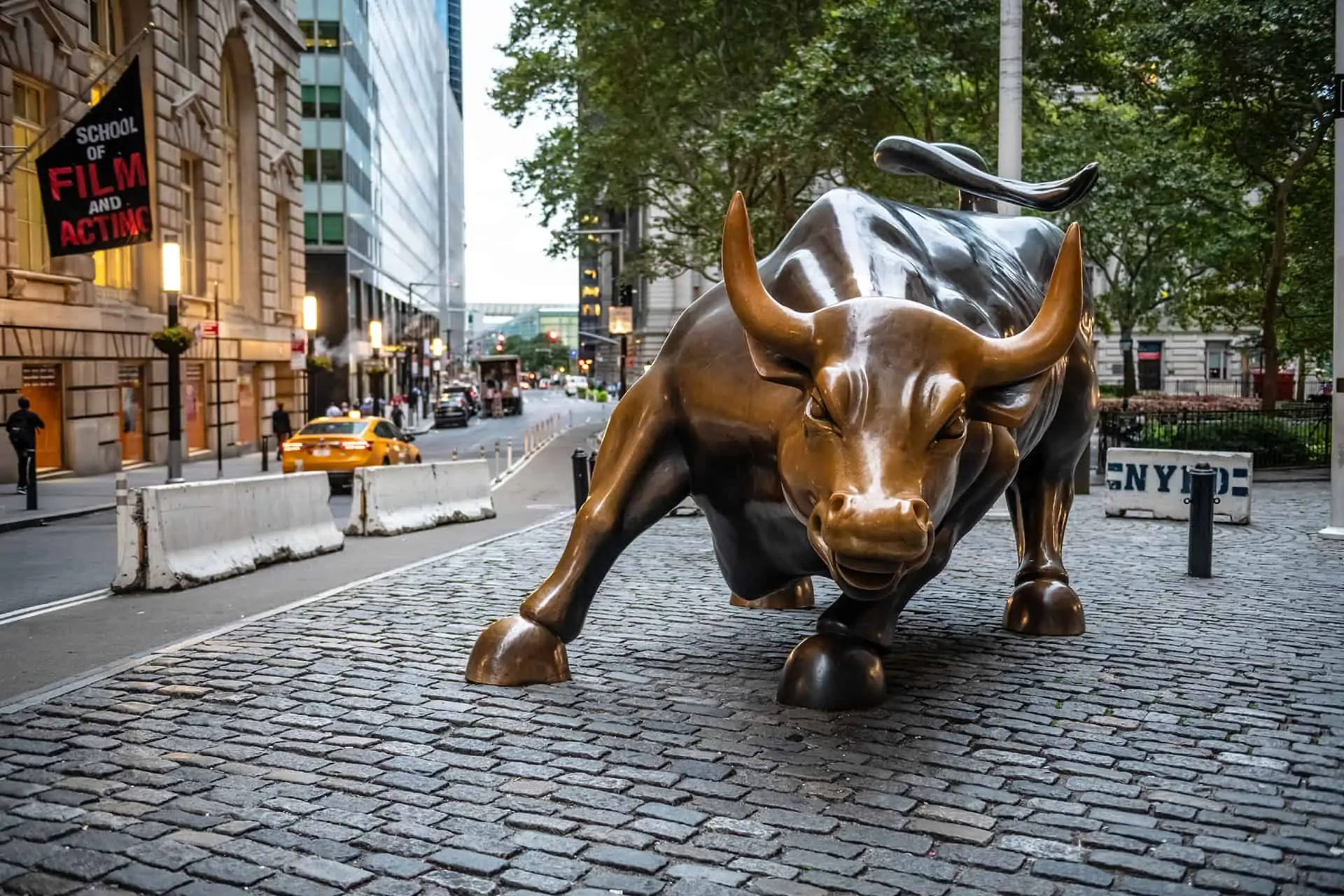
The power-elite financiers, the Wizards of Oz from the Wall Streets of the world also are the major influencers and participants in the securities markets of the world.
If left to their own devices, stock and commodities markets will inevitably be overtaken by the destabilizing forces of overly optimistic and greedy (speculative) investors hoping for good luck to make these “bulls” some easy money.
All private investment decisions incorporate some level of inherent risk in those endeavors. When financial markets convert long-term assets into short-term commitments for investors, this also fosters a speculative mentality in the markets.
What becomes central for investors is not whether a company’s products will produce profits over the long-term [are longer term “value investments”], but rather whether the short-term financial market investors think a company’s fortunes will be strong enough in the present and immediate future to drive the company’s stock price up [e.g., are good short-term “speculative investments”].
In part this focus is one of the unintended consequences of the short-sighted government practice of taxing company income, rather than allowing the much less distorting practice of publicly traded companies distributing their profits directly to their shareholders in the form of individual dividends which can then be still be taxed by the government as personal income, e.g., as capital gains.
An incompletely effective regulatory response to this problem is the government’s Tax Cuts and Jobs Act (TCJA) of 2018, which cut the corporate Income tax rate to a reasonable, and flat 21% level. The TCJA also distinguished between short-term capital gains (speculative gains) for investments held for less than 1 year and taxed as personal income (the top personal tax bracket is 37%), and long term capital gains on assets held for more than one year (which are taxed as long-term capital gains at rates of 0%, 15%, or 20%, depending on income level of the security holder. A significantly higher short term capital gain tax would be even more stabilizing, and therefore safer and better for the financial markets, the nation in general, and the regular people on Main Street in particular.