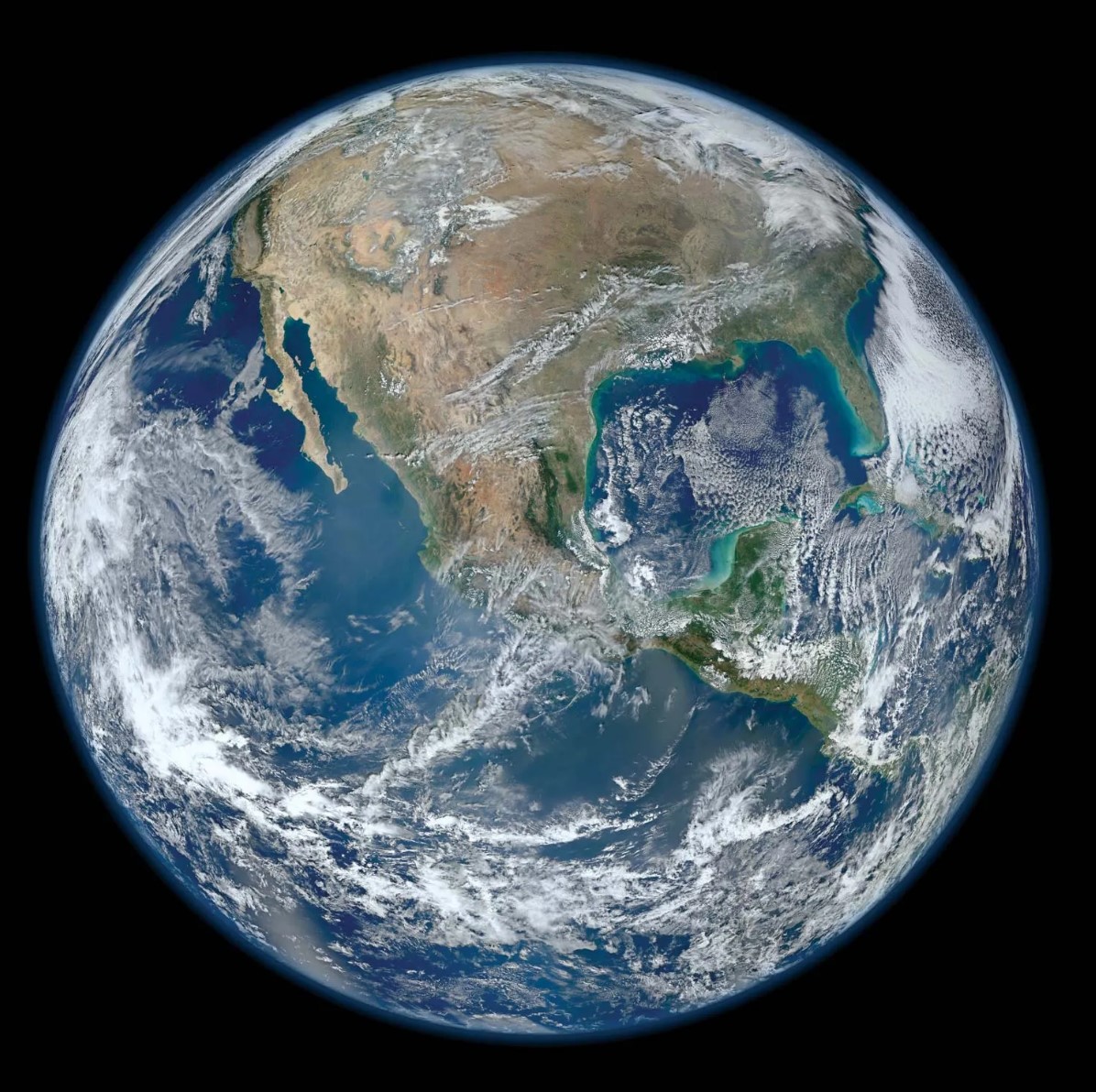
In the vast expanse of the cosmos, our home, Earth, emerges as a remarkable celestial body, bearing the signature of a complex and awe-inspiring birth. From the swirling clouds of stardust to the molten chaos of its early days, the Earth’s formation is a captivating story that beckons us to explore the origins of our world. Understanding the intricacies of how our planet came into being is not merely a matter of scientific curiosity; it holds the key to unraveling the mysteries of life, geology, and even the fate of humanity. In this journey of discovery, we will delve into the formation of Earth, the cradle of life as we know it, uncovering the profound significance of this ancient tale for our present and future. Therefore, through the prism of Earth’s formation, we will gain insights into the fundamental processes that have shaped our planet and continue to influence our existence today.
The Story of the Origin of our Earth Heralds Back to the Beginning of Time Itself:
The universe we inhabit today is the result of a long and intricate evolutionary process, starting with the Big Bang Singularity. The Big Bang Theory stands as the cornerstone of modern cosmology, offering a profound understanding of how the universe itself came into existence. It reveals a story of cosmic expansion, the birth of galaxies, and the eventual emergence of our very own solar system.
The Big Bang Theory, was proposed in the early 20th century; it posits that the universe originated from an infinitely dense and hot point known as the Singularity. Approximately 13.8 billion years ago, the pre-condition of the Big Bang Singularity suddenly and inexplicably appeared. The moment the unstable condition of the Singularity occurred, the cosmos began to expand through space and it soon began to condense from a pure hyper-concentrated energy state into physical matter. As the universe expanded, it cooled, and matter began to form, eventually coalescing into cosmic dust clouds (nebulae), which in turn eventually formed into galaxies, stars, and planets.
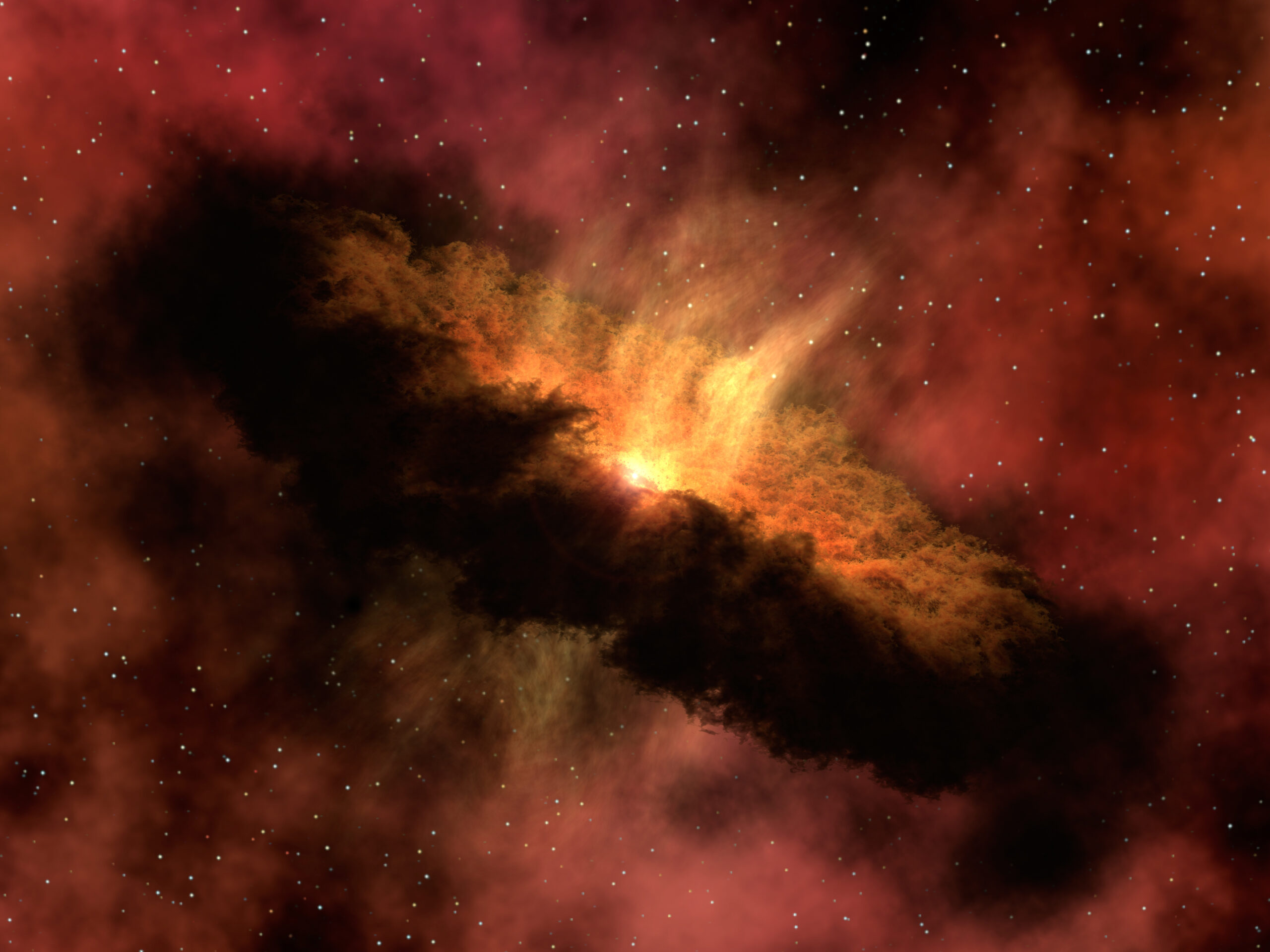
Within this grand cosmic narrative, the formation of our solar system is a remarkable subplot. It begins with a massive cloud of gas and dust, known as the solar nebula, which was enriched with elements synthesized in the cores of earlier generations of stars. The force of gravity played a pivotal role in the physical contraction of the solar nebula.
As the mass of the Solar Nebula increased so did the strength of the attractive gravitational force which was pulling cosmic materials together. This process of cosmic accretion continued. The cosmic dustcloud developed clumps, then chunks, then a dense core. As it grew together and contracted, the mass began to spin, forming a spinning disc.
In the dense core in the center of the Solar Nebula the Sun was forming. In the protoplanetary disc the clumping of cosmic material formed into bodies called planetesimals which were large enough to exert significant attractive gravitational forces.
For a more detailed account the events of Big Bang see The Big Flash – The Divine Creation of the Cosmos linked below. For a more detailed description of the events of the formation of the Sun see The Real Big Bang – The Creation of our Sun also linked below.
The Birth of the Earth:
The Earth’s birthday occurred around 4.54 billion years ago. That was actually slightly prior to when the thermonuclear fusion reaction of the sun is thought to have ignited! The matter which coalesced to become the Earth was a portion of the sun’s protoplanetary disk. The Earth was initially just one of the chunks of concentrated matter, near to but not too near to the dense core of matter which became the sun.
The chunks, boulders, and planetesimals left behind continued to collect into a handful of large, stable bodies in well-spaced orbits. The Earth was the third one of these, counting outward from the Sun. The process of accumulation and collision was violent and spectacular because the smaller pieces left huge craters on the larger ones. Studies of the other planets show these impact scars and today the evidence is strong that they contributed to catastrophic conditions on the infant Earth.
The growing Earth was not the only object in that nascent solar system. That baby solar system was also producing and growing the other planets, their moons, and the asteroids we recognize today. As time went by, planetesimals collided with additional cosmic bodies and debris and those future planets also grew larger. The formation of the solar system and our Earth within it was a very dynamic process that resulted in the distinct celestial bodies we observe in our cosmic neighborhood. The inner rocky planets, including Earth, formed closer to the Sun, while the outer gas giants like Jupiter and Saturn formed farther out, where the solar nebula contained more volatile elements.
Understanding The Big Bang Theory and the formation of the solar system not only deepens our appreciation of the vast cosmos but also sheds light on the origins of our own planet and its place in the universe. It underscores the interconnectedness of all celestial bodies and the fascinating interplay of physical laws and cosmic phenomena that have shaped our existence.
Terrestrial Differentiation and Layering (4.5 Billion Years Ago):
The story of Earth’s formation and differentiation into its distinct layers is a remarkable journey that unfolds over billions of years. Understanding this timeline and the intricate processes involved in shaping our planet is key to appreciating the complexity of the world we call home.
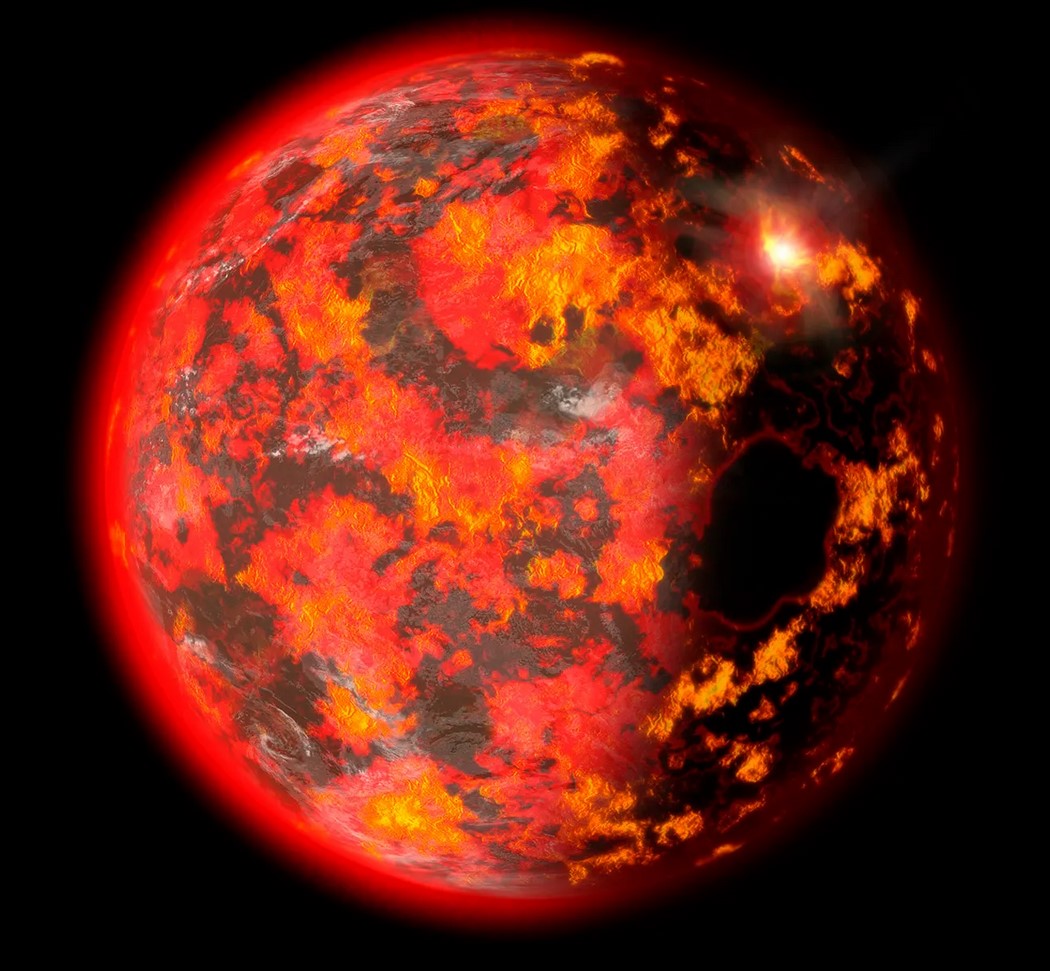
As the Earth grew, the kinetic energy of each collision was tremendous. By the time they reached a diameter of around 60 miles or so in size, the planetesimal collisions were energetic enough to melt and vaporize much of the material involved. Heat may also have been generated by the decay of unstable radioactive isotopes of various elements.
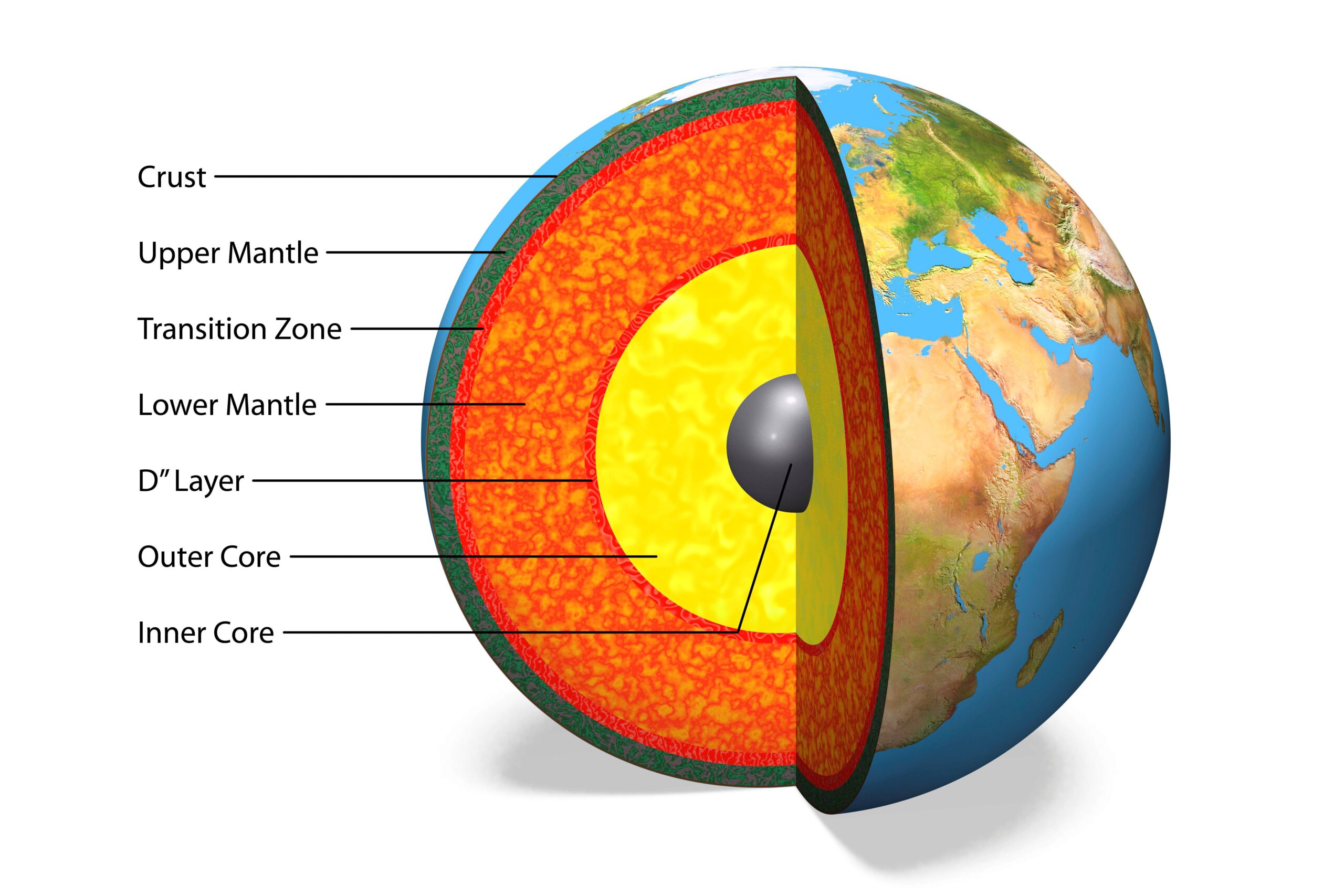
The molten nature of the forming Earth allowed the rocks, iron, and other metals in these colliding objects to sort themselves into layers. The dense iron settled in the center and the lighter rock separated into a mantle around the iron core materials. This was a miniature of the Earth. Planetary scientists call this settling process differentiation. This differentiation of materials not only caused the core materials the nascent Earth to sort out based on their different masses and densities. Lighter elements rose to the surface of the Earth and eventually solidified and became the materials of the Earth’s crust. This process of differentiation also caused the forming Earth to eventually develop surface oceans, and a gaseous atmosphere.
As its mass and gravitational forces of the forming Earth increased further, this early Earth experienced a period of intense meteorite bombardment.
It didn’t just happen with the forming Earth and the other planets of our solar system; it also occurred within the larger moons and the largest asteroids. The iron and nickel containing meteorites that we can occasionally see in our night sky and which occasionally plunge to Earth from time to time come from collisions between these asteroids in the distant past. The process of the material accretion of the Earth is an ongoing process.
Metallic meteorites (6% of the meteorites recovered on the Earth) are mostly composed of iron and eight plus percent nickle. The scant number of ancient steel archeological artifacts which pre-date man learning how the make steel from iron ore (around 1800 BC) were a great enigma to archeologist. How could early civilizations have made a few steel objects, like ceremonial knife blades, yet not manufactured other useful steel objects? That enigma was solved when they discovered that all of these very old steel artifacts were alloyed with eight or more percent nickle and hence must have been manufactured out of meteorite steel.
The fourth most common element on the Earth is iron. The iron rich core of the Earth explains why magnetic compasses point towards the Earth’s magnetic north pole. All of the terrestrial iron on the Earth is thought to be the result of meteoric iron being added to the Earth during its early formation period.
Terrestrial Cooling and Solidification (4.4 Billion Years Ago):
Starting around 4.4 billion years ago, the Earth’s surface cooled and solidified, forming a thin crust. This marked the beginning of the Hadean Eon, a period of intense bombardment by asteroids and comets continued and the mass and size of the Earth continued to grow. The term Hadean is derived from the Greek word for Hades; hence these geologist describe this epoch as a hellish period of time.
Terrestrial Mantle Formation (4.4 to 3.5 Billion Years Ago):
The gradual cooling of Earth’s surface (between 4.4. and 3.5 billion years ago) allowed the Earth’s mantle to form. In its early days, Earth’s mantle was the thick outer layer of the Earth which surrounds the denser materials in the earth’s core. Early in the earth’s history it was the thick outer layer comprised mostly of solid rock, predominantly composed of lighter (less dense) silicate minerals. Eventually an outer crust formed on the surface of the mantle.
Today the mantle is a viscous but fluid layer of material beneath the crust which is roughly 1800 miles (2,900 kilometers) thick. The mantle experiences convection currents, driving the movement of the Earth’s tectonic plates and influencing the planet’s surface features and geological activity. It varies in temperature from cooler regions around 500 degrees Celsius (930 degrees Fahrenheit) to the warmer regions of the mantle which are as much as 4000 degrees Celsius (7230 degrees Fahrenheit). The mantle makes up 67% of the Earth’s mass, and 84% of the Earth’s volume. It is a thick, hot layer which flows slowly. The convection currents in the mantle circulate from its deeper layer near the earth’s hot core to its relatively cooler upper layer.
The outer most portion of the mantle is known as the Asthenosphere. It is the layer of the mantle where fluid flow happens. The mantle is huge, hot, and flows slowly. Volcanoes occur when the molten mantle breaks through the Earth’s outer crust layer.
Terrestrial Crust Formation (4.2 to 2.5 Billion Years Ago):
Starting about 4.2 billion years ago the surface of Earth began to cool and form a solid outer crust. Since we all live on this outer crust, its characteristics are important to us. When the crust cooled and solidified enough, and earth developed oceans and an atmosphere that became habitable, biological life was created on the earth’s crust.
I remember my college geology class instructor illustrating for us students what the crust was like compared to the underlying molten structure of the Earth. He asked us if we had ever had a cup of hot chocolate which we let cool a little because it was too hot to drink right away. As the hot chocolate cools, a thin skim forms on the surface of the liquid chocolate. He told us the relative proportions of the Earth’s crust to the rest of the earth are the same as those of the thin skim to cup of chocolate. We are just the skim-dwellers on the hot chocolate of the earth.
The earth’s crust is the outermost solid layer of the Earth. Above the crust are the oceans and the atmospheric layers of the Earth. The crust formed solid rock mostly formed of a mixture of lighter (lower density) silicate minerals. It is divided into the continental crust, found on the continents, and the oceanic crust, which underlies Earth’s oceans. The crust is where most geological processes, including the formation of mountains, volcanoes, and Earthquakes, occur.
Earth’s crust layer averages around 9.3 to 12.4 miles (15 to 20 kilometers) thick. The radius of Earth is 3,963 miles (6,378 kilometers). Hence the truth of the hot chocolate analogy. The crust is the Earth’s thin skin. The semi-rigid crust is brittle and it can break. Mountains are formed by the folding of this thin skin. The crust moves with time. Plate tectonic motion occurs as a result of the movement of the mantle’s slow convection current flows.
Terrestrial Layer Summary:
The process of Earth’s differentiation into these layers was a dynamic and gradual one, driven by the differences in density and composition of various materials. This layering not only defines the planet’s internal structure but also plays a crucial role in shaping its geological and geophysical processes.
Understanding the timeline of Earth’s formation and the differentiation of its layers provides insight into the planet’s long and complex history. It helps us appreciate how Earth’s unique characteristics, including its magnetic field, geological activity, and diverse surface features have been shaped by these ancient processes, ultimately creating the habitable world we know today.
The Role of Volatiles and Refractories:
Volatiles: Volatiles are elements and compounds that have relatively low boiling points. These include water (H2O), carbon dioxide (CO2), ammonia (NH3), and methane (CH4). Volatiles play a crucial role in Earth’s climate, weather, and the composition of its atmosphere. Water, in particular, is essential for life as we know it and is a key component in Earth’s hydrological cycle, supporting the existence of oceans, rivers, and the overall habitability of the planet.
Refractories: Refractories are elements and compounds with higher boiling points, such as silicates and metals like iron. These materials are found in Earth’s solid crust, mantle, and core.
The balance and interplay between volatiles and refractories are crucial for Earth’s dynamic processes, including plate tectonics, volcanic activity, and the regulation of the planet’s climate. Earth’s chemical composition, shaped by the presence of these elements and compounds, has fostered the development of diverse ecosystems and has made our planet a truly exceptional and hospitable world in the vastness of the cosmos.
Heavy Bombardment Period (Approximately 4.1 to 3.8 Billion Years Ago):
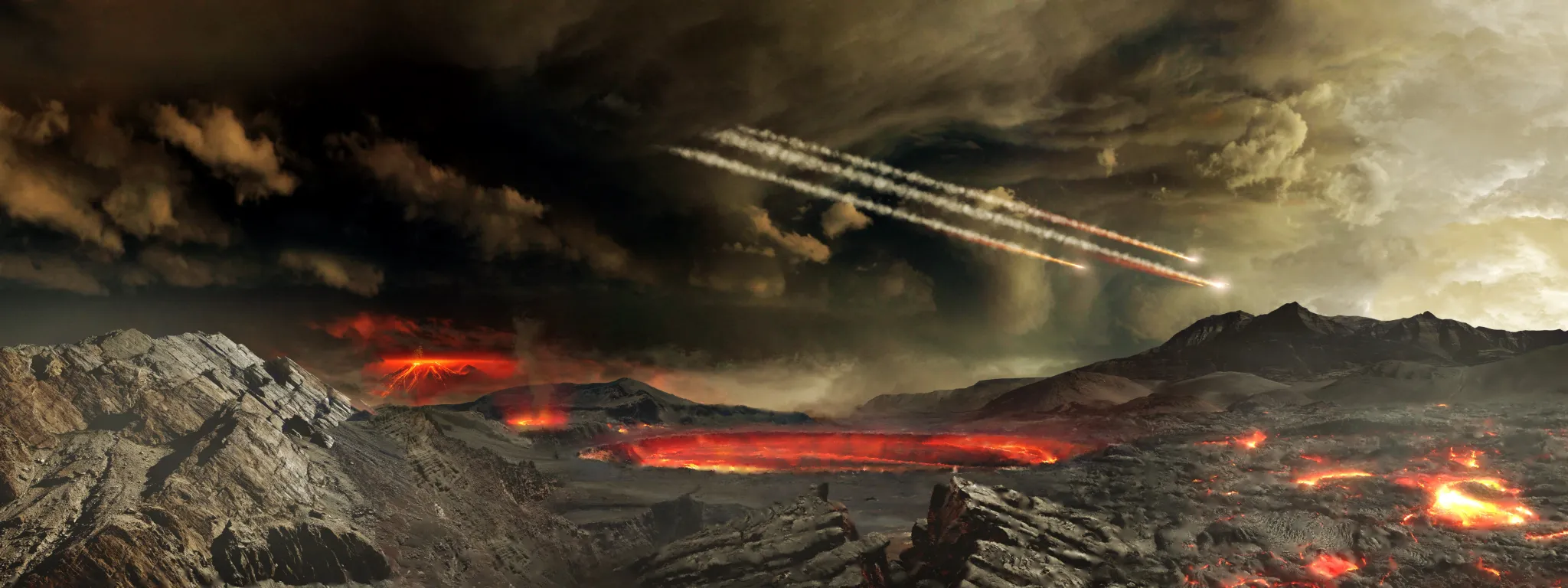
Earth and the inner solar system experienced a period of intense and frequent meteorite impacts. This era, known as the Heavy Bombardment Period or the Late Heavy Bombardment, was a chaotic time for our planet’s surface and had significant implications for the early Earth and its celestial neighbors.
Effects of Meteorite Impacts on Earth’s Surface:
Crater Formation: During the Heavy Bombardment Period, Earth’s surface was bombarded by a multitude of meteorites and asteroids. The impacts resulted in the formation of numerous impact craters of various sizes. These craters, when preserved, provide valuable insights into the history of impacts on our planet.
Atmospheric Changes: The frequent meteorite impacts during this period had a profound effect on Earth’s atmosphere. The energy released from these impacts could have caused substantial changes in the composition of the early atmosphere. For instance, it may have released gases like water vapor, carbon dioxide, and methane.
Magma Oceans and Geological Effects: Some of the most massive impacts during the Heavy Bombardment may have been energetic enough to cause the partial or complete melting of Earth’s surface, resulting in the formation of magma oceans. These geological processes influenced the differentiation of Earth’s interior and the formation of its crust.
Formation of Early Oceans: Water is a crucial component of life, and it is believed that the Heavy Bombardment played a role in the delivery of water to Earth. Comets and water-rich asteroids impacting the early Earth could have contributed to the formation of Earth’s early oceans.
Early Earth Conditions – Earth’s Atmosphere and Composition, Origin of Water, and Formation of Continents and Oceans:
Earth’s Atmosphere and Composition: The early Earth’s atmosphere was markedly different from the one we know today. It primarily consisted of volatile compounds, such as water vapor (H2O), carbon dioxide (CO2), nitrogen (N2), methane (CH4), and ammonia (NH3). Notably, there was a lack of significant amounts of free oxygen (O2) in the atmosphere during this period, as oxygen was primarily bound to other elements.
Reducing Atmosphere: The early atmosphere was considered reducing, meaning that it had a surplus of compounds with electrons that could be readily shared with other elements. This reducing environment was conducive to the formation of complex organic molecules, which are essential for the development of life.
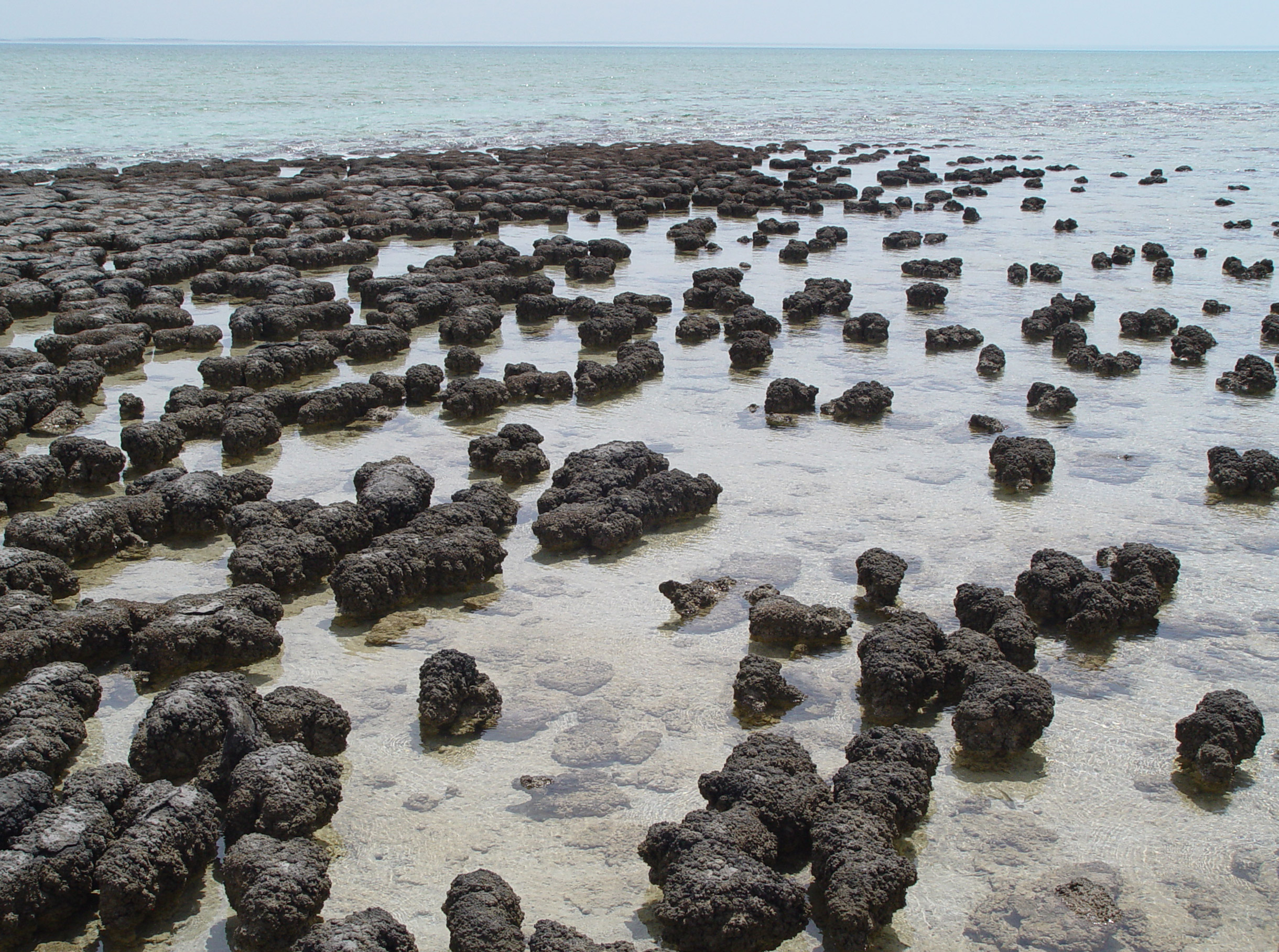
However, the appearance of algae capable of biological photosynthesis (around 3.5 billion years ago) quickly changed this condition because the algae thrived in the reducing atmosphere and their large scale photosynthesis release carbon dioxide and free oxygen as byproducts of the photosynthetic reaction they used to as their energy source.
Volcanic Activity: Volcanic eruptions and outgassing from the Earth’s interior were significant contributors to the composition of the early atmosphere. These emissions released gases like carbon dioxide, water vapor, and sulfur dioxide, influencing the planet’s early climate and chemistry.
Origin of Water on Earth:
The origin of Earth’s water is a subject of ongoing scientific investigation, with multiple theories proposed to explain its presence. Some of the leading theories include:
Cometary Delivery: It is believed that a significant portion of Earth’s water was delivered by comets or water-rich asteroids during the Late Heavy Bombardment period, around 4.1 to 3.8 billion years ago. These celestial bodies contained water in the form of ice, which could have melted upon impact with Earth and contributed to the formation of the planet’s early oceans.
Volcanic Outgassing: Some water may have been released from the Earth’s interior through volcanic activity. Water vapor and other volatile compounds trapped in the Earth’s mantle could have been gradually released through volcanic eruptions and then condensed to form the early oceans.
Hydrated Minerals: Water may have also been present in the building blocks of Earth, such as hydrated minerals in the materials that formed the planet. These minerals could have released water during Earth’s formation and differentiation.
The exact proportion of water contributed by each of these sources is still a subject of ongoing research, but it is likely that a combination of these processes played a role in forming Earth’s oceans.
“On that day all the fountains of the great deep were broken up, and the windows of heaven were opened. And the rain was on the earth forty days and forty nights(Genesis 7:11-12).”
Formation of Continents and Oceans:
The formation of continents and oceans on Earth was a dynamic and complex process that unfolded over geological time scales. Key processes involved include:
Crust Formation: The Earth’s early crust was initially composed of solidified basaltic rocks. These rocks formed the foundation for the future continents and ocean basins.
Continental Crust Formation: Over time, the Earth’s crust evolved as it underwent processes like partial melting, fractional crystallization, and plate tectonics. These processes resulted in the differentiation of the crust into the lighter continental crust, rich in granitic rocks.
Ocean Formation: The depressions and low-lying areas in the Earth’s crust filled with water to form the early oceans. This process was influenced by the balance between tectonic activity, erosion, and sedimentation.
Plate Tectonics: Plate tectonics, a crucial geological process, played a significant role in shaping the Earth’s surface. The movement of tectonic plates led to the creation of continents through the collision and convergence of landmasses and the formation of ocean basins through seafloor spreading.
The formation of continents and oceans significantly affected Earth’s climate, geology, and the evolution of life. Continents provided a variety of environments for different ecosystems to thrive, while oceans played a role in regulating Earth’s climate and supporting marine life. This dynamic interplay between the Earth’s geology, its changing atmosphere, and the emergence of life continues to be a fascinating subject of study in Earth sciences.
The Creation of Life on the Planet Earth – 3.8 (+) Billion Years Ago:
The first scientifically undisputed appearance of biological life on Earth is not a subject of this post; it is however the elephant in the room and for me not to mention it here would be an error of omission on my part. It will be covered in detail in on this website in a later post.
Despite “scientific exuberance” to the contrary the earliest undisputed fossils of microbial life are dated to the period 3.8 billion years ago.
The existence of Interesting mineral formations of microscopic flecks of graphite with “a low ratio of heavy to light carbon atoms,” incased in Zircon crystals which might be of biological origin have been found in the rocks of the Jack Hills Greenstone Belt (zircon rock) in Western Australia which date to 4.2 billion years ago, are NOT clearly microbial fossils. Neither are the microscopic iron filaments in encased in the rock of the ancient ocean floor in the Nuvvuagittuq Supracrustal Belt (NSB), which are dated to be between 3.77 to 4.28 billion years old in Quebec province in Canada. So far these are only interesting mineral collections. Sensationalized, popular media reports not withstanding, these interesting mineral collections are NOT “fossils” and they are NOT “smoking gun” evidence of the earliest life on earth.
The solid scientific evidence of the oldest undisputed and independently confirmed microfossils of biological life was found in metamorphosed rock is the specimens found in the Isua region of western Greenland in 1979 which are dated to be 3.8 billion years old and are found in silica (quartz) rock formations there. These mineral formations were initially named “Isuasphaera” even though they were thought to possibly be fossils of yeast cells. It is generally assumed that biologically simpler bacterial microbes pre-date these yeast, but no solid evidence of that exists in the geological record.
Note that yeast are eukaryotic organisms; that is they are very structurally and biochemically complex cells which have a nucleus, which contains the genetic code of the organism “written” in the sequence of base pairs of the DNA molecule.
The independent confirmation that they were in fact yeast fossils came when some of the formation was cut into 40 to 100 micrometer (10-6 meter) sections through which radiation probes (light waves) could penetrate. The spectra of these probes showed characteristic absorption bands of organic residues within the putative yeast fossils, confirming the biological origin of these fossils!
The next undisputed and seminal fact in this procession of life on earth is the sudden arrival of free oxygen in the earth’s atmosphere which is mentioned above and which occurred 3.5 billion years ago. This global burst of atmospheric free oxygen is universally believed to be due to the arrival (creation or development) of biological photosynthesis.
Conclusions:
I would like to make clear that all the processes described in this post (up to but not including the origin of life on Earth) occurred as a result of routine and generally well-understood and testable physics. While there has been a considerable amount of deduction required to put this scientific narrative together, no real Kierkegaardian leaps of faith are required to believe the geological truth of it all.
This is utterly unlike the attempts to explain Singularity, the pre-condition state which proceeds the Big Flash (the Big Bang Singularity) which cannot be understood without invoking such a Kierkegaardian type leap of faith.
See the: The Big Flash – The Divine Creation of the Cosmos linked below.
The issue of the origin of life has numerous inexplicable and enigmatic facts which do not follow any scientifically explainable process and hence require multiple Kierkegaardian type leaps of faith. Again that subject will be discussed in a later thread of posts on this web site.
Amazing and marvelous as this story is, all the existing evidence supports the truth of these scientific conclusions. The Divine creation of the cosmos was certainly not a quick event.