
The Holy Scriptures have contained literary themes expressed with metaphors and allegories from the time when Moses penned the first five books forward. The 40 years God’s chosen people wandered in the wildness gave God the time required for the slave generation to gradually perish in that desert land, but it also gave Moses time complete his task as the author of The Bible’s first five books.
Metaphors, Allegories and Parables are Powerful Modes of Expression
These literary techniques were commonly used rhetorical devices are clearly encouraged by the Holy Spirit and used by most , if not all, of the biblical authors. Christ himself taught his followers using parables (which everyone understands figuratively and not necessarily literal statement of historical events). They were outward and visible narrative illustrating inward and spiritual truths.
The use of metaphors and allegories never weakens the moral fabric or the divinely intended message being conveyed, or the factual details of the literally factual miracles described in the Bible. In fact they often lead to the reader understanding a given passage as having both a valid literal meaning and one or more equally valid deeper, broader and more generalizable understanding which can be more easily applied to the in-the-moment circumstances of the listening believer.
Biblical Literalism Gets a New Name: Fundamentalism
The modern literalist school of biblical interpretation began to increase in popularity when conservative Christians appropriately and strongly objected to and reacted against the gnostic scholars at European universities which were claiming to be “demythologizing” The Bible. These critics arose in the respected and previously orthodox Christian, Bible training centers in “enlightenment” Europe. This work was especially concentrated in the then mostly apostate German hermeneutical schools whose scholars were later known as the “higher critics.” These higher critics generally claimed to just be trying to separate silly biblical superstition for scientific facts.
The conservative Christian reaction against these higher critics was based on those critics’ utter exclusion of any concept of the transcendental nature of the divine, or of religious faith. Those critics ignored the core supernatural nature of religion. Since the views of the Higher Critics were either atheistic, agnostic, or apostate, they were clearly not in a position to understand or criticize God’s Holy Word.
In 1910 a group of biblically conservative Presbyterian Christians began publishing a series of essays against the ever-increasing malarkey of the higher critics entitled The Fundamentals. They soon began calling themselves fundamentalist, and that term stuck and it soon was generalized and changed into a pejorative term to describe anyone who only interpreted the scriptures literally.
Sadly the fundamentalist reaction to those bazaar interpretations of the Holy Scriptures was to fall back into a reactionary school of Biblical textual hermeneutics which essentially forbade the use of metaphors and allegories to explain and understand the meanings of the scriptures. The hermeneutical “principle” they clung to was that which primarily recognized only the literal understanding of the words. The first, most legitimate, correct and preferred understanding of a given passage was assumed to be the primary and most important meaning of that passage. This limited principle can result in the deeper, or more important meaning a given passage being missed entirely.
Literalism is a Nice, But it is a Limited Way to Hear the Voice of God
The problem with this not-wrong first-pass at understanding the meaning of a given passage of scripture is that it most often stopped there. That superficial approach often led the reader to not see or ignore the sometimes deeper meaning embedded in the text. Once the obvious superficial meaning had been harvested, the Bible reader concluded that he or she understood that passage. Done deal.
Once one has been trained as a literalist, one assumes that God’s “real meaning” is just what the literal words of the passage state. One does not then routinely dig further to mine any possible deeper jewels of meaning which might be there.
In the first season of the recent movie series The Chosen Jesus forgives the Samaritan Women at the well. With her introduction of Jesus and his disciples to her village Jesus and crew stay in that town, and Jesus performs numerous miracles and heals many people. The village elders from the local synagogue invite Jesus to read the Scripture on the ensuing Sabbath. Jesus takes John with him, ostensibly to help Him select a scroll to read from. They get to the cabinet the synagogue keeps the sacred scrolls in and John is astounded to see that they only have 5 scrolls.
What isn’t explained in the scene is that this synagogue is part of the sect of the Sadducees. They only believe that the words of the Torah are holy. Christians call the Torah the Pentateuch, which is the first five books of the Old Testament.
John looks at the barren cabinet and utters an inquisitive “Lord?” Christ reticently replies to John (without explaining): “I know. They just miss so much.” Only looking at the literal meaning of Biblical passages also causes one to “just miss so much.”
The literalist hermeneutic must be understood as being an idea which was just as arbitrary as that of the ideas of the heretical, faithless, higher critical scholars, who avoid supernatural explanations for the miracles described in The Bible.
The literalist interpretation benefits from having clear and strong boundaries. It provides practicing believers with strong and safe guardrails. Hence that understanding is authentic and authoritative; however it does not necessary allow God (or His Holy Spirit) the latitude to choose His own style of literary expression to convey God’s message to His people. Thus may not only miss a part of the divine message, but it is also, at its core, inadvertently impertinent to God in that it limits His literary freedom to express Himself as He wishes.
Reason is One of the Three Human Attributes of Our Being Made in the Image of God
The Bible tells us that people are made in the image of God. The Apostles and the ancient Early Church Fathers understood that there are three ways in which people are like God.
The three defining characteristics we share with the divine are:
1. We have an immortal soul and God is eternal
2. We have reason and God is the essence of reason. As Christians we have a redeemed reason guided by God’s Holy Spirit.
3. We have free agency and God, of course, does as he wills.
Each of these traits are, of course, substantially similar to characteristics being present in the persons of the Holy Trinity which make up the fullness of the Triune God.
This individual redeemed reason, guided by God’s Holy Spirit, empowers us to better understand the full meaning of scriptural passages. However, our individual reason does not “stand on its own.” Rather it is subject to the expressed wisdom of the Apostles and disciples of Christ and their subsequent disciples who were the Early Church Fathers.
The more sound philological principle for interpreting passages of scripture should be for Christians to first read and understand the plain and obvious mean of the passage. Christian is then free to use their redeemed reason and the Holy Spirit’s guidance to understand any deeper meanings which may be present in the passage. However it does not stop there we could still be mistaken. Good intentions do not guarantee good results.
Our initial impression of the meanings of the passage should further be subject to the expressed wisdom of the Apostles and the Disciples and their subsequent disciples, the Early Church Fathers.
Personal Reason and Wisdom Need to be Augmented by “the Mind of the Church”
In many passages the Bible is complicated. Understanding the full meaning and nuance of Holy Writ is easy and obvious in many passages, but it can also be obscure or obtuse in other sections. Using the understanding of the Apostles and the Early Church Fathers to augment the difficult sections of scripture is indispensable in some section of scripture.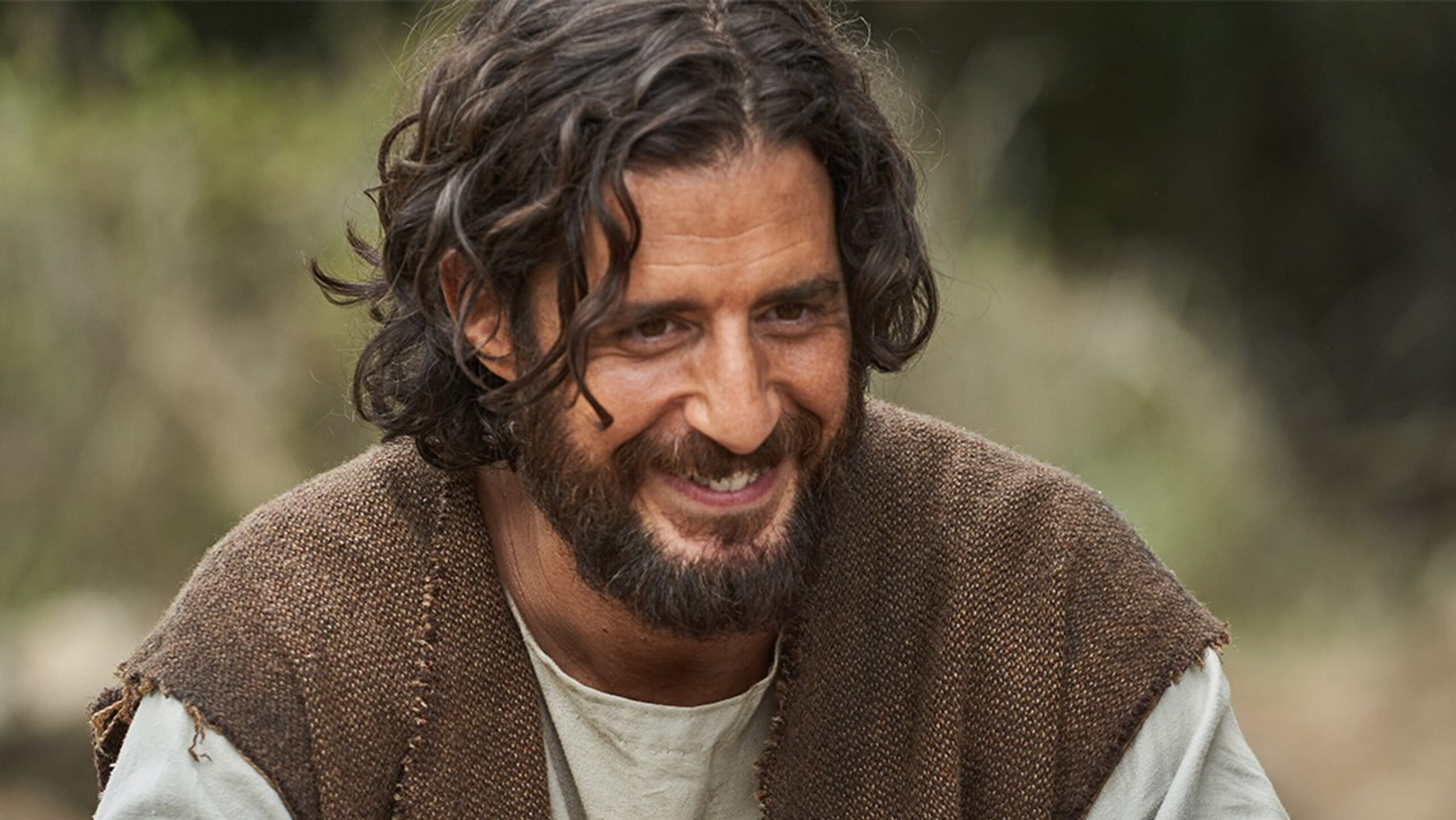
A More Comprehensive View of Apostolic Succession
This understanding is sometimes referred to or called “the mind of the church” and it is deeply intertwined with the allied and more complete understanding of the apostolic succession of the early post-apostolic fathers of the nascent Christian church.
My favorite example of the fullness of this concept is the historically well-documented example that the Apostle John the Evangelist. John discipled Polycarp of Smyrna for decades while he served under John in Ephesus. Polycarp, in turn, discipled Irenaeus of Lugdunum in that same manner for decades. Irenaeus became the apostle to the Gauls and the Bishop of Lugdunum (modern-day Lyon, France). Irenaeus, in turn, discipled Hippolytus of Rome. Four men whose pious, faithful and dedicated lives spanned from the life of Jesus the Christ Himself, until the mid 3rd century, ranging from Palestine to Roman Gaul and then the capital of the Western Roman Empire.
This well-documented history is a much fuller and more complete example of apostolic succession than the simple laying on of hands during an ordination or consecration service. While the ancient and truly Christian hermeneutic philosophy of scriptural understanding needing the mind of the church to prevent it from going off the rails, it does suffer from having somewhat fuzzier borders. It is not the clear and present safety of the solid guardrails of the fundamentalists. However, it benefits from not “throwing the baby out with the bath water,” as it were. Hence the more figurative interpretation of the Holy Scriptures is the richer and more meaningful hermeneutic, but it needs to be applied with prayerful caution and restraint.
This Literalist-Cautiously Figurative Dichotomy is Not New
This literalist-cautiously figurative dichotomy was the basis for the two ancient Hebrew schools of scriptural interpretation. They arose in the Rabbinical schools which trained the Pharisees in Jerusalem around 170 BC, just prior to the Maccabean Revolt against the overlordship and blatant temple blasphemy of the Seleucid King, Antiochus IV Epiphanes.
The literalist view was taught at the Shammai School of biblical interpretation. The more figurative school was the Hillel School. Both training the Jewish Law students to become the lawyers describe in The Bible as the Pharisees. Gamaliel(Acts 5:33-34) was the moderate head of the School of Hillel who trained the Jewish legal zealot Saul of Tarsus who famously persecuted the members of the Jewish sect of the Nazarene, soon to be called Christians. After the famous event of the road to Damascus Saul of Tarus became the influential and productive apostle, Paul(Acts 22:3), the author of most of the epistles of the New Testament.
After his conversion Paul spent several years at Mount Sinai figuring out what Jesus Christ having been God’s Messiah meant(Galatians 1:17). After this period of prayerful reflection and possible times of mystical union and personal interaction with the triune God, Paul became the clear-minded author of his many complex and often figurative letters which have taught two millennia of Christians to understand God and His plan for mankind.
Early Christian Church Schools of Biblical Interpretation
This literalist/pragmatist dichotomy was also the basis of the difference between two schools of thought in the early Christian church. This stimulated a prolonged discussion in the virtual city square of the community of Christian scholars in The Early Church, both within the Roman Empire and well beyond it boundaries. The most obvious example of this is the literalism of the intermittently present schools at Antioch and the more figurative Great Catechetical School of Alexandria.
The Catechetical School in Alexandria was the source of almost every one of the fully developed doctrinal principles and the essential elements of Christianity. The Alexandrian School advocated for and ultimately prevailed regarding all the core doctrines of the Christian faith which became the decisive findings (conclusions) regarding the nature and relationships of the Holy Trinity (three persons, one essence) and those between the man Jesus and the Son of God, the Christ (two natures, one person) in the proceedings of the first four ecumenical councils of the still One, Holy, Katholic and Apostolic Church.
The Modern Explosion of Literalism
The great explosion of the modern and occasionally divisive scriptural literalist is a fairly recent phenomena. As described above, It took off when the apostate textual scholars of the mid 19th century began composing bogus conjectural narrative alternatives to traditional and orthodox understandings of Christianity and it exploded after Scopes Monkey Trail caught the imagination of America and the Western World in the post-World War I era.
One of the Outcomes of the Modern Surge of Literalism is the Young Earth Idea
It is this author’s strong opinion that the literalist “young earth” view suffers from several simple yet fatal flaws; again, “They just miss so much.” In particular, if one assumes the cosmos is a mere 10,000 or so years old, then that assumption implicitly makes God into a liar. No blasphemy intended!
There are mountains of independent observations and hard evidence of events which clearly and reasonably appear to have occur earlier than 10,000 years ago.
The modern young earther must explain why God filled his holy and divine creation with so much false evidence. Of course, God is NOT a liar; the young earthers are well-meaning, but mistaken. The truth of the amazing revelations of most of the modern scientific discoveries of the mekhane, or mechanisms, of the cosmos are, in fact, the fingerprints of God on His creation, and thus the details of the mechanisms of modern physics and biology bring profound glory to God !!
Modern Science Ignores the Purpose of Life
The fact that modern science fails to address the telos, the reason for or the why or the purpose, of creation is modern science’s great but sad loss. While revealing the details of the creation, they have lost sight of the bigger and more important whole picture of God’s purpose in His actions of creation.
The divine purpose of the creation of the physical universe was to give mankind the opportunity of being able to experience the mystical union with God during holy communion. Then as a result of his fellowship with and service to God, individual men and women are able to truly serve mankind. The forgiveness and atonement of Christ’s passion for mankind reversed mankind’s self-inflicted initial mistake in his relationship with God.
Conclusion
As Christians we don’t get to pick and choose the parts of the faith we like. We can only be “all in,” or not. If we chose accept God, then we must submit ourselves to God without negotiating any limitations on our part. Modern individualist pick and choose behavior is a foolish example of our trying to make “God in our own image,” rather than submitting to Him. The parts of our faith that aren’t convenient for us or don’t fit our personal views or preferences can’t be ignored or deleted. The good news is that “obedience is better than sacrifice,” and in the end His burden on us is lite.