

In the decades after the Second World War, California achieved an iconic status. Hollywood productions portrayed the region as a virtual paradise, with glistening sandy beaches and perfect weather year round; construction and the aerospace industries were booming. Jobs were plentiful, and they paid an ample living wage. Public schools were excellent and they became even better after the Russians launched the Sputnik satellite. John F. Kennedy launched NASA, which in turn launched a race to safely put and man on the moon bring him back. California was the hopping place to be, and the Beach Boys and Disneyland were symbols of it all.

Apple Computers and IBM were launching the personal computer revolution and the fruit orchards of the San Francisco’s South Bay Area were becoming Silicon Valley, and Stanford University and Cal-Tech were supplying armies of progressively trained college graduates with great new ideas. Everything was roses, and those roses grew beautifully in California.
In 2020, California was the 5th largest economy in the world. Silicon Valley is the Global center of innovation. Hollywood dominates entertainment. The ports of Los Angeles and Long Beach are the busiest in the Western Hemisphere. On paper California is untouchable.
All That Glitters Is Not Gold
However beneath the surface cracks are forming. Energy costs are rising. Housing costs are exploding. homelessness is spiraling upward. Government taxes were continuing to rise. The valleys adjacent to LA have filled with housing. The state was not building and expanding its freeway system as fast as the traffic was increasing. Crime was on the rise. State’s welfare rolls are expanding. Ghettos of despair are forming in California’s older urban neighborhoods.
Businesses are starting to quietly ask the question that used to be unthinkable. Should we stay?
The Early Birds Are Stirring in the Coop
The image of California did not deflate overnight. However many smart people were beginning to count the costs, and they were realizing that there were better places to live in states outside of California. The individual emigration trend started as a nobody-noticed-it demographics trend. Net migration was away from California, but it was not yet large enough to be noticed by many people.
U-Haul and Ryder rental truck companies hast to pay people to drive their trucks back to California because so few people are moving that way. The California State Franchise Tax Board noticed it because those expatriate former Californians were tax payers who mostly had better paying upper middle class jobs.
On the other hand, the many of the immigrants entering into California were government dependents who saw that the California welfare system paid better than similar welfare systems in other states. The immigrant pools also included foreign immigrants, legal or otherwise, from Mexico, or Central and South America and beyond who wanted the not so good job opportunities that California still offered them.
The burgeoning not-so-illegal drug trade brought criminal entrepreneurs who recruited street gangs as distribution networks. These regional grey-market and black-market merchants connected with international cartels, and they expanded their product lines to include the neo-slavery trade involving human trafficking of vulnerable children and young adults. Auto theft of new cars and trophy status sports cars became a growth industry of its own.
On top of all of this sits California’s politically insoluble problem of homeless hobos living on urban sidewalks.

Newsom’s response? Denial, and deflection. He argues that these companies are outliers. He claim’s California’s economy is resilient. He points to GDP numbers and tech sector growth as proof that everything is fine. However, here’s the problem with that argument: GDP can grow as the foundation crumbles. GDP measures activity not sustainability. While tech stocks were booming and venture capital was flooding into startups the infrastructure that supports those businesses was rotting. The electrical grid was failing. Water resources were mismanaged. Transportation projects were vastly over budget and behind schedule. The tax base was becoming dangerously dependant on a small number of ultra wealthy companies and on individuals whose income was tied to volatile stock markets.
Many People Are Counting the Costs for Themselves
According to the US Census Bureau, in 2010, some 129,239 more people left California than moved to it. That fact was continued for 93,915 people in 2011, for 73,345 people in 2012, for 96,202 people in 2013, for 79,340 people in 2014, for 129,233 people in 2015, for 142,932 people in 2016, for 137,895 people in 2017, for 190,122 people in 2018, and for 173,347 people in 2019.
In the decade between 2010 and the end of 2019 the state of California lost 1.25 million tax paying former residents. The total number of California residents peaked just below 40 million people.
This California Exodus had become an ongoing trend of residents leaving the state for other states, primarily due to high living costs, increasing crime levels, and other quality-of-life issues. That’s only the exodus of individual people who were voting with their feet. Major companies were also fleeing the state.
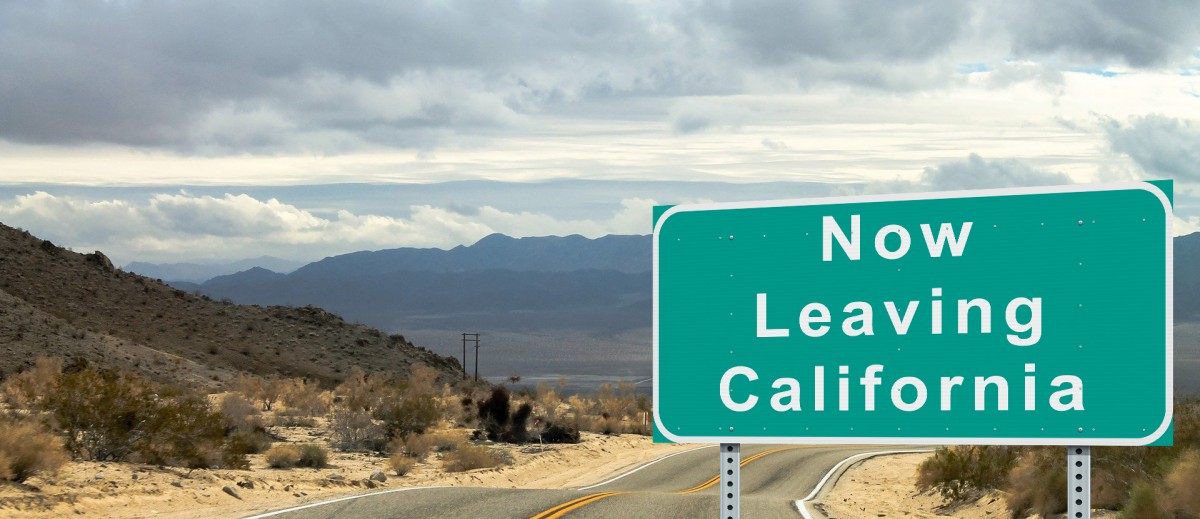
Large Fortune 500 Companies Can Also Do-The-Math
The difficult decision to leave California is neither a partisan nor political choice. Large Fortune 500 level companies do not make a decisions to move their operations lightly. Such moves are expensive, time consuming and fraught with an endless stream of technical difficulties. Nobody really wants to start that ball rolling. It’s the result of a detailed analysis of the math, of the fiduciary responsibility, and of the competitive reality of the business environments in different locations.
So why do profitable companies with deep California roots chose to relocate their operations to other states. The answer is their costs can drop by 30–50% essentially overnight. That’s not a small factor. It is a compelling reality. Moreover, competitive business-friendly states make almost everything much easier of the business they are seeking to attract. It not just a financial move. It’s the whole package.
So what do you do? You move to Nevada. You move to Arizona. You move to Tennessee. States that want your jobs and are willing to streamline permitting. States that don’t treat you like a villain for existing. That’s exactly what starts happening.
Within months Charles Schwab the financial services giant announces it moving its headquarters from San Francisco to Texas. CBRE Group the world’s largest commercial real estate services firm relocates to Dallas. Palantir Technologies the secretive data analytics company co-founded by Peter Thiel leaves Palo Alto for Denver. Bechtel one of the largest engineering and construction firms in the world moves to Virginia.
These aren’t startups. These aren’t Fly-by-night operations. These are centuries old institutions. These are Fortune 500 anchors, and they are all saying the same thing. California is no longer competitive.
The prudent and professional management of the C-suites of these companies have a fiduciary responsibility to their shareholders that demanded that the cold facts of these figures could not be ignored. The inescapable realization was that the commercially overtaxed and overregulated state was an adversarial business environment in which it was difficult or worse to try to do business.
The following is list of the larger companies that flew the coop of California over the time period listed.
2016
Jacobs Engineering Group, now known as Jacobs Solutions, is an American company that provides engineering, design, construction, and maintenance services, as well as technical, professional services as well as scientific and specialty consulting across various sectors, including water, transportation, and healthcare. Jacobs Solutions services a broad range of clients globally, including companies, organizations, and government agencies.
In 1947, the Jacobs Engineering Group was established with its headquarters located in Pasadena, California. In 2016 the increasingly onerous and adversarial business environment and high overall cost of doing business in California caused the company to endure the expense of relocating its headquarters to Dallas, Texas.
As of 2025 Jacobs Solutions employed over 43,000 people, and in 2025 they produced a total of $12.39 B in revenues.

Jamba Juice (now just Jamba) is an American quick-service restaurant and juice bar chain that sells blended fruit and vegetable juices, smoothies, and other food products. The first Jamba location, originally named Juice Club, opened in 1990 in San Luis Obispo, California.
In May of 2016 Jamba moved its headquarters from Emeryville, California to the Dallas area suburb of Frisco, Texas . The company is owned by GoTo Foods and has over 850 locations across the United States and internationally. Jamba locations employ over 5,000 people, and their annual revenue is over $75 million dollars
2017
Toyota Motor North America (TMNA – stock ticker symbol: TYO) is the North American subsidiary of the Japanese company . Toyota was founded in Toyota City, Aichi, Japan. The company was established in 1937 by Kiichiro Toyoda as a division of Toyoda Automatic Loom Works.
Toyota’s operations in North America began in 1957 when it established its headquarters in Torrance, California. TMNA handles their North American manufacturing, vehicle sales, servicing, and parts system.
In 2017 the management of TMNA realized that it was no long smart money to be located in the adversarial business environment of California. TMNA moved their operations to Plano, TX (a suburb located northeast of Dallas). TMNA directly employs over 49,000 people and their total revenue in 2024 was $284 billion dollars.

Nestlé USA is the American subsidiary of the Swiss company Nestlé. The parent company was originally founded in the 1860s in Switzerland to produce condensed milk and its baby formula products. Besides its Nestlé labeled products Nestlé USA, is also the owner of DiGiorno, Toll House, and Coffee mate.
Nestlé USA was originally headquartered in Glendale, California. In 2017 it left California and moved its headquarters to Arlington, Virginia. Nestlé USA employs over 48,000 people and its annual revenue in 2023 was $111.03 B.

2018
Bechtel Corporation is a privately held American engineering, procurement, construction and project management company founded in San Francisco, California in 1898. As of 2022, the Engineering News-Record ranked Bechtel as the second largest construction company in the United States, following Turner Construction. Bechtel has completed 25,000 major construction projects in 160 countries since its founding.
In 2018 the behemoth Bechtel Corporation moved its headquarters from California to Reston, Virginia, near Washington DC. Jack Futcher, the company’s chief operating officer said, “Consolidating the corporate leadership and operations in Reston will enable the company to thrive in the current fast-paced business environment — one that demands faster and seamless decision-making, integration and collaboration.”
Bechtel has over 50,000 employees as of May 2025. Bechtel’s annual revenue was reported to be $58.2 billion in 2024.

2019
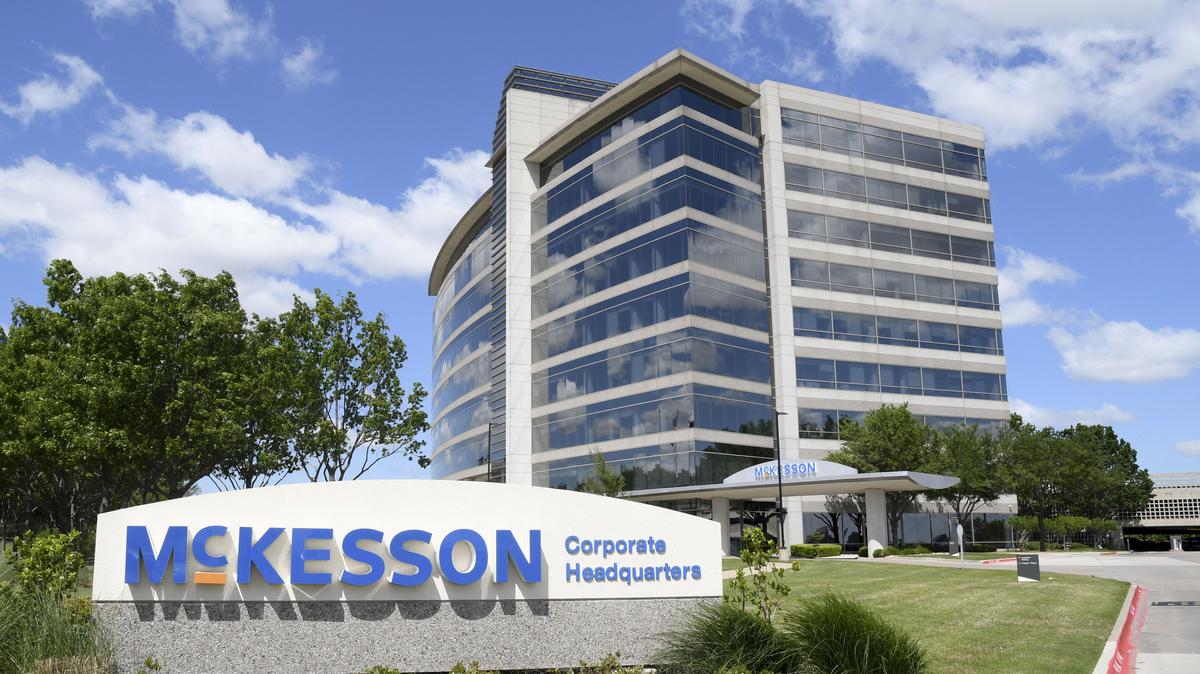
McKesson Corporation (stock ticker symbol: MCK) is a giant publicly traded American company that distributes pharmaceutical products and provides health information technology, medical supplies, and health management tools. The company delivers a third of all pharmaceutical products used or consumed in North America. McKesson provides extensive network of infrastructure for the healthcare industry and was an early adopter of technologies, including barcode scanning for distribution, pharmacy robotics, and RFID tags.
McKesson’s forerunner was founded as a partnership in 1828. In 1967 it moved its headquarters to San Francisco, where it thrived and expanded for decades; however by 2019 the business climate in California had changed so significantly that it moved its headquarters to the Dallas suburb of Irving, Texas.
McKesson Corp. employs over 80,000 people and in 2024 it enjoyed a revenue of 308.9 billion dollars, which makes McKesson the ninth largest company in the United States by revenue.
Charles Schwab is an American multinational financial services company. It offers individual and commercial banking. Its investing and related services include consulting, and wealth management advisory services to individual, retail and institutional clients. The company’s headquarters were founded in San Francisco, California.
In 2019 the company left California after it agreed to buy Omaha-based company TD Ameritrade. The chairman and founder is Charles Schwab, who singled out the business climate in California as motivation for the move: “The costs of doing business here are so much higher than some other place” he told Forbes. “We’ve had an extremely positive experience in Texas,” a spokesperson from Schwab said in a statement to Business Insider: “From day one, the energy, innovation, and welcoming spirit of North Texas has far exceeded our expectations.”
Charles Schwab is now headquartered in Westlake, Texas. As of 2024 Charles Schwab directly employed 32,100 people, and it enjoys a total revenue of 23.92 billion dollars.

Conclusion
Over the course of the 2010s California’s tax base was slowly collapsing. That meant that the total cost of government would need to be borne on the shoulders of fewer tax payers who would be forced to support an ever-increasing pool of government revenue consumers.
These facts should have been an early warning to the governor and to the legislature in Sacramento.
As the next post in this series shows, rather than back off from their radical and idealist fantasies about the environment, criminal incarceration, homeless hobos, unskilled laborers, and the marginalized behavioral and ethnic minorities, the governor and his pocket minions in the legislature decided to double down and further increase the burden of those workers and companies who had remained and were still supporting the state.
The governor and the legislators increased both the tax burdens on California residents and businesses and the burden of government over-regulation on everyone. The results of this knavish folly drove even more residents and business “out of town,” actually completely out of the state. The Great Escape, The Great California Exodus was about to explode.