The Real Wise Men from the East (the journey of the Biblical Magi and the Adoration of Christ)
The second chapter of the Gospel According to Matthew describes the visit of the magi to Bethlehem and their adoration of Jesus the Christ, the newborn king. The shepherds of Bethlehem and the magi were the first people to adore the Virgin Mary’s infant son Jesus as the promised Messiah, the Christ, the Son of God, and the future savior of mankind.

Medieval Era, western traditions have greatly embellished Matthew’s testimony declaring the wise men to have been “three kings.” The bible does not actually tell us how many wise men came to adore the newborn king; three gifts are mention so the later assumption that there were three gift givers is not unreasonable, but it is only a later tradition.
That tradition varies somewhat however it includes the names of the three wise men:
- Melchior, who was variously described as a Persian (i.e., a Parthian), Zoroastrian King and/or Priest or an Arabian who brought the gift of gold (symbolizing Christ’s royal nature).
- Caspar, black-skinned king from either Africa or India and who brought Frankincense (which represented Christ’s divine nature).
- Balthazar who was described as either a king of Arabia or a scholar from Babylon who brought the gift of myrrh which is a spice used as a burial fragrance to diminish the smell of the corpse (symbolizing that Jesus would grow up to die for the salvation of all of mankind).
The earliest extant reference to this extra-biblical story is written in Latin and is form an 8th century manuscript from a Frankish Merovingian source. The names of the “three kings” were supposedly derived from a Greek manuscript, which either never existed or has been lost to history, and which was allegedly composed in the early 500s in Alexandria, Egypt. The Eighth century Merovingian manuscript is titled Excerpta Latina Barbari, so named because the Latin translator/editor (Joseph Justus Scaliger) described the “original document” as having been “translated into Latin by a “senseless ignoramus” who had no skill at Greek or Latin, who is now referred as Scaliger’s barbarian.
Per one account, at some point the three kings were formally canonized (officially declared to be saints) by the western Roman Catholic Church, and the apocryphal narrative grew from there and became a western Christian story which was incorporated into the greater narrative of the annual Christmas remembrance and celebration.
The Frankish medieval conjecture (and the subsequent expansive derivations of it) not withstanding, it is very unlikely that the “wise men from the east” came from or through the Parthian Empire. In the last year of the reign of Herod “the Great,” when Jesus was born, the Roman empire was at odds with the Parthians, who were the other regional superpower of that day.
A group of three kings, bearing royal gifts for a newly born king within the Roman Empire would have found crossing the frontier into the Roman Empire difficult at best and most likely it would have been impossible. The Roman authorities would not have been oblivious to such an unusual event.
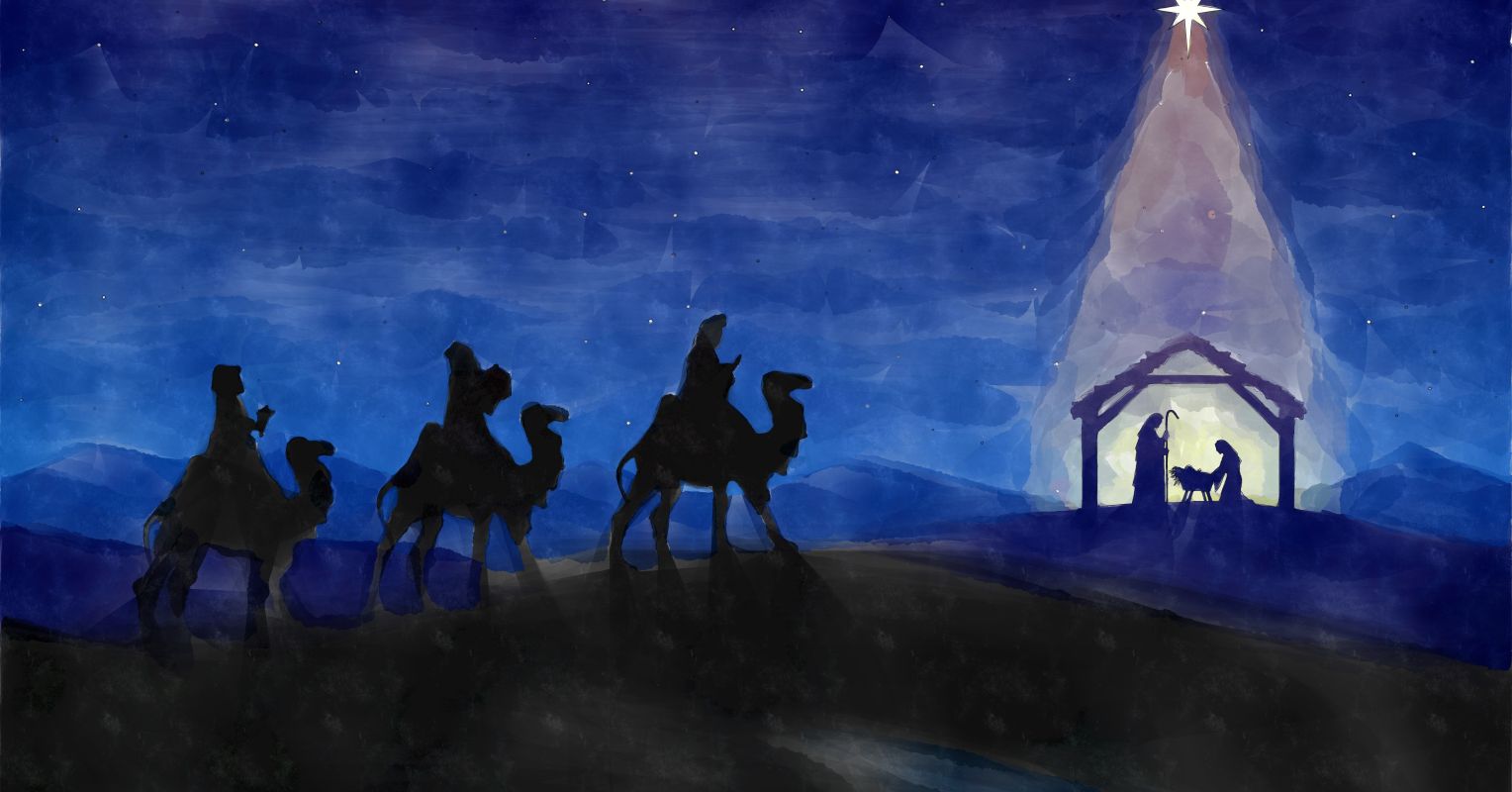
The Bible tells us that the wise men’s questions asked in Jerusalem about the location of the newborn king not only aroused the suspicions of the Romanized Jewish King Herod the Great, but when word got to him he ordered the brutal Massacre of the Innocents in Jerusalem in response to it.
It should also be noted that travelers to or from the Parthian Empire (Persia) would have had to travel via the city of Damascus. From a Jewish perspective they would have been said to have come from the north, not the east.
The biblical account of the early life of Christ is that as the firstborn of an observant Jewish couple, He was duly presented in the temple with the appropriate offerings of thanksgiving to God, on the 40th day of his life.
After Christ was presented at the temple the Holy Family fled King Herod’s dominion in Palestine and quietly traveled, into Egypt.
If wise men came from somewhere in the Parthian Empire they would have had to travel with great haste, and then sneak across the frontier into Roman controlled territory to get to the newborn Christ before the family fled to Egypt. The Bible does not describe the wise men as stealthy travelers. Rather we are told that they stopped in Jerusalem and asked about where the newborn king had been born. Parthian nobles trying to sneak past the Roman authorities to reach and adore the infant Christ could not have done this. This travel timing problem has led numerous biblical academics to postulate the modernist malarkey that the wise men came a year or two after the birth of Christ.
It is exceedingly unlikely that the biblical wise men were Parthians.
The far more probable and historically likely reality is that the “wise men from the east” were wealthy Semitic Arab traders from the north-western Arabian Nation of Nabataea (who are referred to in the Old Testament as the Edomites). These were the people of Moses’ father-in-law Jethro (mentioned by Moses in the book of Exodus).
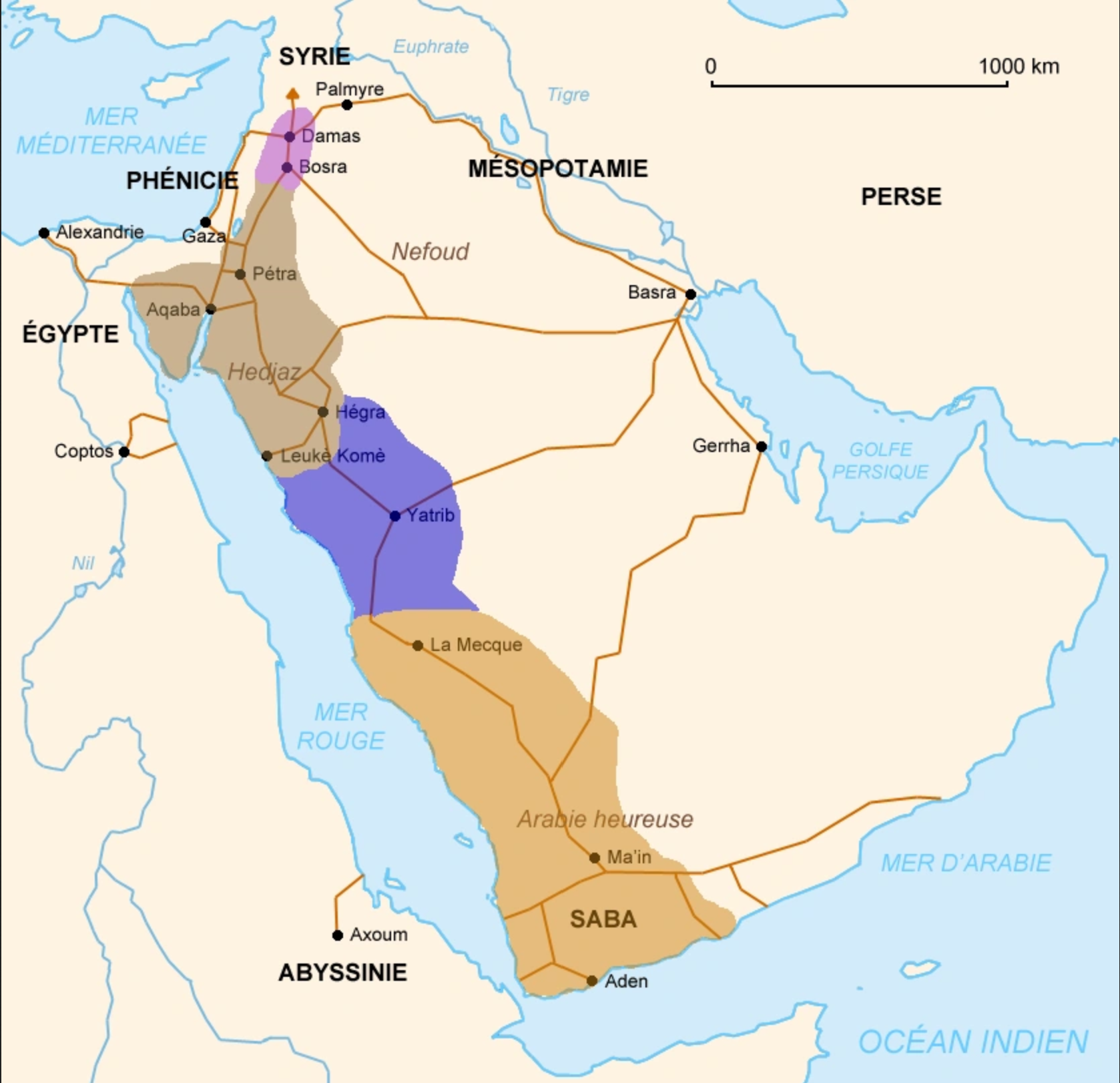
Map of the Routine Nabataean Trade Routes of the First Century:
The biblical book of Obadiah describes the “wise men from Edom” in the 8th verse of that single chapter book. It would be textually consistent for the “wise men” of Matthew’s gospel to be the descendants of the “wise men” described by Obadiah.
In general, the Nabataean traders were a prosperous people who lived in the northwestern Arabian Peninsula (modern day Jordan and Saudi Arabia) and in the southern region of the Levant, and the Sinai Peninsula from sometime before the time of the Seleucid King Antigonus the first (301 BC). The capital of Nabataea was the famed City of Petra with its civic buildings carved out of (into) the rock of the mountainside (near modern day Amon, Jordan). Importantly, Nabataea was due east of Jerusalem.
These Nabataean traders were well known to work with the Nabataean gold miners, who worked the mines in Nabataea.
The Nabataean traders also traded for and imported both frankincense, and myrrh from Arabia Felix (in south western Arabia around modern day country of Yemen) and fine silks from China, which arrived in the Red Sea area via the maritime Silk Trade Routes which had been functioning since the time of the Persian king Cyrus the Great in 540 BC. One of the two southern maritime silk route terminal ports was the Nabataean port of Leuce Come (on the shore of the Red Sea); the other being the Egyptian port of Myos Hormos. The Nabataeans had become prosperous carrying gold, frankincense, myrrh and fine Chinese silks from Leuce Come to resell them at the Mediterranean port of Gaza (from which they were transshipped throughout the Roman controlled Mediterranean. This Nabataean trade is well documented by the Greek historian Diodorus Siculus (50 BC) & the Greek geographer Strabo.
Map of the Kingdom of Nabataea around 85 BC:
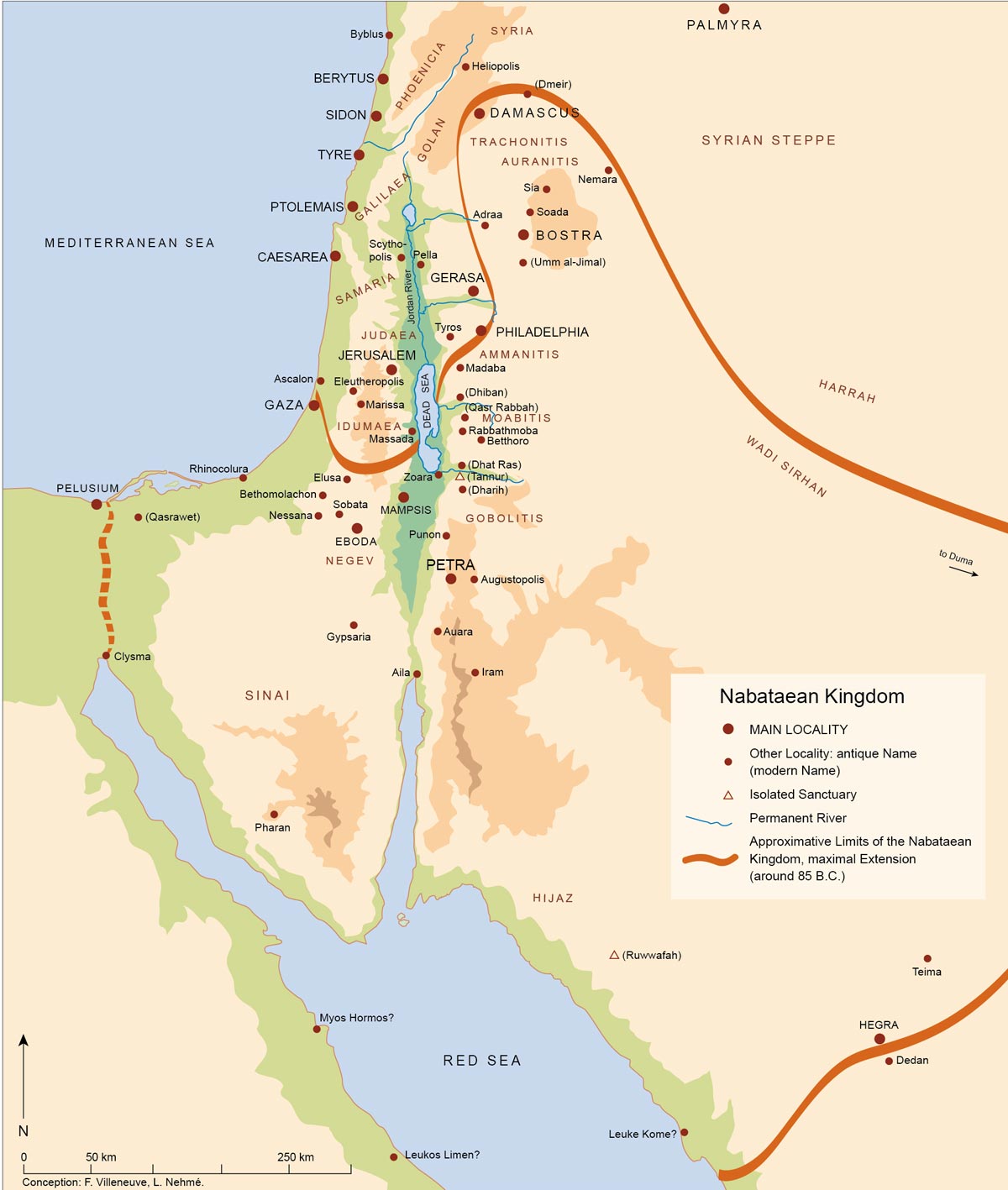
By AD 36 when Saint Paul, the apostle, encountered Jesus the Christ on the road to Damascus, the city of Damascus was controlled by the Nabataeans. Second Corinthians 11:32-33 states:
“In Damascus the governor, under Aretas the king, was guarding the city of the Damascene with a garrison, desiring to arrest me; but I was let down in a basket through a window in the wall, and escaped from his hands.”
Here Paul mentions the Nabataean king, Aretas IV Philopatris, who reigned from 8 BC to AD 40.
The conclusion of all of these facts is that the “wise men from the east” mentioned in the Gospel According to Matthew were most probably the same “wise men” mentioned in the Book of Obadiah, the Nabataeans.