Polanyi Disputed Conventional Wisdom
Polanyi famously asserted that:
“The victory of fascism was made practically unavoidable by the liberals’ obstruction of any reform involving planning, regulation or control.”
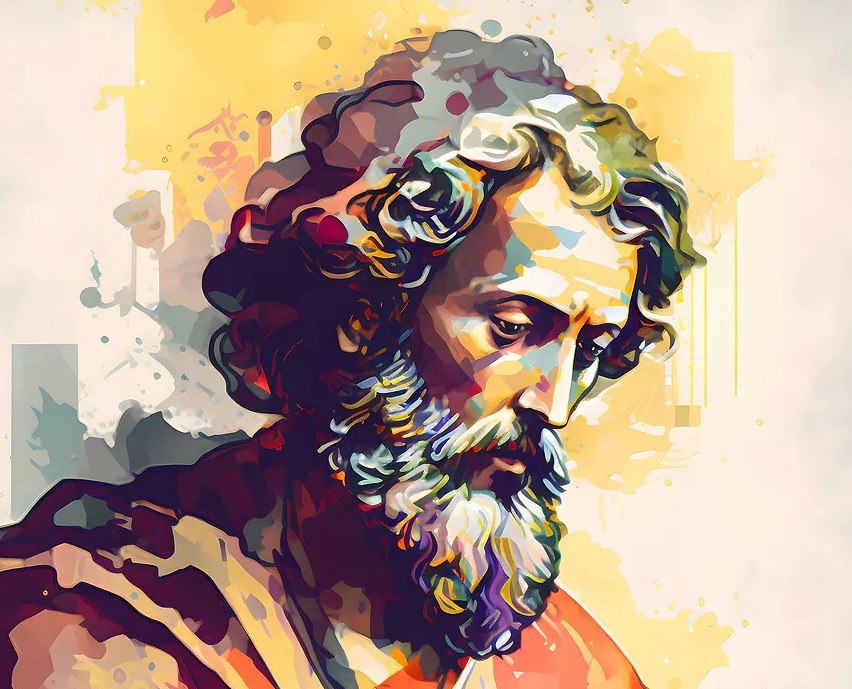
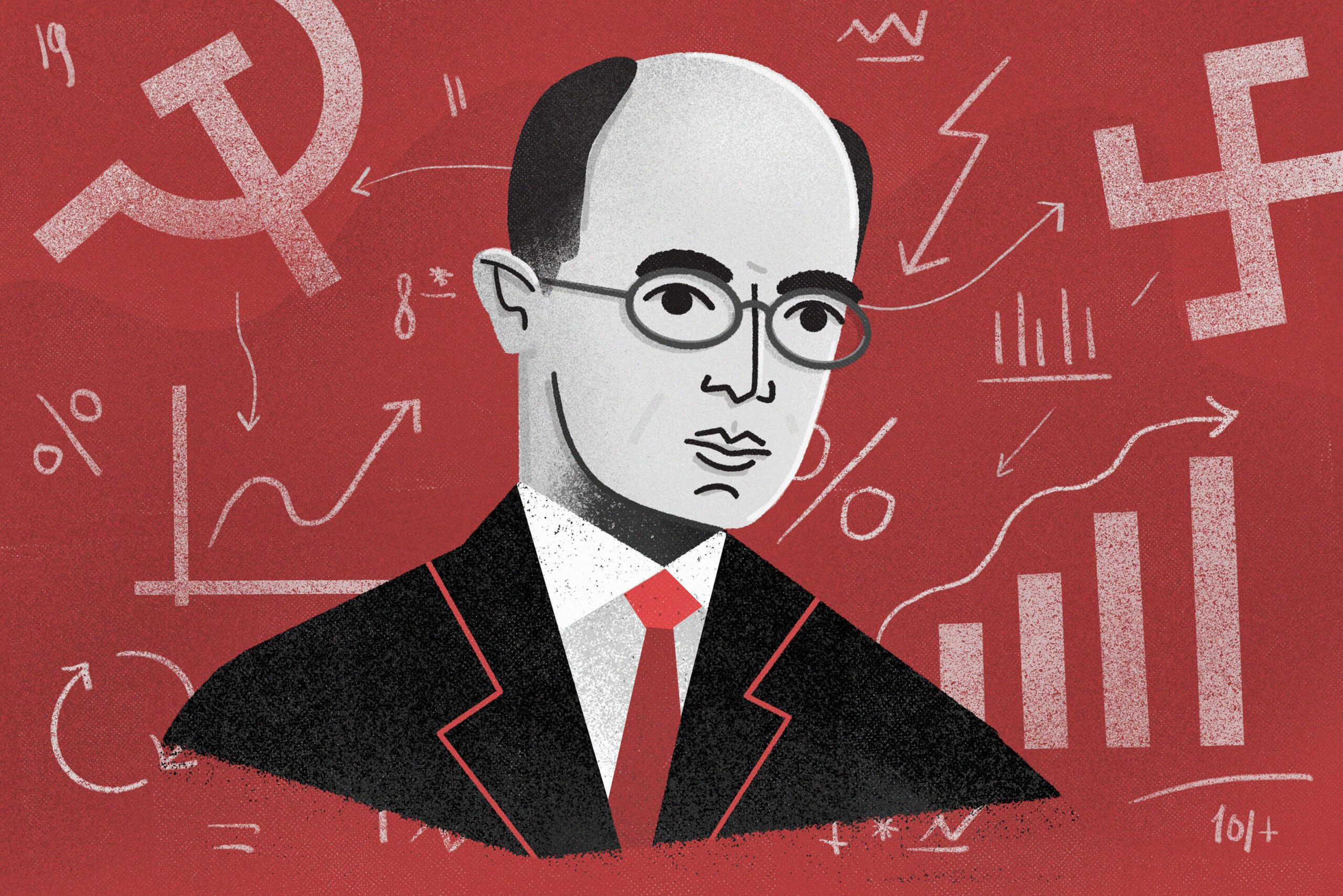
The Hungarian intellectual Karl Paul Polanyi (1886 to 1964) was an Austro-Hungarian economic anthropologist and politician, who was raised in Budapest, Hungary by his affluent German-speaking Jewish family who were well assimilated into the secular upper middle class of Hungary.
His political leanings were strongly socialist and Marxist in nature and from 1924 to 1933 he worked as a liberal publisher. After the accession of Adolf Hitler in Germany, Polanyi fled to England where he became a Christian Socialist.
He is best known for his book The Origin of Our Times, the Great Transformation, which among other things questions the conceptual validity of self-regulating, so called, free markets. Note that the term “self regulating” is code speak for “unregulated.”
Karl Polanyi argued that until the rise of 19th-century liberalism (classical liberalism), where markets had existed at all, those markets were always and everywhere embedded in society, and therefore they were subject to various distortions of social, religious and political controls.
Free Markets Were Never Truly Free
The forms of these controls varied widely; for example in India occupations (labor markets) were for centuries determined by the caste an individual was born into, rather than market forces such as an individual’s personal interests or his individual skill set. During the Middle Ages, physical markets in Europe were generally heavily regulated, with many towns only permitting larger markets then known as fayres (fairs) to open once or twice a year.
Polanyi explicitly refutes Adam Smith‘s statement that natural man has a “propensity to barter, truck and exchange,” arguing that anthropology and economic history show that until the 19th century markets (the commerce occurring in local fairs) only had a marginal role in the regional or national economy, and that by far the most important methods governing the distribution of resources were reciprocal gift giving, centralized redistribution and autarky (self-sufficient households).
Polanyi concedes that European society was beginning to develop towards modern capitalism from as early as the 14th century. This was increasingly true after the Glorious Revolution brought diligent Dutch merchantilist ideas to England, and especially after the commencement of England’s First Industrial Revolution.
England Destroyed the Prosperity of Its Own Industrial Revolution
In 1817 the influential British economist David Ricardo’s book The Principles of Political Economy and Taxation strongly supported the prevailing wisdom of laissez-faire, or unregulated free markets which had been advocated by the French Physiocrat, Francois Quesnay (1759).
Beginning in the late 1830s these free market ideas began to dominate British commercial philosophy and practice. These new ideas were replacing the classical merchantilist practices which had fostered England’s nationalist Industrial Revolution to begin with. Ricardo’s ideas contained the seeds that eventually grew into modern globalism.
As a result of this protoglobalist philosophical wave Britain began to advocate the abolition of tariffs in international trade. They foolishly abolished most of their own protective tariffs (e.g., they abolished the corn laws), and encouraged their trading partners to do the same.
Brittan’s Trading Partners Wisely Refused Brittan’s Advice
Brittan’s trading partners wisely refused to follow suit, because their internal industrial revolutions were far behind that of England’s. In 1841, the respected German political economist Friedrich List asserted that:
“Britain preaching free trade to less industrially advanced countries like Germany and the USA was like someone trying to ‘kick away the ladder’ with which he had climbed to the top.”
Polanyi contended that it was not until 1834 that the establishment of truly free international markets became possible. Polanyi calls this dis-embedding of markets from society a “singular departure” from anything that had happened before in human history. Prior to the 19th century, international trade was very low in proportion to global GDP.
Polanyi asserted that:
“economic liberalism made a supreme bid to restore the self-regulation of the system by eliminating all interventionalist policies which interfered with the freedom of markets.”
and that:
“For market economics to function with some modicum of fairness, they must be embedded in social norms, and institutions that effectively promote broadly accepted notions of the common good. Other wise, acquisitiveness [a propensity to acquire property; desire of possession, e.g. self-interested greed], and competition – the two forces of market economies – achieve overwhelming dominance as cultural forces, rendering life under capitalism a Hobbesian ‘war of all against all.’ “
Hence, Polanyi argued that free or self-regulated markets (unregulated markets), not only never existed anywhere, but such a market would be a social injustice to any society which allowed it.
- Nine Fundamental Problems or Failures of Capitalism
- 0 – The Zeroeth Industrial Revolution in England – How Market-Price-Based Commerce Improves the Lives of the Common People
- 1 – What Marx got Right - Factory Labor Exploitation Problem
- 2 – Mismanaged Financial Panics - Ignoring the LENDER-of-Last-Resort Principles – How Modern Central Banks Fail to Help the Common People
- 3 – The Economic Crime Scene of the National Budget – Modern Governments Fail to Improve the Lives of the Common People
- 5 – Criminal Globalist Traitors – The Destroyer of America’s Working Middle Classes
- 6 – Financial Zombies and the Debt Slavery Problem
- 7 – The FED - A Hegelian "Captured Agency" From Birth
- 8 – What Lenin Got Right – The Monopoly Problem
- 9 – Dragonomics, Capitalism’s Global Catastrophe – The Communist Capitalism with “Chinese Characteristics” Problem – Concealed, Undeclared and Unrestricted Warfare Against the West